EV charging app development company UK operators and fleets can hire for driver apps and charger back offices
Our EV charging app development starts at the charger. We list every charger model and OCPP version you run, fix the price, and hand you a test report from those chargers before launch. We build for UK operators, fleets and charging sites.
Contactless, 99% reliability, open data and p/kWh pricing planned in discovery
Code, designs, store and cloud accounts in your name
9:41
ChargingRiverside Park · A1 · CCS2
Live58%41% at start · 68% at 20 kWh
Power now54.2 kW
Energy12.4 / 20 kWh
Time14:06
Cost so far£7.32
Done at11:16
Stop charging
Rules this build is planned around
Contactless at the chargerNew public chargers of 8kW and above deployed after 24 November 2024, and all of 50kW and above
99% reliability on rapid chargersPublic chargers of 50kW and above, as a network mean over a year
Open data in OCPI 2.2.1Every public charger, each EVSE on its own
Price in p/kWh before the sessionAll public charge point operators, micro-businesses included
Security and compliance
Cyber EssentialsCertified
Cyber Essentials PlusIndependently tested
ISO/IEC 27001:2022Information security
ISO 9001:2015Quality management
ISO/IEC 42001:2023AI management
SOC 2 Type IIAudited controls
UK GDPR andData Protection Act 2018
ICORegistered
NHS DSPTData security toolkit
WCAG 2.2 AAAccessibility
PCI DSSCard data security
What does an EV charging app development project involve?
A two-week discovery lists each charger model and its OCPP version, then fixes the price. Every bill uses the charger’s own meter reading, not a guess. A first release costs £15,000 to £40,000 excluding VAT and takes 8 to 14 weeks.
Discovery
2 weeks, off the build price
First release
8 to 14 weeks
Full app
4 to 8 months
Support
Optional, monthly
Which EV driver apps and charge point operator apps do we build?
The UK had 119,080 public chargers on 1 April 2026.
01
Driver app
Drivers
Find, check the plug, scan and pay, and status comes from the charger itself.
02
Operator back office
Operators
Sessions, tariffs, faults and refunds, with faulted rapid chargers flagged fast.
03
Fleet and depot charging
Fleets
Each charge tied to a van and its driver at the depot.
04
Workplace and destination chargers
Sites
Staff charge free, guests pay, with no front-desk step.
05
Roaming and partner access
Partners
Your tariffs and status sent to partner apps through OCPI.
Building in ev charging means rules you cannot get wrong. Talk them through with the developers who would build to them.
“Drivers want three things: find a working charger, start charging without fuss and pay without surprises. AppAgentix built the Android app, the prepaid wallet and the link to our chargers. Live charger status is accurate, starting a session is a scan and a tap, and the wallet settles the right amount even if the connection drops. The app has passed 10,000 downloads with a 4.1 star rating, and our manual billing work has dropped sharply.”
“A smart home app only works if the whole family trusts it. AppAgentix built our Android app so every appliance and routine sits in one place, with each family member given the right access. Commands reach the device in a moment, the app shows honestly when something is offline, and voice control works through Google Assistant and Alexa. The listing holds a 4.9 star rating. Every release was tested on real devices in real homes.”
“We wanted one streaming service that felt the same on phone, tablet and TV, whether people watch free with adverts, subscribe or rent a film. AppAgentix built the apps for iPhone, iPad, Android and Apple TV and the service behind them. They got the hard parts right: playback that starts quickly, a home screen that works with a TV remote, and billing that stays correct. The Android app has passed 50,000 downloads.”
A few examples from the many apps we have built for charging and for energy use.
EV charging network
Tiger Charge: find, start and pay in one app
What we built
Drivers kept reaching offline chargers or the wrong plug, and billing was done by hand. We built an Android app with a live station map, scan to charge and a prepaid wallet, linked to the chargers by our OCPP gateway.
10,000+Google Play downloads, 4.1 stars, over 40% of sessions begun in the app with no support call, 70% less manual billing
Families using Digilite Automation, the Android app we built, follow their power use as it happens, on smart plug energy pages and graphs for the whole home. Schedules and routines switch appliances on a timer, or when room temperature, motion or a door changes. Energy readings are held in a time-series database next to PostgreSQL, and MQTT carries the device messages.
Riverside Park, A2Connector faulted 2 h 10 minEngineer booked 14:30
Station Square Car ParkCard reader offline 38 minReader restarted, watching
Hillside Hotel, B1Delivering 22 kW of 50 kWGrid limit set by site
Sessions today412
Energy delivered6.8 MWh
Revenue today£3,204
Open data feed live · last update 12 s ago
What is EV charging management software?
It is the software that runs your chargers. Buy, white label or build? Our advice:
Which route fits your network?
IfFewer than about 20 sites, standard tariffs, no app of your own
ChooseBuy a ready platform
A monthly licence costs less than a build.
IfChargers from one maker whose platform offers a branded app
ChooseWhite label
Your brand on a working app; the roadmap stays with the vendor.
IfOwn brand, payment rules, fleet logic or several charger makers
ChooseA custom build
You own the code and data.
IfA bought platform runs the chargers, but its driver app is weak
ChoosePlatform plus your own app
We build the app on the platform's API.
Which screen does each UK charging rule change?
Where each rule above lands.
UK ruleScreen
01UK ruleContactless
Screen"Pay by card at the charger" beside Start
02UK rulePrice in p/kWh
ScreenTariff in p/kWh shown before Start
03UK ruleOpen data
ScreenStation status updated within 30 seconds
04UK rule99% reliability
ScreenFault state and downtime clock in the console
05UK ruleHelpline
ScreenTap to call on station and fault screens
06UK ruleRoaming
ScreenPartner tariffs and access through OCPI
What 99% reliability means in hours
Worked sumDowntime allowed by the 99% ruleAppAgentix
Step
Figure
Hours in a year (365 days at 24 hours)
8,760 hours
Share the rule allows to be down (100% less 99%)
1%
Most downtime a year, on average per rapid charger
87.6 hours
About a month
7.3 hours
The rule is a mean across your rapid chargers over a calendar year. A failed card reader counts as downtime, so the console shows readers as well as connectors.
What a charger test report looks like
Shown for the imaginary 40-site network below.
ExampleCharger test report, release candidate 1.0AppAgentix
Test
Where run
Result
What happens next
Remote start on each model
Simulator, then three models
Pass
None needed.
Charger reboots mid-session
Real charger, OCPP 1.6
Pass after fix
Session left open. Fixed to close on the last reading.
Network cut for ten minutes
Simulator
Pass
Bill matched the meter.
Duplicate payment event
Gateway test mode
Pass
One payment recorded.
Connector type on the map
All 40 sites
Pass after fix
Two sites showed the wrong plug; corrected.
Status stuck after unplug
One real model
Open
Raised with the maker; launch waits.
An example, not a client record, and nothing goes live before you read it.
What does OCPP mean?
OCPP, the Open Charge Point Protocol, is how a charger talks to its software.
OCPP, the Open Charge Point Protocol, is how a charger talks to its software. Versions 1.6 (2015) and 2.0.1 (2020, IEC 63584 since 2024) are not compatible, and 2.1 came in 2025.
Our gateway speaks 1.6 and 2.0.1, on Security Profile 2 or 3.
What each OCPP charger status shows in an EV charging app
Each connector reports one of nine OCPP 1.6 states, while drivers see plain words.
OCPP 1.6 connector statusWhat the driver sees
01OCPP 1.6 connector statusAvailable
What the driver seesFree
02OCPP 1.6 connector statusPreparing
What the driver seesPlugging in
Cable in or card shown, no charge yet.
03OCPP 1.6 connector statusCharging
What the driver seesIn use
04OCPP 1.6 connector statusSuspendedEV or SuspendedEVSE
What the driver seesIn use, paused
The console says whether the car or the charger paused it.
05OCPP 1.6 connector statusFinishing
What the driver seesFinishing
Charge stopped, cable still in.
06OCPP 1.6 connector statusReserved
What the driver seesReserved
07OCPP 1.6 connector statusUnavailable
What the driver seesOut of service
08OCPP 1.6 connector statusFaulted
What the driver seesOut of service
Fault logged and the operator alerted.
How much does it cost to build an app in the UK?
For EV charging app development, here is what each stage includes. One worked example, an imaginary 40-site network, came to £34,000 fixed. Price your own EV charging app development project with the calculator below.
01
Discovery
2 weeks
Charger survey and a fixed quote. Comes off the build price.
02
EV charging MVP
8 to 14 weeks
Driver app, OCPP link, card payment and store launch.
03
Full app
4 to 8 months
Both phones, wallet, back office and roaming.
04
Support
monthly
Updates and fixes. 30 days' notice after 3 months.
The ten questions discovery starts with: users, the jobs they need done, systems to connect, rules, deadline and budget. Fill it in, attach nothing else, and the first call starts at the right place.
OCPP links a charger to the system that runs it, while OCPI links that system to other companies, such as roaming partners and driver apps. UK public charge point operators must open their data in OCPI 2.2.1, so most public networks need both.
The charger opens a WebSocket link to the central system and keeps it open. Short messages flow both ways: BootNotification at start-up, StatusNotification when a connector changes, and StartTransaction, MeterValues and StopTransaction around each charge.
Which EV chargers support OCPP?
OCPP 1.6 remains widely used, and the industry is moving towards OCPP 2.0.1 and 2.1. Before launch, we prove the charger link on a simulator, then on each charger model you run.
Is there a universal app for EV charging?
Not one that works at every charger, and roaming comes closest: one app or card pays across several networks. UK public charge point operators must accept at least one outside roaming provider, so your app can reach other networks through OCPI.
Can I charge an EV without an app?
Often, yes. Public chargers of 8kW and above deployed after 24 November 2024, and all of 50kW and above, must take contactless bank cards with no account. An app still adds live availability, the price before you arrive, receipts and help when a charge fails.
Most app projects run late. Let’s make yours the one that ships.
More than 95% of our projects are delivered on or before the agreed date. About 60% of our clients come back for a second project.
What happens next
1We reply within 30 minutesEvery day of the year. A developer at our app development company, not a sales team, reads your brief.
2A 30-minute callWe ask about users, deadlines and the systems you already run.
3A written view in two working daysScope, timeline and a price range, yours to keep.
Thank you. Your brief is in.
A developer, not a sales team, reads it. We reply within 30 minutes, from info@appagentix.co.uk.
We use cookies to run this site and, with your permission, to understand how it is used. Cookie policy · Privacy policy
Most app projects run late. Let’s make yours the one that ships.
More than 95% of our projects are delivered on or before the agreed date. About 60% of our clients come back for a second project.
What happens next
1We reply within 30 minutesEvery day of the year. A developer at our app development company, not a sales team, reads your brief.
2A 30-minute callWe ask about users, deadlines and the systems you already run.
3A written view in two working daysScope, timeline and a price range, yours to keep.
We wanted one streaming service that felt the same on phone, tablet and TV, whether people watch free with adverts, subscribe or rent a film. AppAgentix built the apps for iPhone, iPad, Android and Apple TV and the service behind them. They got the hard parts right: playback that starts quickly, a home screen that works with a TV remote, and billing that stays correct. The Android app has passed 50,000 downloads.
Michael S.CEO and Co-Founder, Play Now Media
Thank you. Your brief is in.
A developer, not a sales team, reads it. We reply within 30 minutes, from info@appagentix.co.uk.
 WCAG 2.2 AAAccessibility

 SwiftGeneral-purpose language for all Apple platforms and servers
 SwiftUIDeclarative screens for every Apple platform
 KotlinGoogle’s preferred language for Android
 Jetpack ComposeAndroid’s current toolkit for screens
 FlutterMobile, web and desktop apps from one codebase
 React NativeNative Android and iOS apps built with React
 FigmaScreens and clickable prototypes you can test
 TypeScriptTyped JavaScript that catches errors early
 Node.jsJavaScript runtime for scalable network applications
 PythonLanguage for web development and scientific work
 PostgreSQLOpen-source database; pgvector adds vector search
 RedisIn-memory store for caching and live messages
 FirebaseFirestore and Realtime Database: store and sync app data
 AWSCloud hosting with a London region
 CloudflareContent delivery, caching and attack protection
 GitHub ActionsCI/CD platform to automate build, test and deployment
 SentryCaptures errors and alerts you with full context
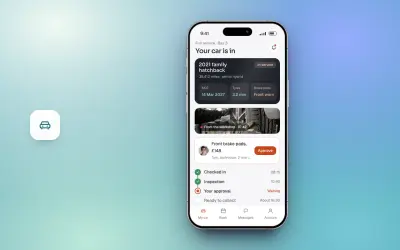 AutomotiveDealer, service and driver apps.
 LogisticsDriver, depot and tracking apps.
 FintechBanking, payments and lending apps.
 MVP developmentA first version for users and investors.
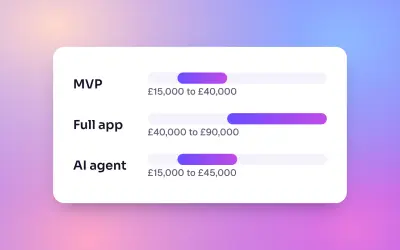 PricingWhat apps and AI agents cost, in pounds.
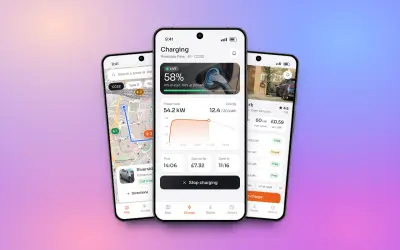 Tiger ChargeLive charger status, scan to charge and a prepaid wallet.
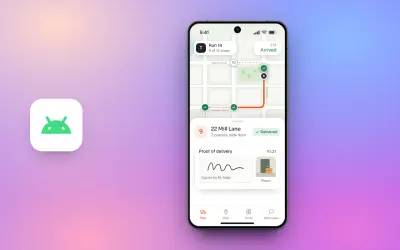 Android app developmentNative Kotlin apps for Google Play.
 BristolMobile apps for Bristol businesses.