Retail software development company UK shops hire for tills, stock and store apps
Need a retail software development company UK shops can rely on? We build tills, stock counts, store staff handhelds and click and collect for UK retailers. We also link your shops to your online store, card terminal and accounts package. Prices are in pounds and exclude VAT, and the code and accounts are yours.
Fixed-price retail software development after a two-week discovery
Code, designs and accounts in your name from the first commit
9:41
Fernhill & Co2
Linen apron£38.00
★★★★★ 4.8 · 126 reviews
Sage
Free UK delivery over £50 · arrives Thu 19 Nov
Add to basketPay
Rules this build is planned around
Consumer Rights Act 2015Every shop that sells goods to consumers, in store or online
Consumer Contracts Regulations 2013Orders taken online or by phone, when you and the customer are not together
PCI DSSEvery business that takes card payments, and any software that holds or handles card data
VAT records and receiptsVAT-registered shops (GOV.UK: you register once 12-month taxable turnover goes over £90,000)
Security and compliance
Cyber EssentialsCertified
Cyber Essentials PlusIndependently tested
ISO/IEC 27001:2022Information security
ISO 9001:2015Quality management
ISO/IEC 42001:2023AI management
SOC 2 Type IIAudited controls
UK GDPR andData Protection Act 2018
ICORegistered
NHS DSPTData security toolkit
WCAG 2.2 AAAccessibility
PCI DSSCard data security
Custom retail software and what it costs
Custom retail software is the till, stock and store staff tools built around how your shop sells, instead of a licensed EPOS used as it comes. Our retail software development starts with a first release at £15,000 to £40,000 excluding VAT, in 8 to 14 weeks. A two-week discovery fixes that price first. A build for a five-shop gift retailer with a linked card terminal, barcode counts and an accounts link comes to £28,000 fixed. Price your own version with the calculator on this page, and see every price line we sell on our app development cost page.
Discovery
2 weeks, ending in a fixed quote
Retail MVP
8 to 14 weeks
Full build
4 to 8 months
What software is used in retail?
Our retail software development covers six parts, for UK retailers from one shop to a chain, and most start with one or two.
01
Till and checkout with VAT receipts
Till
Staff ring up sales on a tablet, with bundles and discounts, and price changes need a manager. Each receipt shows the VAT for every rate, and a retailers' VAT invoice prints on request. Day-end totals by VAT rate go to your accounts software without retyping.
02
Stock levels and barcode counts
Stock, optional AI
Every sale, return and delivery moves the stock figure for that shop. Staff count shelves by scanning barcodes, and a count that disagrees waits for a manager. An optional AI helper drafts a reorder list from your sales for a buyer to approve, tested first on your own past weeks, every miss shown.
03
Store staff handhelds
Shop floor
One handheld app covers click and collect picking, price labels and goods in. Staff mark each item found, send a ready message and scan the order code at handover. This is the staff side; the customer's order screens sit on our ecommerce app and website pages.
04
Returns, refunds and age checks
Counter
The returns screen finds the sale from the receipt and shows the days since purchase. By default the refund goes back to the card or cash used, and any other route needs a manager. Age-restricted lines pause the sale for a check, and each refusal is logged.
05
Loyalty and customer records
Customers
Customers join at the till or online and collect points and vouchers in one record. Scheme membership and marketing permission are separate fields, each with a date and a source. It is a full scheme of your own, not a store add-on.
06
Links to your online shop, card terminal and accounts
Links
The online shop, tills and handhelds read one stock figure, so an item sold out in a shop stops showing online. That matters when 28.8% of Great Britain retail sales were online in September 2026 (ONS). The till sends the total to a linked card terminal, and any provider fee goes on the quote. One figure for shops and online is more than a single website stock link.
One stock figure for every channel
The till, the stockroom handheld and the online shop read and write the same stock.
01Till sale
02Stock updated
03Online shop synced
04Accounts record
05Reorder flagged
9:41
Fernhill & Co2
Linen apron£38.00
★★★★★ 4.8 · 126 reviews
Sage
Free UK delivery over £50 · arrives Thu 19 Nov
Add to basketPay
Retail software development: the UK figures that matter
28.8%
of Great Britain retail sales were online in September 2026, ONS
Six UK rules, as they stand in November 2026, shape retail software development. They decide what a till or stock system must store, block or warn about, so we map them in discovery. We are a software team, not a law firm, so your adviser confirms how each applies to you.
Consumer Rights Act 2015
Applies to
Every shop that sells goods to consumers, in store or online
What it changes in the build
A customer has 30 days to reject faulty goods for a refund. A fault found within 6 months counts as present at delivery, unless the shop proves otherwise. A refund is due within 14 days of the shop agreeing it, and our returns screen records that date.
Consumer Contracts Regulations 2013
Applies to
Orders taken online or by phone, when you and the customer are not together
What it changes in the build
A customer can cancel a distance order within 14 days after the goods reach them, with no reason. A shop need not refund an in-person purchase the customer no longer wants. Our reading is that click and collect is still a distance sale, so ask your adviser. Online orders get a 14-day clock.
PCI DSS
Applies to
Every business that takes card payments, and any software that holds or handles card data
What it changes in the build
PCI DSS sets a baseline of requirements that protect payment card data. A PCI-listed point-to-point encryption terminal keeps card data unreadable until it reaches a secure decryption environment, so the shop has fewer requirements. Our till sends only the amount, so no card number reaches your till or our servers.
VAT records and receipts
Applies to
VAT-registered shops (GOV.UK: you register once 12-month taxable turnover goes over £90,000)
What it changes in the build
Under Making Tax Digital, some VAT records must be kept in compatible software, with no retyping between programs. Retail scheme shops keep a digital record of daily gross takings. The shorter retailers' VAT invoice is allowed up to £250. Our till sends takings by VAT rate to your accounts software.
UK GDPR and PECR
Applies to
Shops that run a loyalty scheme, keep customer records or send marketing emails and texts
What it changes in the build
The ICO says marketing emails need consent or the soft opt-in. The soft opt-in covers details collected in a sale, used for similar products, with an opt-out each time. So our sign-up screen keeps the two apart, and the marketing box starts unticked.
Age-restricted goods
Applies to
Shops that sell alcohol, tobacco, vapes, knives or adult fireworks
What it changes in the build
GOV.UK gives 18 as the age of sale for alcohol, most knives, adult fireworks, and vapes and nicotine from 29 October 2026. From 1 January 2027 it is an offence to sell tobacco to anyone born on or after 1 January 2009. Each product holds its own rule, so the till asks for a check when that line is scanned.
How each rule changes a till screen
Each rule, plus the Price Marking Order 2004 for shelf labels, lands on one screen.
UK ruleTill screen or record
01UK ruleConsumer Rights Act 2015
Till screen or recordReturn reason and refund to the original payment
02UK ruleConsumer Contracts Regulations 2013
Till screen or recordOrder-type flag on every sale
Online and phone orders get a 14-day clock from collection or delivery.
03UK rulePCI DSS
Till screen or recordCard terminal screen that never shows a card number
04UK ruleVAT records and receipts
Till screen or recordReceipt and day-end VAT totals
A retailers' VAT invoice prints on request.
05UK ruleUK GDPR and PECR
Till screen or recordUnticked marketing box at loyalty sign-up
An opt-out link goes in every email and text.
06UK ruleAge-restricted goods
Till screen or recordDate-of-birth prompt at the till
Each refusal is logged.
07UK rulePrice Marking Order 2004
Till screen or recordShelf label with the selling price including VAT, and a unit price where one is needed
Labels and the till read the same price record, in pounds sterling.
“Drivers want three things: find a working charger, start charging without fuss and pay without surprises. AppAgentix built the Android app, the prepaid wallet and the link to our chargers. Live charger status is accurate, starting a session is a scan and a tap, and the wallet settles the right amount even if the connection drops. The app has passed 10,000 downloads with a 4.1 star rating, and our manual billing work has dropped sharply.”
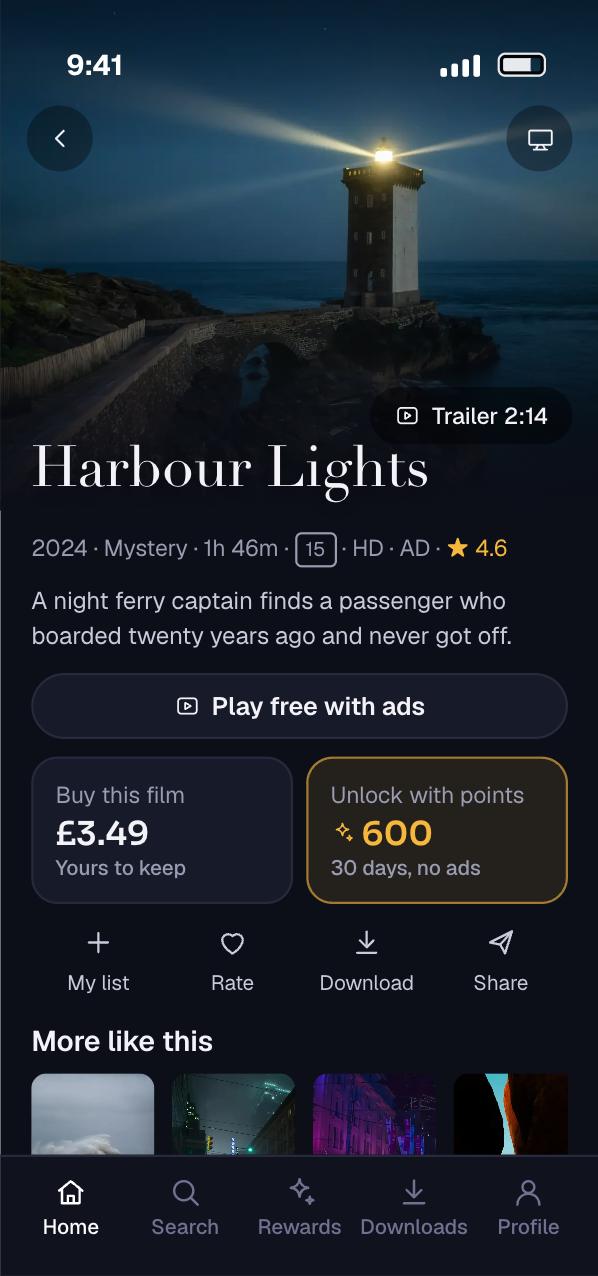
“We wanted one streaming service that felt the same on phone, tablet and TV, whether people watch free with adverts, subscribe or rent a film. AppAgentix built the apps for iPhone, iPad, Android and Apple TV and the service behind them. They got the hard parts right: playback that starts quickly, a home screen that works with a TV remote, and billing that stays correct. The Android app has passed 50,000 downloads.”
“Our patients needed the portal in their pocket: requesting visits, reading test results, reordering medicines and messaging their care team. AppAgentix built the Android app on our Epic MyChart system, careful where it matters: secure sign-in, no clinical detail on the lock screen, and patients choose what fitness data they share. The app has passed 50,000 downloads with 4.4 stars from over 750 reviews, and every release was tested before it reached our patients.”
A few examples from the many apps we have built, and the parts a shop needs too.
Payments and scanning
Tiger Charge: scan to start and a prepaid balance
What we built
We built Tiger Charge, an EV charging app where drivers scan a charger with their phone to start and stop a session, then pay from money held in the app. A shop handheld needs the same parts: a camera scan that opens a sale and a stored balance to spend.
Streaming app: points, rewards and an admin dashboard
What we built
We built a streaming app with a points scheme: viewers earn points and swap them for films or time-limited access, and the team runs it all from an admin dashboard. A shop loyalty scheme needs the same parts: points earned, points spent and one place to manage them.
Can I create my own POS system? Build, buy or both
Yes, and you would own its code. Whether you should depends on how far a licensed EPOS fits the way you sell, and we say so in discovery.
How far does a licensed EPOS fit your shop?
IfYou run one shop with standard pricing, and a licensed EPOS already handles your till, stock and card terminal
ChooseKeep the licensed EPOS
A monthly licence costs less than a build, and you need nothing it cannot do.
IfYour till works, but stock across shops, click and collect or the online stock figure does not
ChooseHybrid: keep the till and build the missing part
We link to the till through its API or a file export and build only the missing part, which you own.
IfThe till or stock flow is the business: unusual pricing, bundles, hire, repairs or wholesale beside retail
ChooseCustom retail software
You pay one build price, then running costs, and own the code. A first release takes 8 to 14 weeks.
One sale on our till when the Wi-Fi drops
Cash was 8% of all UK payments in 2025 (UK Finance), so a till must keep card sales working when the connection drops. This is what our till does with one sale when the connection drops, if you choose offline sales. Card numbers are never kept on the device.
01Sale rung up on the till
Prices and VAT come from the price list held on the device.
02Saved on the device
The sale gets its own number from that till, so two tills never clash.
03Card payment
The terminal takes payment over its own mobile connection where it has one. If not, the sale waits until the customer pays another way.
04Connection back
The queue sends each sale to the server in the order it was rung up.
05Totals checked
Stock and day-end totals are matched. A mismatch lands in a list a manager must clear.
The custom retail software test report
You read this report before launch, and this one is for an imaginary five-shop gift retailer.
ExampleShop test report, till and handheld release candidateAppAgentix
Check
Device
Result
What happened
Refund to the original card after 20 days
iPad (10th generation) and linked terminal
Pass
Day 20 of 30 shown for a faulty item, refunded to the same card
Online order refund on day 9 and day 16
Samsung Galaxy Tab A9
Pass
Day 9 refunded with no reason needed. Day 16 asked for a fault reason first
Stock count that disagrees with the system
Zebra TC22
Pass
A count of 18 against 21 went to the manager list, and stock changed only after approval
Stockroom scan with no Wi-Fi
Zebra TC22
Pass after fix
A scan taken offline was not resent. The fixed build synced every scan when back in range
Age check on a bottle of wine
iPad (10th generation)
Pass
The sale paused for the check, and a refusal was logged
Till offline, then back
iPad (10th generation)
Pass
Twelve cash sales kept their own numbers, were sent in order, and the day-end totals matched
Card declined at the terminal
iPad (10th generation) and linked terminal
Pass
The till kept the basket and took a second card. No card number appeared
Shelf label for sweets sold by weight
Zebra TC22
Open
The unit price was missing. A unit price field goes into the next build, and launch waits for the rerun
An example, not a client record. Every miss is listed with its cause and the build that fixed it, and nothing goes live until you have read the report, open rows included.
Need a figure for the board? Get a written view of scope, time and price within two working days, yours to keep.
Our usual process, plus a test in a real shop after close of trading, including a stockroom with no Wi-Fi. More than 95% of our projects are delivered on or before the agreed date.
Weeks 1 to 201
Discovery
We watch a trading day, list every system to link and write the scope behind the fixed quote.
Weeks 3 to 402
Design and shop-floor tests
Five of your staff try the till and handheld screens at the counter and in the stockroom.
Weeks 5 to 1003
Build
Two-week sprints, each ending with a working build on your own tablets and handhelds.
Weeks 11 to 1204
Shop test
A real shop after close of trading, with the card terminal, the printer and a stockroom with no Wi-Fi.
Week 1305
Launch
One shop goes live first, and the others follow once its day-end totals match.
What does each stage of retail software development include?
Retail software development covers tills and stock together, because most first releases need both. Each stage below lists what you receive, and the calculator below prices your own mix. Fixed price, time and materials, or a dedicated team.
01
Discovery
Comes off the build price
2 weeks
Scope, clickable prototype, a list of the systems to link and a fixed quote.
02
Retail MVP
Quoted after discovery
8 to 14 weeks
Till with VAT receipts, stock for one or more shops, staff sign-in, day-end totals, one or two links and the shop test.
03
Full build
Quoted after discovery
4 to 8 months
Tills, handhelds, click and collect, loyalty, several links, reports and testing to WCAG 2.2 AA.
04
AI feature on one workflow
Quoted after discovery
6 to 10 weeks
For example a stock agent on your live sales, tested on your past weeks, running cost on the quote.
05
Support and running
After launch
monthly
Fixes, operating system updates, monitoring and a monthly report. 30 days' notice after a 3-month minimum.
What moves the price: the number of shops, offline sales and the links to other systems. You pay by milestone. A free 30-minute consultation. Three months of fixes after launch are included in the build price.
Estimate your retail software in a minute
Pick what your tills, stockroom and staff need, and the range updates as you go.
Included to start: Discovery, design, a till with VAT receipts and age checks, stock for one shop, staff sign-in, day-end totals, the shop test and launch. 9 to 11 weeks.
Costs paid to others, and who owns the code and accounts
Settled in writing before the build starts. The first five lines are bills from other companies, and the next four are yours.
Card terminal rental and per-payment fees
Paid to your payment provider under your own merchant account, and named on the quote.
Hosting
Paid by you at cost, in a cloud account in your name, as a monthly line on the quote.
Online store plan
Paid to your store platform as now.
Tablets, handhelds, receipt printers and scanners
Bought by you, from models we agree in discovery.
App store accounts
Apple and Google developer accounts in your company name, if staff apps go through the stores.
Source code
In your repository from the first commit. The licence is assigned to you on payment.
Developer, payment and cloud accounts
Opened in your name, with us as invited users you can remove.
90 days of fixes
For 90 days after launch we fix faults in what we built at no extra cost, included in the build price.
Our refund promise
If we do not deliver what the written scope promises, we refund what you paid for the undelivered work within 7 days.
A quick answer
We reply to new enquiries within 30 minutes.
Three ways to work with us
Pick by how much you can write down today. Prices in pounds, excluding VAT.
Fixed-price build
Best whenYou can say what the product must do, and want one figure before work starts.
Price
MVP from £15,000, 8 to 14 weeks
Two weeks of discovery first, its fee taken off the build price
Full iPhone and Android app in 4 to 8 months
Terms
One fixed figure in writing after discovery
Fixes for 90 days after launch included
If we do not deliver what the written scope promises, we refund what you paid for the undelivered work within 7 days.
You own the code, designs and accounts from the first commit.
The ten questions discovery starts with: users, the jobs they need done, systems to connect, rules, deadline and budget. Fill it in, attach nothing else, and the first call starts at the right place.
POS software costs £15,000 to £40,000 with us for a first release, excluding VAT, built in 8 to 14 weeks. That covers a till with VAT receipts, stock for one or more shops, staff sign-in, day-end totals and the shop test. A full build with handhelds, click and collect and loyalty costs more. A two-week discovery fixes one price before the build starts.
Can AI build me a POS system?
Not one you can trust at a counter today. AI tools can draft screens and code, and our team uses them to work faster. A till in daily use still needs terminal links, VAT records, offline sales, age checks, a real shop test and someone accountable.
What is a point of sale software?
It is the software that records a sale at the counter. It adds up the basket, applies prices, discounts and VAT, takes payment by card terminal or cash, prints the receipt and updates stock.
How to develop inventory management software?
We start with how stock moves in your shops: deliveries, sales, returns and counts, and then decide with you where the one stock figure lives. We build stock levels and barcode counts, supplier orders and goods in, and one stock figure that the tills and the online shop both read.
It means a customer can buy, collect and return through any of your channels, whether shop, website, app or phone, and meet the same price, stock and record each time. In software terms, every till, handheld and online order reads and updates one stock figure and one customer record.
Retail software is any software a shop uses to sell and to manage what it sells. That means tills, stock control, supplier ordering, loyalty, customer records, staff handhelds and the links between them. Some shops buy it, and some have it built.
Let’s make your software project the one that ships on time.
More than 95% of our projects are delivered on or before the agreed date. About 60% of our clients come back for a second project.
What happens next
1We reply within 30 minutesEvery day of the year. A developer at our software development company, not a sales team, reads your brief.
2A 30-minute callWe ask about users, deadlines and the systems you already run.
3A written view in two working daysScope, timeline and a price range, yours to keep.
Thank you. Your brief is in.
A developer, not a sales team, reads it. We reply within 30 minutes, from info@appagentix.co.uk.
We use cookies to run this site and, with your permission, to understand how it is used. Cookie policy · Privacy policy
Let’s make your software project the one that ships on time.
More than 95% of our projects are delivered on or before the agreed date. About 60% of our clients come back for a second project.
What happens next
1We reply within 30 minutesEvery day of the year. A developer at our software development company, not a sales team, reads your brief.
2A 30-minute callWe ask about users, deadlines and the systems you already run.
3A written view in two working daysScope, timeline and a price range, yours to keep.
We wanted one streaming service that felt the same on phone, tablet and TV, whether people watch free with adverts, subscribe or rent a film. AppAgentix built the apps for iPhone, iPad, Android and Apple TV and the service behind them. They got the hard parts right: playback that starts quickly, a home screen that works with a TV remote, and billing that stays correct. The Android app has passed 50,000 downloads.
Michael S.CEO and Co-Founder, Play Now Media
Thank you. Your brief is in.
A developer, not a sales team, reads it. We reply within 30 minutes, from info@appagentix.co.uk.

 WCAG 2.2 AAAccessibility

 FigmaScreens and clickable prototypes you can test
 ReactThe library for web and native user interfaces
 Next.jsThe React framework for web applications
 TypeScriptTyped JavaScript that catches errors early
 Anthropic ClaudeClaude Fable 5.2, Opus 5.5, Sonnet 5.5, Haiku 5.5
 Google GeminiGemini 4 models for text, images, audio, video and PDF
 Node.jsJavaScript runtime for scalable network applications
 PythonLanguage for web development and scientific work
 PostgreSQLOpen-source database; pgvector adds vector search
 RedisIn-memory store for caching and live messages
 AWSCloud hosting with a London region
 Google CloudCloud hosting with a London region
 DockerPackages and runs an app in a container
 TerraformCloud set-up written as code, repeatable
 GitHub ActionsCI/CD platform to automate build, test and deployment
 SentryCaptures errors and alerts you with full context
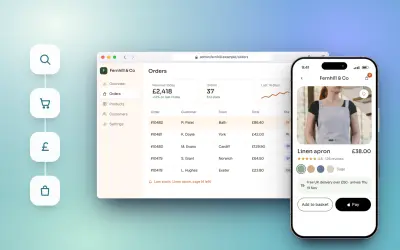 EcommerceShopping apps and online stores.
 Ecommerce website developmentOnline stores, checkout and stock.
 Custom CRM and ERPBusiness systems shaped around how you work.
 MVP developmentA first version for users and investors.
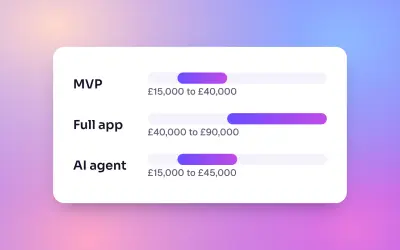 PricingWhat apps and AI agents cost, in pounds.
 LogisticsDriver, depot and tracking apps.