Healthcare app development company UK: patient and clinician apps built to UK health rules
Our healthcare app development covers patient apps, clinician tools and care-team platforms for UK clinics and health-tech teams. The UK rules are planned in from week one: UK GDPR, DTAC, DCB0129, DSPT and MHRA device rules.
A healthcare MVP takes 10 to 14 weeks, discovery included
The data protection impact assessment starts in week 1
Code, accounts and clinical safety documents are in your name
9:41
Good morning, Amelia
Thursday 12 November
AH
SP
Follow-up, Sam PatelPhysiotherapist, 45 min
£65
Mon16Tue17Wed18Thu19Fri20
09:4510:3011:1512:00
Confirm Thu 19 Nov, 10:30Booked for Thu 19 Nov, 10:30
Today’s exercises0 of 31 of 32 of 33 of 3
Bridge3 sets of 12
Side plank3 sets of 30 seconds
Hip hinge video2 minutes with Sam
HomeBookingsExercisesMessages1Profile
Rules this build is planned around
UK GDPR and DPIAAny app that handles health data about identifiable people
DTAC and accessibilityDigital health technologies used in the NHS
DCB0129 and DCB0160Makers of health IT and the organisations that deploy it
MHRA registrationSoftware that counts as a medical device
Security and compliance
Cyber EssentialsCertified
Cyber Essentials PlusIndependently tested
ISO/IEC 27001:2022Information security
ISO 9001:2015Quality management
ISO/IEC 42001:2023AI management
SOC 2 Type IIAudited controls
UK GDPR andData Protection Act 2018
ICORegistered
NHS DSPTData security toolkit
WCAG 2.2 AAAccessibility
PCI DSSCard data security
What a UK healthcare app costs and how long it takes
A healthcare MVP with up to two integrations, a data protection impact assessment and a draft clinical safety file costs £20,000 to £40,000 and takes 10 to 14 weeks. A patient portal with several roles or three or more integrations costs £40,000 to £90,000 and takes 4 to 8 months. Prices are as of November 2026 and exclude VAT. A physiotherapy clinic app with both phones, email sign-in, one-calendar booking and an admin panel comes to £30,000 fixed. Price your own version with the calculator on this page, and see every price line we sell on our app development cost page.
Healthcare MVP
10 to 14 weeks
Patient portal or care platform
4 to 8 months
Our healthcare app development services
More patients now contact their practice online. In the GP Patient Survey 2026, 30.8% of patients last tried to contact their GP practice online, up from 22.4% in 2025.
01
Patient booking and portals
Patients
Patients book or move appointments, get reminders, and read results, letters and secure messages behind role-based access. Every role, and what it may see, is written down in discovery. Reminders matter, as there were around 8 million missed appointments in elective care in 2023 to 2024 (DHSC, June 2025).
02
Remote monitoring
Care teams
Readings arrive from a device or by hand, and the care team sees trends and alerts. If the app interprets a reading, device status is decided before design starts.
03
Clinician tools
Staff
Rotas, handovers, tasks and notes, built for gloves, bad light and ward wifi that drops, with offline behaviour specified for every screen.
04
Video consultations
Telehealth
A telehealth waiting room, a video call, consent capture and notes saved to the right record. The per-minute video cost is a line on the quote.
Building in healthcare means rules you cannot get wrong. Talk them through with the developers who would build to them.
UK rules for healthcare app development, in plain words
Each card gives the rule as of November 2026 and what we deliver. It is a summary, not legal or regulatory advice.
UK GDPR and DPIA
Applies to
Any app that handles health data about identifiable people
What it changes in the build
The data map is agreed in week 1, and the technical DPIA draft reaches you for sign-off by the end of week 2. Health data is special category data, so you need a lawful basis under Article 6 and a separate condition under Article 9. The ICO lists large-scale use of special category data, which includes health data, as processing that needs a data protection impact assessment. Individual health professionals handling their own patients’ data are not counted as large scale.
DTAC and accessibility
Applies to
Digital health technologies used in the NHS
What it changes in the build
Your evidence folder covers the five DTAC areas: usability and accessibility, interoperability, technical security, data protection and clinical safety. Do I need DTAC? Expect to be asked for it if you sell to the NHS: it is the NHS baseline assurance process. Its shorter form fully replaced the old one by 6 April 2026. The NHS service manual asks NHS digital services to meet WCAG 2.2, and we test every build to level AA with a screen reader, large text and colour-blind simulation.
DCB0129 and DCB0160
Applies to
Makers of health IT and the organisations that deploy it
What it changes in the build
These NHS England clinical risk standards cover health IT makers (DCB0129) and the organisations deploying it (DCB0160), though not every product is in scope. Both call for a named clinical safety officer, a hazard log and a clinical safety case, and NHS England publishes a tool for checking scope. Who signs the clinical safety case? Your clinical safety officer does, as NHS England makes the officer responsible for the safety process. We write the technical documents and keep the hazard log current every sprint.
MHRA registration
Applies to
Software that counts as a medical device
What it changes in the build
The intended-purpose statement is written before design starts. If the software is a medical device, it must be registered with the MHRA before it is placed on the Great Britain market. It must also meet the Medical Devices Regulations 2002 (UK MDR 2002), shown by a UKCA marking or a CE marking accepted under the transition rules.
DSPT and Cyber Essentials
Applies to
Organisations with access to NHS patient data and systems
What it changes in the build
We map app controls to the DSPT questions that apply and run the app’s own penetration test before launch, for your DTAC evidence. DSPT stands for Data Security and Protection Toolkit, an online self-assessment against the National Data Guardian’s 10 data security standards. NHS England states that all organisations with access to NHS patient data and systems must use it. Cyber Essentials is the Government-recommended minimum cyber security standard from the NCSC, and a growing number of organisations require suppliers to hold it. The risk is common: 43% of UK businesses reported a cyber security breach or attack in the last 12 months (DSIT Cyber Security Breaches Survey 2025/2026).
Sandbox access is requested in week 2, with dates, owners and any known fees. We build to HL7 FHIR where the other system offers it, as on the patient portal below. NHS login has its own onboarding before a service goes live, and GP Connect is only for organisations that provide direct care. Hospitals use the NHS App too: 87% offered services through it in April 2025, up from 68% in July 2024 (DHSC, April 2025).
“Our patients needed the portal in their pocket: requesting visits, reading test results, reordering medicines and messaging their care team. AppAgentix built the Android app on our Epic MyChart system, careful where it matters: secure sign-in, no clinical detail on the lock screen, and patients choose what fitness data they share. The app has passed 50,000 downloads with 4.4 stars from over 750 reviews, and every release was tested before it reached our patients.”
“We wanted one streaming service that felt the same on phone, tablet and TV, whether people watch free with adverts, subscribe or rent a film. AppAgentix built the apps for iPhone, iPad, Android and Apple TV and the service behind them. They got the hard parts right: playback that starts quickly, a home screen that works with a TV remote, and billing that stays correct. The Android app has passed 50,000 downloads.”
“Amara is built around creators, so posting had to be effortless: posts, short videos, Stories, recipes and workouts, with each creator deciding who sees what. AppAgentix built it for iPhone and Android from one codebase, and what I value most is the video: uploads process in the background, playback starts fast and holds up on mobile data. Moderation and audience controls were built properly, not as an afterthought. They worked like part of our team.”
We have been building apps since 2019. A few examples from the many healthcare apps we have built, and what they do for patients.
Healthcare
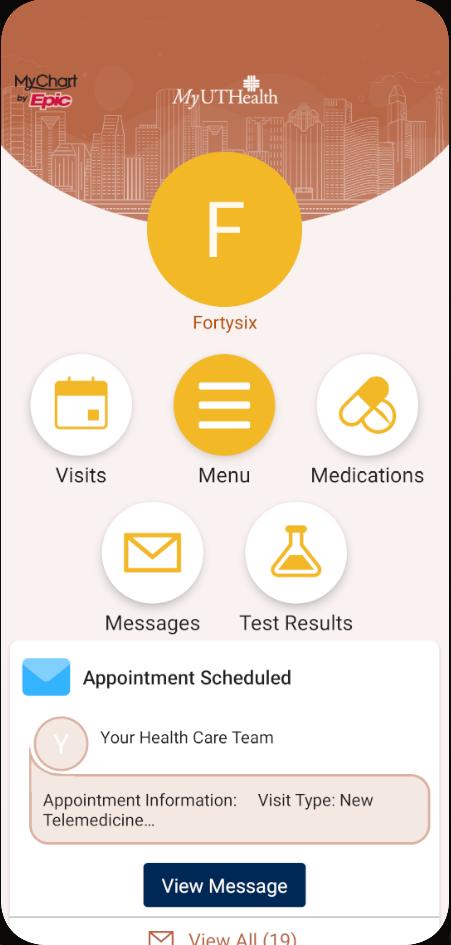
MyUTHealth: patient portal app
What we built
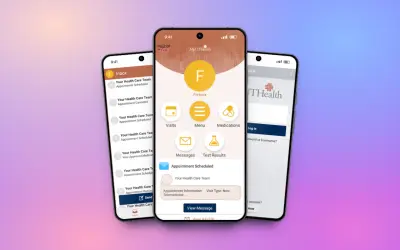
We built MyUTHealth for a health provider. Patients request appointments, view test results, renew prescriptions and message their care team securely from one mobile app. It connects Google Fit, so step counts, blood pressure and glucose data flow into the portal, and we built it for Android with HL7 FHIR APIs.
Downloaded 50,000+ times from Google Play and rated 4.4 stars across 750+ reviews
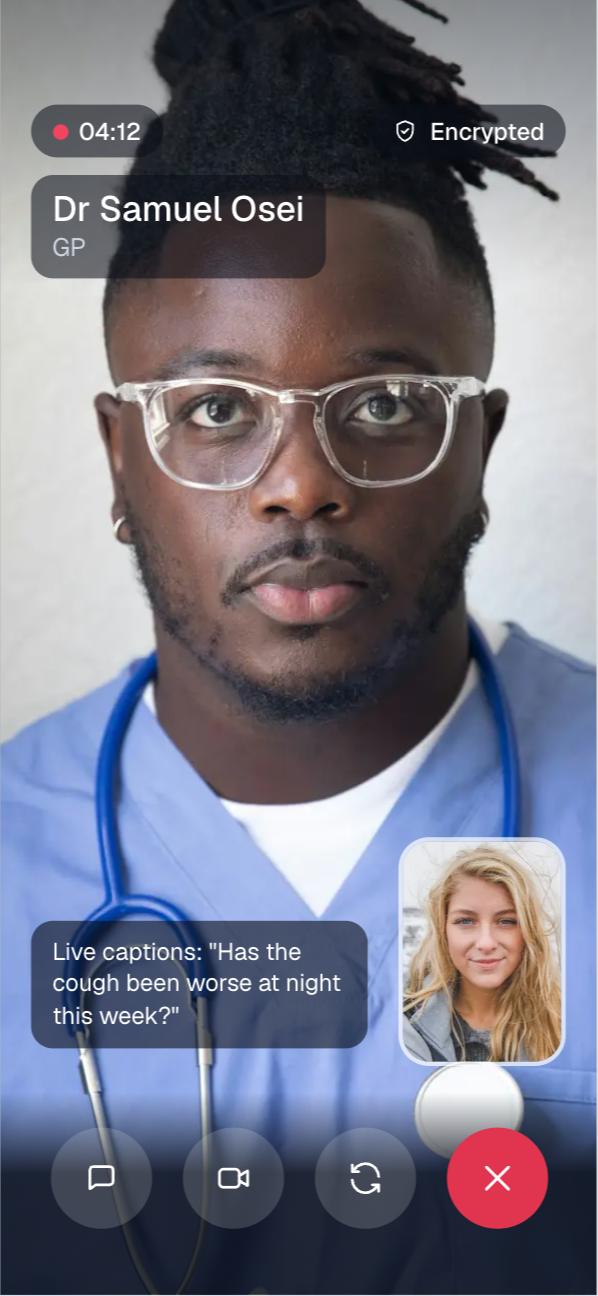
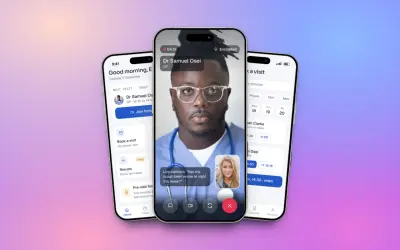
With the telehealth app we made for Android and iOS, patients reach care without a phone queue or a waiting room. They search for a clinician, book a slot online and hold the consultation on video. Prescriptions, lab results, medical records, bills and pre-visit forms then sit in the same app, with access set by role for patients, doctors and administrators.
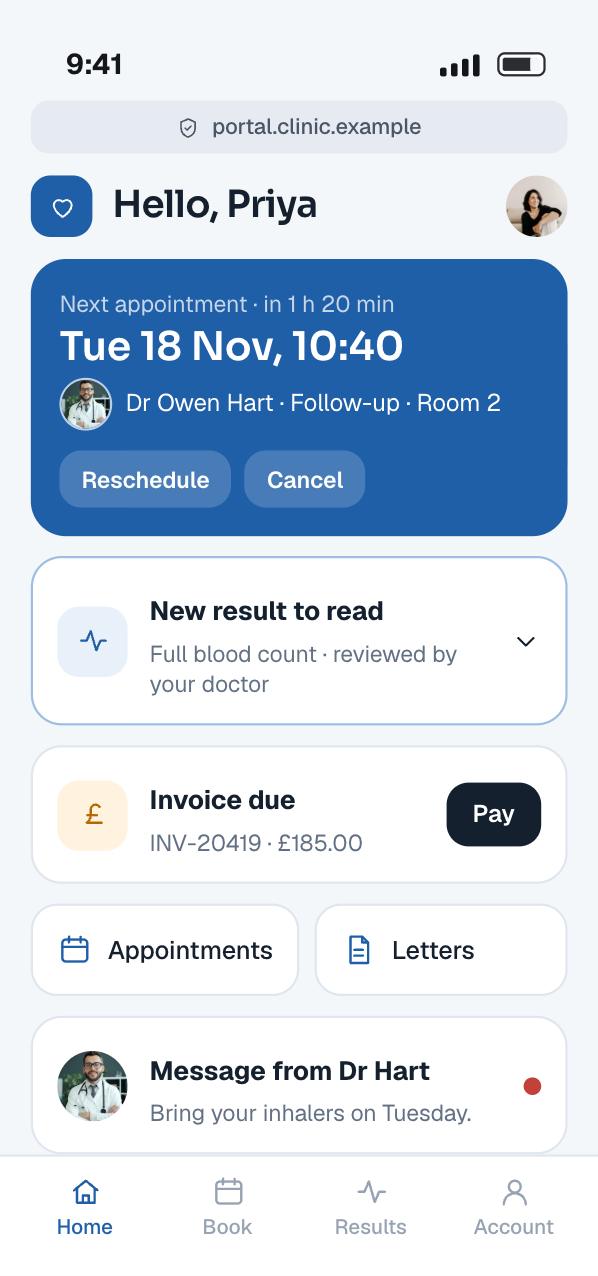
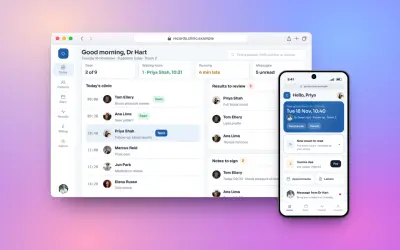
This clinic records system, built by our team, serves doctors, clinic staff and their patients. Doctors open one record holding history, consultation notes and the latest lab result, which arrives over HL7 rather than by hand. Patients use their own portal, and staff keep the appointment diary and handle billing in that system too, behind sign-in, roles, encryption and audit trails.
Confirm Thu 19 Nov, 10:30Booked for Thu 19 Nov, 10:30
Today’s exercises0 of 31 of 32 of 33 of 3
Bridge3 sets of 12
Side plank3 sets of 30 seconds
Hip hinge video2 minutes with Sam
HomeBookingsExercisesMessages1Profile
Work out which of three kinds of product you are building
Is this a medical device? Answer that first, because the rules depend on what the software does, not on its sector.
Topic
Wellbeing or admin
Handles patient data
Medical device software
Typical examples
Booking, reminders, fitness, staff rotas
Patient portals, care records, monitoring dashboards
Software that diagnoses, treats, works out a dose or steers a clinical choice
Rules that apply
UK GDPR and good security practice
UK GDPR special category rules, DCB0129 where the NHS standard applies, DTAC if sold to the NHS
All of the left, plus the Medical Devices Regulations 2002 and MHRA registration
Our position
We build it
We build it and write the documents your clinical safety officer signs
We build the software; you need regulatory advice first
The MHRA does not usually count fitness or wellness tracking as a medical purpose. Software that calculates a medicine dose, or tells a user they may have a condition, is a device, so take regulatory advice first if you are near that line.
A regulated launch cannot slip. More than 95% of our projects are delivered on or before the agreed date.
HIPAA is a United States law and does not apply to a UK clinic treating UK patients. For a UK organisation, UK GDPR applies with the Data Protection Act 2018, plus the NHS standards above when you sell into the NHS.
HIPAA matters only if you also serve US patients or providers, and we do not describe any app as HIPAA compliant.
What we would say no to, and when not to hire us
A certified quality management system supplied by us
We do not hold one, so a device maker needs its own.
A clinical safety officer supplied by us
NHS England says the role needs a senior clinician with current professional registration and clinical safety training, so we work with yours.
A medical device with no regulatory plan
Take regulatory advice first, as we do not rule on device status.
A build that a ready-made product already covers
If a booking or video product does the job, buy that.
Healthcare mobile app development: native, cross-platform or web?
Where is the app used, and what must it reach?
IfThe app needs background monitoring, Bluetooth devices or deep health platform features
ChooseNative iOS and Android
Full phone access, but two codebases to maintain.
IfIt is a typical patient or clinician app for both stores
ChooseFlutter or React Native
One codebase, though some device features need extra native code.
IfUsers sit at a desk, as with a practice portal
ChooseA web app only
Browser only, and push reminders on phones are harder.
A healthcare MVP, week by week
The 14-week plan for a patient app with up to two integrations. More than 95% of our projects are delivered on or before the agreed date.
Week1234567891011121314monthly
01Discovery with clinicians
02Integration access requests
03Design and user testing
04Healthcare app development in two-week sprints
05Testing and safety case
06Launch
01Weeks 1 to 2
Discovery with clinicians
We watch the real workflow, classify the product, map the data and open the hazard log for your clinical safety officer.
You receive: The scope, a prototype, one fixed quote, the draft DPIA and hazard log.
02Weeks 2 to 3
Integration access requests
We request sandbox access to systems such as NHS login or GP Connect, and live approval depends on each service. What if the NHS supplier does not give access? You hear in the same week, and we agree a changed scope before more is built.
You receive: The request list, with dates and owners.
03Weeks 2 to 4
Design and user testing
Screens are tested with five real users, one on an older device.
You receive: The tested design file and accessibility notes.
04Weeks 4 to 11
Healthcare app development in two-week sprints
Each sprint ends with a working build on your phone and an updated hazard log, with roles, permissions and audit logs built first.
You receive: Four working builds and their sprint reports.
05Weeks 11 to 13
Testing and safety case
The independent penetration test, accessibility audit and any AI test run happen here, and we draft the safety case report.
You receive: The penetration test report, any AI test report and the safety case draft.
06Week 14
Launch
Store listings go live under developer accounts you own, and monitoring starts.
You receive: A live app, the DTAC evidence folder and a handover pack.
Healthcare app development, stage by stage
Each stage below lists what you receive. Discovery ends with one fixed figure, and the calculator below prices your own mix.
01
First call
Free
30 minutes
A written view on scope, timeline and price within two working days.
02
Discovery
Comes off the build price
2 weeks
Scope, prototype, fixed quote, draft DPIA and hazard log.
03
Healthcare MVP
Quoted after discovery
10 to 14 weeks, discovery included
One patient or staff journey, up to two integrations, role-based access, audit log, admin panel, technical DPIA, clinical safety file draft, penetration test and store launch.
04
Patient portal or care platform
Quoted after discovery
4 to 8 months
iPhone and Android apps, several roles or three or more integrations, analytics and WCAG 2.2 AA.
05
Medical device software
Quoted after the regulatory route is known
Software that works out a dose or says a user may have a condition, which the MHRA must register.
06
Support and running
After launch
Monthly
Operating system updates, monitoring, security patches and the hazard log kept current.
Estimate your healthcare app in a minute
Pick what the first version needs.
Included to start: Discovery, design, one patient journey, audit log, DPIA and safety file drafts, penetration test and launch. 8 to 10 weeks.
What sits outside the fixed figure, and what is yours
Everything we build is yours from the first commit: the source code, designs, accounts and hosting, plus the DPIA, hazard log and safety case. Patient data stays in the hosting region you choose in week 1, and we propose a UK region, while testing uses synthetic records only.
Fixes are included in the build price for 3 months (90 days) after launch, and support can be ended on 30 days’ notice after a 3-month minimum. If you change supplier, nothing has to be handed back, because nothing sits in our accounts.
The AI test report you receive
Every AI feature is scored on your own cases before launch. This example, for a note-summary feature added to a physiotherapy clinic app as its own priced line, is not a client result.
ExampleAI test report: consultation note summary, first runAppAgentix
Line
Result
Status
What happens next
Pass rate
88 of 100 anonymised notes matched the physiotherapist’s own summary
Recorded
All 12 are marked below
Misses: harmless
7 gave the same meaning in other words
Accepted
No change
Misses: awkward
4 ran past the length limit
Pass after fix
Limit enforced; all 4 re-ran clean
Misses: safety issue
1 left out a weight-bearing restriction
Open
In the hazard log; feature stays off until a re-run passes
Clinician sign-off
Lead physiotherapist
Waiting
Signs once nothing is open
Test sets hold 50 to 200 cases, and a clinician confirms anything that touches care.
Need a price before you go to the board? A two-week discovery ends in one fixed figure, and you own the code from the first commit.
The ten questions discovery starts with: users, the jobs they need done, systems to connect, rules, deadline and budget. Fill it in, attach nothing else, and the first call starts at the right place.
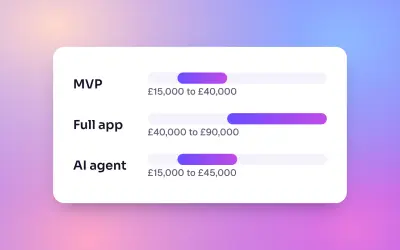
A wellness app MVP costs £15,000 to £40,000 with us, excluding VAT, as of November 2026. Wellness tracking is not usually a medical purpose (MHRA), but if the app stores health data about named people, budget for our healthcare MVP instead.
How to make a medical app?
To make a medical app, first decide whether it counts as a medical device, as the rules follow what the software does. Software that works out a dose or says a user may have a condition must be registered with the MHRA. Any app handling health data about identifiable people falls under UK GDPR, and our technical DPIA draft reaches you by week 2.
Who are the top app developers in the UK?
We do not rank other firms, so we suggest judging a health app developer by its safety papers. Ask each one who drafts the DPIA and hazard log, and whether a penetration test is inside the fixed price. With us, both drafts come out of discovery, and one independent test before launch is inside the healthcare MVP price.
What is the cheapest way to develop an app?
In our view, the cheapest sound way is to start on one phone with one patient journey, while keeping the safety work in the price. On our estimator the base covers discovery, design, the DPIA and safety file drafts, a penetration test and launch. The second phone can follow later.
What is the best software for telemedicine?
No single product is best: it depends on whether you need video alone or video inside your own patient journey. A ready-made service suits consultations only, while a custom build suits booking, consent, notes and records in one app you own.
Is it legal to use AI to build an app?
In our view, yes, because the UK health rules on this page depend on what the software does, not on its sector. The MHRA gives apps that work out a medicine dose, or tell a user they have a condition, as examples of medical devices. A medical device must be registered with the MHRA before it is placed on the Great Britain market. This is our reading, not legal advice. We use AI tools to speed up our engineers.
Can I create an app with no money?
Not a live health app: even our smallest step, a two-week discovery, is paid, and its fee comes off the build price. Outside costs also sit beyond any fixed figure, such as your clinical safety officer’s time, hosting, SMS and video minutes.
What is the Data Protection Act 2018 in healthcare?
In UK healthcare, the Data Protection Act 2018 applies together with UK GDPR, so a UK clinic follows these rules rather than the US law HIPAA. Under them, health data is special category data, which needs a lawful basis under Article 6 and a separate condition under Article 9. The ICO also lists large-scale use of health data as processing that needs a data protection impact assessment.
What are the top digital healthcare companies in the UK?
No official ranking exists. The phrase covers firms that sell their own health products and firms that build apps for others. We are in the second group: we build your app, and you own it.
Most app projects run late. Let’s make yours the one that ships.
More than 95% of our projects are delivered on or before the agreed date. About 60% of our clients come back for a second project.
What happens next
1We reply within 30 minutesEvery day of the year. A developer at our app development company, not a sales team, reads your brief.
2A 30-minute callWe ask about users, deadlines and the systems you already run.
3A written view in two working daysScope, timeline and a price range, yours to keep.
Thank you. Your brief is in.
A developer, not a sales team, reads it. We reply within 30 minutes, from info@appagentix.co.uk.
We use cookies to run this site and, with your permission, to understand how it is used. Cookie policy · Privacy policy
Most app projects run late. Let’s make yours the one that ships.
More than 95% of our projects are delivered on or before the agreed date. About 60% of our clients come back for a second project.
What happens next
1We reply within 30 minutesEvery day of the year. A developer at our app development company, not a sales team, reads your brief.
2A 30-minute callWe ask about users, deadlines and the systems you already run.
3A written view in two working daysScope, timeline and a price range, yours to keep.
Our patients needed the portal in their pocket: requesting visits, reading test results, reordering medicines and messaging their care team. AppAgentix built the Android app on our Epic MyChart system, careful where it matters: secure sign-in, no clinical detail on the lock screen, and patients choose what fitness data they share. The app has passed 50,000 downloads with 4.4 stars from over 750 reviews, and every release was tested before it reached our patients.
 WCAG 2.2 AAAccessibility
 SwiftGeneral-purpose language for all Apple platforms and servers
 SwiftUIDeclarative screens for every Apple platform
 KotlinGoogle’s preferred language for Android
 Jetpack ComposeAndroid’s current toolkit for screens
 FlutterMobile, web and desktop apps from one codebase
 React NativeNative Android and iOS apps built with React
 FigmaScreens and clickable prototypes you can test
 TypeScriptTyped JavaScript that catches errors early
 Node.jsJavaScript runtime for scalable network applications
 PythonLanguage for web development and scientific work
 PostgreSQLOpen-source database; pgvector adds vector search
 RedisIn-memory store for caching and live messages
 FirebaseFirestore and Realtime Database: store and sync app data
 AWSCloud hosting with a London region
 CloudflareContent delivery, caching and attack protection
 GitHub ActionsCI/CD platform to automate build, test and deployment
 SentryCaptures errors and alerts you with full context
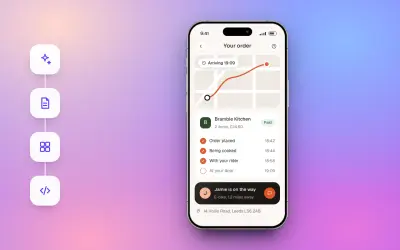 MVP developmentA first version for users and investors.
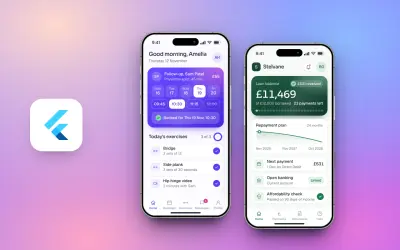 Flutter app developmentOne Flutter codebase for iOS and Android.
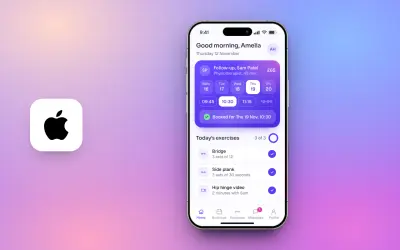 iOS app developmentNative Swift apps for iPhone and iPad.
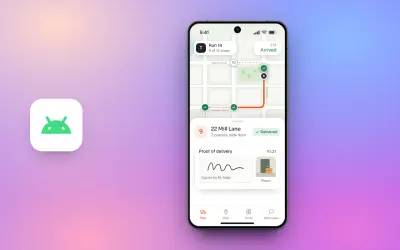 Android app developmentNative Kotlin apps for Google Play.
 LondonMobile apps for London businesses.
 PricingWhat apps and AI agents cost, in pounds.
 Clinic records systemPatient records, scheduling, billing and a patient portal.
 MyUTHealthAppointments, test results, refills and secure messages.
 Telehealth appOnline booking, video visits, prescriptions and results.