As an iOS app development company, we design, build and launch apps for iPhone and iPad, written in Swift with SwiftUI screens, and look after them once they are live. The price range, a cost calculator, the week-by-week plan and a filled test report are all on this page.
Apple Developer account, code and designs in your name from day one
Nothing goes to Apple until every App Review check has passed and you have read the report
Three months of fixes after launch, in the build price
9:41
Good morning, Amelia
Thursday 12 November
AH
SP
Follow-up, Sam PatelPhysiotherapist, 45 min
£65
Mon16Tue17Wed18Thu19Fri20
09:4510:3011:1512:00
Confirm Thu 19 Nov, 10:30Booked for Thu 19 Nov, 10:30
Today’s exercises0 of 31 of 32 of 33 of 3
Bridge3 sets of 12
Side plank3 sets of 30 seconds
Hip hinge video2 minutes with Sam
HomeBookingsExercisesMessages1Profile
Security and compliance
Cyber EssentialsCertified
Cyber Essentials PlusIndependently tested
ISO/IEC 27001:2022Information security
ISO 9001:2015Quality management
ISO/IEC 42001:2023AI management
SOC 2 Type IIAudited controls
UK GDPR andData Protection Act 2018
ICORegistered
NHS DSPTData security toolkit
WCAG 2.2 AAAccessibility
PCI DSSCard data security
How much does it cost to develop an iOS app?
An iPhone MVP with us costs £15,000 to £40,000 and takes 8 to 14 weeks from the first day of discovery to the App Store. A full app with payments, integrations and an iPad layout takes 4 to 8 months, priced in the same range as our full app for iPhone and Android. Prices exclude VAT. Apple charges 99 US dollars for each membership year, and the developer account is held by you.
iPhone MVP
8 to 14 weeks
Full app with iPad layout
4 to 8 months
Discovery
2 weeks, fixed fee
After launch
Three months of fixes included, then monthly support
iOS app development services for iPhone and iPad
Every card names a deliverable you can check on your own phone, not a capability.
01
Native iOS app development in Swift and SwiftUI
The app is written in Apple’s own language and interface toolkit, so it uses Face ID, notifications, the camera and offline storage without a translation layer.
A build on your iPhone through TestFlight at the end of every two-week sprint.
02
Sign in with Apple, Apple Pay and subscriptions
Payments for digital goods inside the app have to go through Apple’s in-app purchase system, with the exceptions Apple lists in guideline 3.1.3. Physical goods and services must use other methods, such as Apple Pay or card entry. The streaming app below sells subscriptions and single-film rentals, with purchase restoration.
The quote states which of your payments fall under each rule.
03
Widgets, Live Activities and watch apps
A widget or a Live Activity suits delivery, booking and tracking apps, and they are optional extras after the core app works.
Each extra is priced on its own and added only after the first release.
04
AI features inside the app
A chat assistant, document reading or a recommendation can sit inside the app, and each one is tested on your own cases before it ships.
A written test report, misses included, before App Store submission.
Still weighing up how to build your app? Ask the developers who would build it, before you commit to anything.
We have been building apps since 2019. A few examples from the many iPhone apps we have built, what each one achieved, and a link to its full case study.
Media and streaming
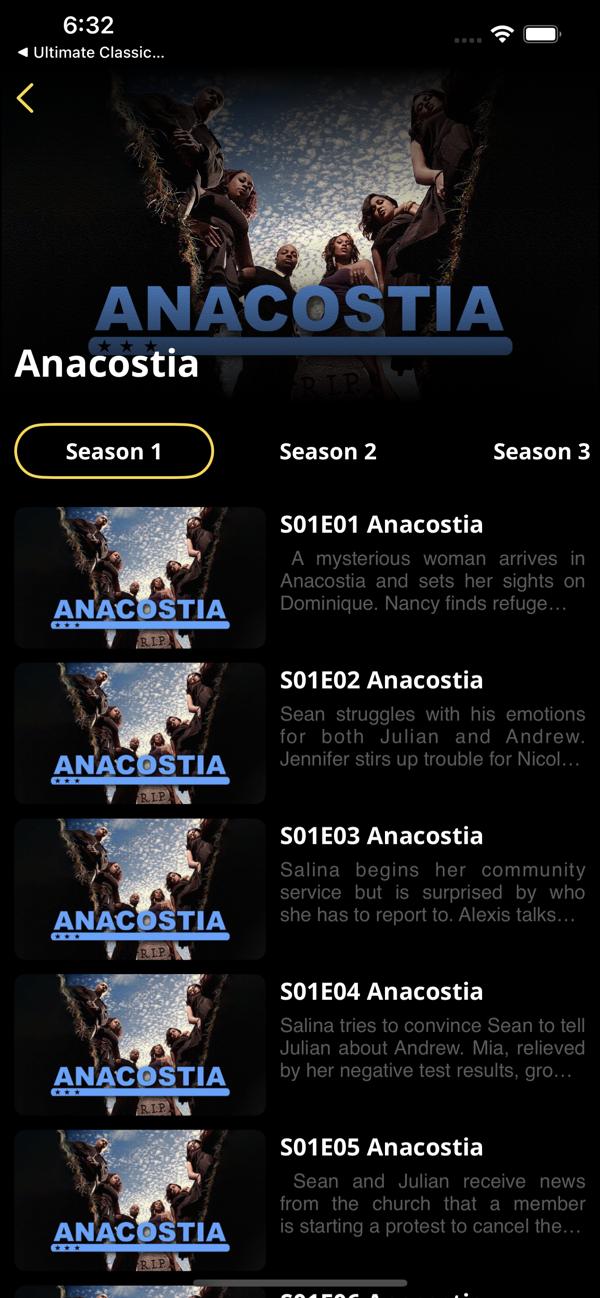
Black Movies & TV: streaming on phones and TV
What we built
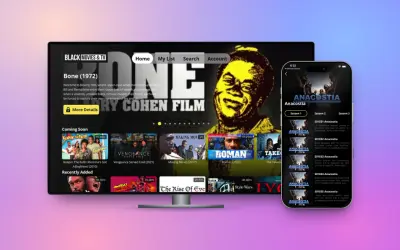
We built Black Movies & TV for films and documentaries from Black creators, where viewers watch free with ads, subscribe or rent a single film, with purchase restoration. It runs on iPhone, iPad, Android and Apple TV, built with Flutter, Java, PostgreSQL and a CDN.
50,000+downloads on Google Play, with 3 ways to watch on 4 platforms
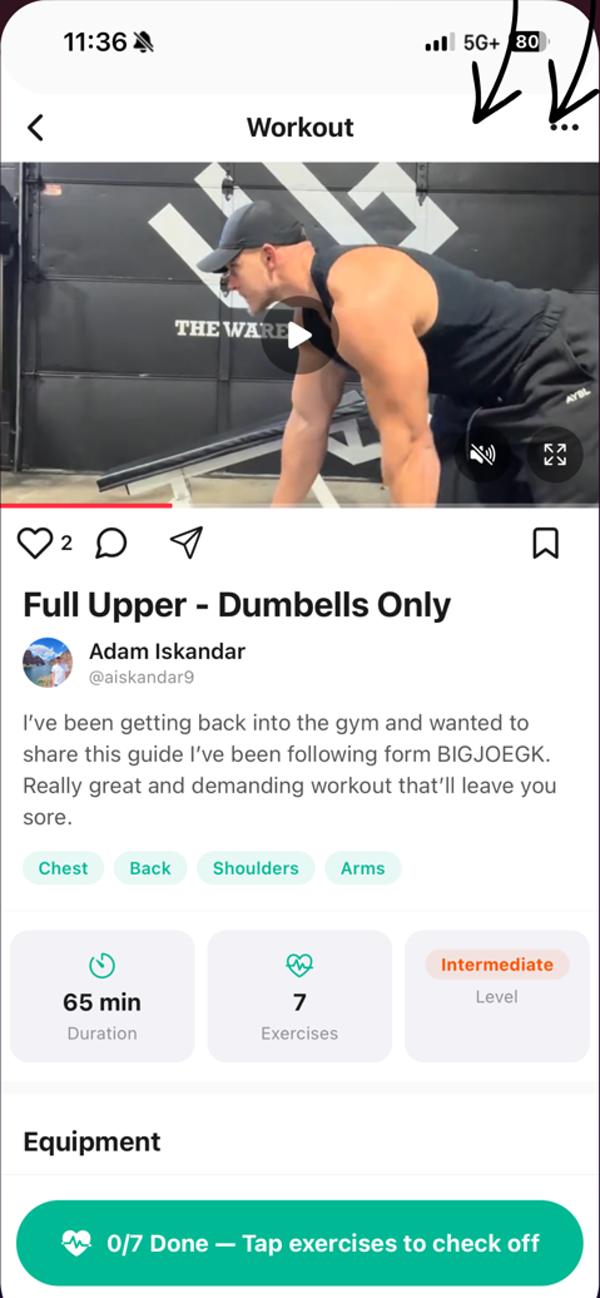
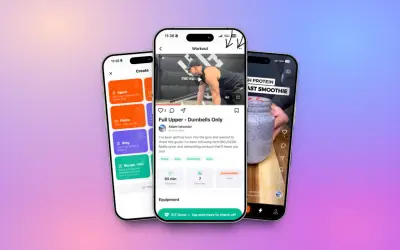
We built Amara Social, a creator-first social app, where people share posts, short videos, Stories, recipes, workouts and blogs, and choose who sees each one. It runs on React Native with TypeScript, Node.js, PostgreSQL and AWS.
30%growth in monthly active users within 6 months of launch
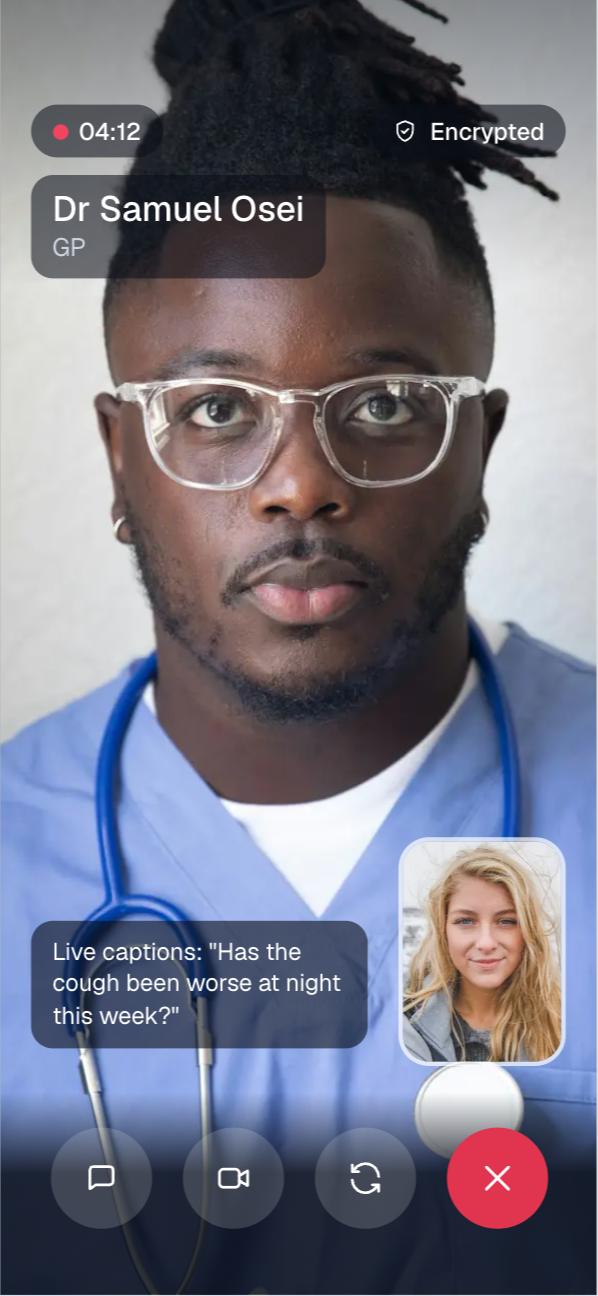
We built this telehealth app for iPhone and Android. Patients find a clinician, book a slot, see the doctor on video and keep prescriptions, results, records and bills in one place. It runs on Flutter, Node.js and PostgreSQL on AWS, with the Amazon Chime SDK for video.
“We wanted one streaming service that felt the same on phone, tablet and TV, whether people watch free with adverts, subscribe or rent a film. AppAgentix built the apps for iPhone, iPad, Android and Apple TV and the service behind them. They got the hard parts right: playback that starts quickly, a home screen that works with a TV remote, and billing that stays correct. The Android app has passed 50,000 downloads.”
“Amara is built around creators, so posting had to be effortless: posts, short videos, Stories, recipes and workouts, with each creator deciding who sees what. AppAgentix built it for iPhone and Android from one codebase, and what I value most is the video: uploads process in the background, playback starts fast and holds up on mobile data. Moderation and audience controls were built properly, not as an afterthought. They worked like part of our team.”
“Our patients needed the portal in their pocket: requesting visits, reading test results, reordering medicines and messaging their care team. AppAgentix built the Android app on our Epic MyChart system, careful where it matters: secure sign-in, no clinical detail on the lock screen, and patients choose what fitness data they share. The app has passed 50,000 downloads with 4.4 stars from over 750 reviews, and every release was tested before it reached our patients.”
Apple sets the fee, the checks and the rules, so here is each one in plain words, with Apple’s own figures as of November 2026.
01 / 04
How much does Apple Developer cost?
Apple charges 99 US dollars for each membership year of the Apple Developer Program, listed in local currency during enrolment where available. Registering as a developer is free, but publishing on the App Store needs the paid membership.
You pay Apple direct, so the fee is never on our invoice.
02 / 04
The account is held by you
You enrol your own company, and Apple displays its name as the seller on the App Store. The person who enrols becomes the Account Holder and must have authority to sign for the company.
We join as team members, and you can remove us at any time.
03 / 04
What Apple checks at enrolment
A company needs a D-U-N-S Number, a free nine-digit identifier Apple uses to verify the legal entity. Apple also asks for a work email on your own domain and a public, working website.
We send you an enrolment checklist in the first week of discovery.
04 / 04
Does Apple take 30% or 15%?
Apple’s standard commission on paid apps and in-app purchases is 30%. The App Store Small Business Program cuts it to 15% for developers with up to 1 million US dollars in proceeds in the prior calendar year. Apple also lists 15% for qualifying subscriptions. Apple’s App Store ecosystem facilitated over 1.4 trillion US dollars in billings and sales in 2025 (Apple Newsroom, June 2026). On more than 90% of that, developers paid Apple no commission.
The quote states which of your payments carry the commission.
Most app projects run late. More than 95% of ours are delivered on or before the agreed date, and yours can be next.
From D-U-N-S Number to release: the waits Apple states
Apple gives a figure for three of these waits and none for its company check, so enrolment starts in week 1.
01D-U-N-S Number
Allow up to 5 business days to receive it from Dun & Bradstreet. It is free.
02Apple gets your details
Allow up to 2 business days more. After that, your company can enrol.
03Enrolment
Your Account Holder enrols, Apple checks the company, then you pay Apple’s yearly fee. Apple states no fixed wait for the check.
04TestFlight beta
Our rule, not Apple’s: your staff run the beta for at least one week.
05App Review
Apple’s typical figures are under 24 hours for at least half of submissions and under 48 hours for nine in ten.
06Release
The app goes live with your company named as the seller.
What is the best app development platform?
We pick one route in the first week of discovery and write the reason in the scope document. Sometimes the right answer is no iPhone app yet. In the UK, iOS runs on 50.14% of mobile phones and Android on 49.85% (StatCounter, October 2026).
Which route fits your app?
IfiPhone is your main or only audience, or the app leans on Apple hardware
ChooseNative Swift
Swift and SwiftUI are Apple’s own tools, so a new iOS feature is usable as soon as Apple’s tools have it.
IfYou need iPhone and Android at launch from one team and one budget
ChooseFlutter
One build covers both phones, as in the streaming app above, and we check plugin support for each Apple feature first.
IfYour own engineers already write JavaScript or React for the web
ChooseReact Native
They can extend the code after handover, while heavy animation or video work suits it less.
IfStaff will use the app at a desk or a counter
ChooseNative Swift with an iPad layout
A tablet screen earns its place there. For most consumer apps a stretched phone layout is enough, so iPad is a separate line you can remove.
IfMost of your customers or staff carry Android phones
ChooseBoth phones, not iPhone only
Staff may carry Android handsets issued by the employer.
IfA web page does the same job
ChooseA web app, not the App Store
It works on every phone with no Apple membership and no App Review, while an app earns its place with notifications, the camera, offline use or Face ID.
IfNobody has yet shown they want the product
ChooseA clickable prototype first
Our two-week discovery produces one, and the fee comes off the build price if you continue.
iOS app development services and what each includes
After discovery you get one fixed figure for your agreed scope. Screens, sign-in, integrations, payments and AI features move the figure most, and each integration is priced on its own. Our worked example, a 12-week order-ahead app for a bakery, came to £24,000, excluding VAT. Price your own version with the calculator on this page.
01
First call
Free, 30 minutes. A written view on scope, timeline and price within two working days.
02
Discovery
Two weeks: scope, clickable prototype and a fixed quote. Comes off the build price if you continue.
03
iPhone MVP
Native iPhone app, core features, admin panel, backend, TestFlight builds and App Store launch, in 8 to 14 weeks.
04
Full app with iPad layout
Payments, integrations, analytics, iPad layout and WCAG 2.2 AA accessibility checks, in 4 to 8 months.
05
AI feature inside the app
One workflow, tested on your cases, with the monthly running cost on the quote, in 6 to 10 weeks.
06
Fixes after launch
For the first three months, faults in what we built are fixed at no extra charge, a term written into every build quote.
07
Support after launch
Fixes, iOS updates, monitoring and a monthly report. Three month minimum, then 30 days’ notice.
Estimate your iPhone app in a minute
Pick what the first version needs and the range updates as you go. The starting picks match the bakery app priced above.
Included to start: Discovery, design, the Swift app, backend, admin panel, push notifications, TestFlight builds and App Store launch. 8 to 10 weeks.
What is not in the price
Most cost disputes with an app development company come from lines nobody wrote down, so these are the lines we write down.
The Apple Developer Program fee
Billed to you by Apple each membership year.
Server and hosting costs
Your backend provider bills by usage. We put a monthly estimate on the quote, but the bill is theirs.
Third-party services
Maps, SMS, email, payment fees and analytics tools are billed by their providers.
Apple’s commission on digital sales
It comes out of your sales, not our invoice. The two rates are in the Apple section above.
Content and photography
Product copy, images and legal text such as your privacy policy are supplied by you, unless added as a line item.
Features added after sign-off
Anything outside the agreed scope is quoted before work starts, never billed afterwards.
Who owns the code, the account and the data
These terms are in the contract, not left to the goodwill of your app development company.
01
Apple Developer account
Enrolled under your company name, as set out in the Apple section above.
We never publish your app from our own account.
02
Source code and designs
Both sit in a repository you own from the first commit, with an invite for you on day one.
You can read, copy or move the code whenever you like.
03
Prompts, models and test sets
For AI features, the prompts and the test cases we write for you are yours too.
Handed over in the repository, not a separate document.
04
Leaving us
If you move to another team, we hand over a written build and release guide.
Handover guide within 10 working days of your request.
The iOS app development process, week by week
A first version (MVP) typically takes us 9 to 10 weeks. This plan is the 12-week bakery app priced above, inside our range of 8 to 14. More than 95% of our projects are delivered on or before the agreed date.
Week123456789101112monthly
01Discovery
02Accounts and setup
03Design
04Build in sprints
05Test run
06Submission and review
01Weeks 1 to 2
Discovery
We map your users, list features by priority, and test the riskiest idea with a clickable prototype.
You receive: A written scope, the prototype, a review-risk list and one fixed quote
02Weeks 1 to 3
Accounts and setup
You start your Apple Developer Program enrolment in week 1, because Apple’s checks set the pace. Once approved, we set up App Store Connect, certificates and the code repository in your name.
You receive: Your developer account, repository and TestFlight group
03Weeks 2 to 4
Design
Screens follow the Human Interface Guidelines that Apple publishes, and each is tested with five of your real users before any code is written.
You receive: Final screens, an icon set and five user test notes
04Weeks 4 to 10
Build in sprints
Three two-week sprints, each ending with a working build on your phone and a short written note on what changed.
You receive: Three installable builds
05Weeks 10 to 11
Test run
Real iPhones in the hands of testers, the oldest supported iOS version, and every AI feature run on your own cases.
You receive: The test report shown below, misses listed
06Weeks 11 to 12
Submission and review
We submit to Apple with screenshots, privacy answers and review notes, and reply to App Review if it asks for anything.
You receive: Your app live on the App Store
From Xcode to the App Store
The route every iPhone build takes before your users see it.
01Swift build
02Test run
03TestFlight
04App Review
05App Store
9:41
Good morning, Amelia
Thursday 12 November
AH
SP
Follow-up, Sam PatelPhysiotherapist, 45 min
£65
Mon16Tue17Wed18Thu19Fri20
09:4510:3011:1512:00
Confirm Thu 19 Nov, 10:30Booked for Thu 19 Nov, 10:30
Today’s exercises0 of 31 of 32 of 33 of 3
Bridge3 sets of 12
Side plank3 sets of 30 seconds
Hip hinge video2 minutes with Sam
HomeBookingsExercisesMessages1Profile
How our iOS developers test an app before Apple sees it
Logic is covered by unit tests and key journeys by interface tests that run before each build is shared.
A failing test blocks the build.
02
AI answers checked against your cases
We run the AI feature on a set of your real questions or documents and mark each answer right or wrong.
You read every wrong answer, in writing, before launch.
03
Crash reporting from day one
After launch, crashes arrive in a dashboard you can open, grouped by iOS version and device.
Crash-free sessions reported each month.
The test report you read before anything goes to Apple
Every build is checked against the App Review Guidelines before we submit it. This filled example is for the imaginary bakery app priced above.
ExamplePre-submission test report, build 1.0.0AppAgentix
Check
Apple rule
iPhone
Result
Notes
Whole order journey, from sign-in to collection
Guideline 2.1(a)
iPhone SE (3rd gen), oldest supported iOS
Pass
No crash
No placeholder text, and every link works
Guideline 2.1(a)
iPhone 15
Pass after fix
The allergens screen showed sample text; final copy added
Demo account for Apple’s reviewer
Guideline 2.1(a)
iPhone 15
Pass
Sign-in details are in the review notes
Delete account inside the app
Guideline 5.1.1(v)
iPhone 15
Pass after fix
Delete button led to a web page, not an in-app deletion; fixed and re-tested
Bread paid with Apple Pay or card entry
Guideline 3.1.3(e)
iPhone SE (3rd gen)
Pass
Physical goods, so no in-app purchase
Location refused: nearest shop still found
Guideline 5.1.1(iv)
iPhone SE (3rd gen)
Pass
A postcode box works without location access
VoiceOver reads every button; controls are easy to tap
Human Interface Guidelines
iPhone 15
Pass
Smallest control is 44 by 44 points, Apple’s default size
Text enlarged to 200% with Dynamic Type
Human Interface Guidelines
iPhone SE (3rd gen)
Open
The basket total is cut off at the largest size; fix booked for build 1.0.1
One week of TestFlight beta with your staff
TestFlight
Staff iPhones
Pass
Every issue raised is closed or listed here
Submission waits until every App Review check passes, and anything else still open is listed with the build that fixes it, and you decide whether to submit. Physical iPhones are always used, the oldest supported iOS version included.
UK rules and App Store rules your app has to meet
Personal data collected by your app falls under UK GDPR and the Data Protection Act 2018. The ICO says you must have a valid lawful basis for handling personal information, and must state it in your privacy information. Apple also requires a link to your privacy policy in App Store Connect and inside the app.
Apple’s App Review Guidelines add rules of their own, such as account deletion inside the app (guideline 5.1.1) and in-app purchase for paid digital features (3.1.1). The report above shows these checks on one app.
Accessibility matters in the UK because the Equality Act 2010 covers services provided to the public, paid for or not. We design for Dynamic Type, VoiceOver and sufficient colour contrast, and test against WCAG 2.2 AA on full apps.
What it costs to keep an iPhone app running
Each new version of iOS needs a check on your app, and often a fix.
Each new version of iOS needs a check on your app, and often a fix. After the three months of included fixes, support starts at £750 a month, excluding VAT, and covers fixes, each iOS update, monitoring and a monthly report.
Apple’s yearly fee, hosting and any AI running cost come on top, as listed above.
The code and accounts are yours, so you can run the app with your own engineers. Paid support has a three month minimum, then ends on 30 days’ notice.
Not sure what your app would cost? Send us the idea and get scope, timeline and a price range in writing within two working days.
The ten questions discovery starts with: users, the jobs they need done, systems to connect, rules, deadline and budget. Fill it in, attach nothing else, and the first call starts at the right place.
An iPhone MVP costs £15,000 to £40,000 with us and takes 8 to 14 weeks. A full app with an iPad layout takes 4 to 8 months. A two-week discovery fixes the figure. Prices exclude VAT.
Is iOS development still worth it in 2026?
Yes, if your customers or staff carry iPhones. It is the wrong first step if most of your users are on Android, or if a web page would do the same job. Check your analytics or ask your staff before you commit.
Is iOS or Android Dev easier?
In our view, neither is simply easier for a business app: the easier route is the one that matches the phones your customers carry. In the UK, iOS runs on 50.14% of mobile phones and Android on 49.85% (StatCounter, October 2026). For an iPhone-first audience we build in native Swift, Apple’s own tools, and Flutter covers both phones from one build.
How much does it cost to hire an app developer in the UK?
To hire us for an iPhone app, you pay a fixed price: £15,000 to £40,000 for an iPhone MVP, excluding VAT. Our worked bakery example includes three Swift build sprints and three months of fixes. We suggest judging any shortlist on four checks: a price in pounds, who holds the Apple Developer account, a written test report before launch, and contract terms on ownership and fixes.
Is the Apple Developer Program worth it?
Yes, if you want your app on the App Store, because Apple requires membership to distribute apps there. For 99 US dollars a year you get App Store Connect, beta testing through TestFlight, and Apple’s certificates and profiles, while a web app needs none of it.
How much does an Apple developer account cost in the UK?
Apple charges 99 US dollars for each membership year of the Apple Developer Program, as of November 2026. Apple says prices are listed in local currency during enrolment, where available. You pay it yourself, which keeps the account in your company’s name.
Is it free to get an Apple Developer account?
Registering as an Apple developer is free, and it gives you beta software and testing on your own device. Publishing on the App Store is not free: it needs the Apple Developer Program, at 99 US dollars for each membership year.
Does Apple take 30% or 15%?
Both rates exist: Apple’s standard commission on paid apps and in-app purchases is 30%. Developers in the App Store Small Business Program pay 15%, open to those with up to 1 million US dollars in proceeds in the prior calendar year. Apple also lists 15% for qualifying subscriptions.
Is there a way to get an Apple Developer Account cheaper?
Only through Apple’s fee waiver, and only for some organisations. Apple waives the fee for nonprofit organisations, accredited educational institutions and government bodies that meet its requirements. A commercial business pays the standard 99 US dollars for each membership year. If you qualify, we point you to the waiver request.
How long does it take to get an Apple developer account?
Apple names two waits for a company. Allow up to 5 business days to receive a D-U-N-S Number if you have none, then up to 2 business days for it to reach Apple. Apple then verifies your details, and a nickname entered as your legal name delays approval.
Most app projects run late. Let’s make yours the one that ships.
More than 95% of our projects are delivered on or before the agreed date. About 60% of our clients come back for a second project.
What happens next
1We reply within 30 minutesEvery day of the year. A developer at our app development company, not a sales team, reads your brief.
2A 30-minute callWe ask about users, deadlines and the systems you already run.
3A written view in two working daysScope, timeline and a price range, yours to keep.
Thank you. Your brief is in.
A developer, not a sales team, reads it. We reply within 30 minutes, from info@appagentix.co.uk.
We use cookies to run this site and, with your permission, to understand how it is used. Cookie policy · Privacy policy
Most app projects run late. Let’s make yours the one that ships.
More than 95% of our projects are delivered on or before the agreed date. About 60% of our clients come back for a second project.
What happens next
1We reply within 30 minutesEvery day of the year. A developer at our app development company, not a sales team, reads your brief.
2A 30-minute callWe ask about users, deadlines and the systems you already run.
3A written view in two working daysScope, timeline and a price range, yours to keep.
We wanted one streaming service that felt the same on phone, tablet and TV, whether people watch free with adverts, subscribe or rent a film. AppAgentix built the apps for iPhone, iPad, Android and Apple TV and the service behind them. They got the hard parts right: playback that starts quickly, a home screen that works with a TV remote, and billing that stays correct. The Android app has passed 50,000 downloads.
Michael S.CEO and Co-Founder, Play Now Media
Thank you. Your brief is in.
A developer, not a sales team, reads it. We reply within 30 minutes, from info@appagentix.co.uk.
 WCAG 2.2 AAAccessibility
 SwiftGeneral-purpose language for all Apple platforms and servers
 SwiftUIDeclarative screens for every Apple platform
 XcodeApple’s tool to develop, test and distribute apps
 App StoreRelease, review and in-app purchase
 FigmaScreens and clickable prototypes you can test
 TypeScriptTyped JavaScript that catches errors early
 Node.jsJavaScript runtime for scalable network applications
 PythonLanguage for web development and scientific work
 PostgreSQLOpen-source database; pgvector adds vector search
 RedisIn-memory store for caching and live messages
 SupabasePostgres database with sign-in and file storage
 FirebaseFirestore and Realtime Database: store and sync app data
 AWSCloud hosting with a London region
 CloudflareContent delivery, caching and attack protection
 GitHub ActionsCI/CD platform to automate build, test and deployment
 FastlaneAutomates code signing and store releases
 SentryCaptures errors and alerts you with full context
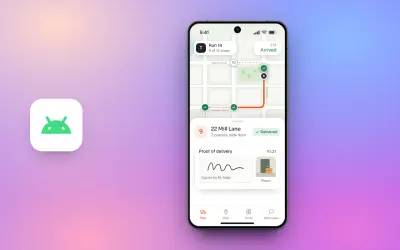 Android app developmentNative Kotlin apps for Google Play.
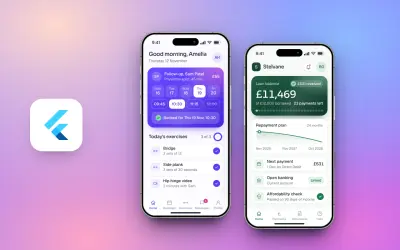 Flutter app developmentOne Flutter codebase for iOS and Android.
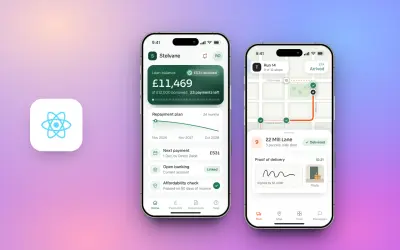 React Native app developmentCross-platform apps written in React Native.
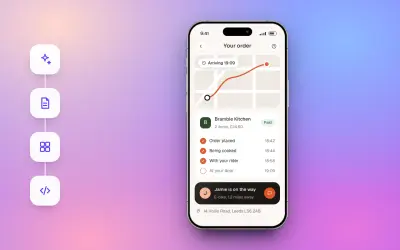 MVP developmentA first version for users and investors.
 Maintenance and supportUpdates, monitoring and OS releases.
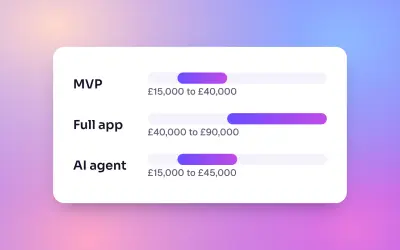 PricingWhat apps and AI agents cost, in pounds.
 LondonMobile apps for London businesses.
 ManchesterMobile apps for Manchester businesses.
 Hire mobile app developersiOS, Android and Flutter engineers for your team.
 Amara SocialA creator app for posts, short videos, Stories and blogs.
 Black Movies & TVA streaming app for films from Black creators, on phones and TVs.