Insurance software development company UK: policy, claims and broker platforms
We are a UK insurance software development company for insurers, MGAs, brokers and insurtechs: we build policy administration, claims, underwriting, bordereaux and reporting systems. We tie each UK rule to the data the system keeps and the checks it runs, and discovery ends with a fixed price in pounds.
ICOBS claims handlingInsurers and those acting for them
Solvency UK reportingFirms within the scope of Solvency UK
Security and compliance
Cyber EssentialsCertified
Cyber Essentials PlusIndependently tested
ISO/IEC 27001:2022Information security
ISO 9001:2015Quality management
ISO/IEC 42001:2023AI management
SOC 2 Type IIAudited controls
UK GDPR andData Protection Act 2018
ICORegistered
NHS DSPTData security toolkit
WCAG 2.2 AAAccessibility
PCI DSSCard data security
What does an insurance software development company build for UK insurers?
It builds the systems of record behind each policy: policy administration, claims, underwriting, broker and MGA platforms, and the data and reporting around them. Customer quote and claims apps sit on our insurance app development page. A first release covers one line of business and one core module, and a two-week discovery fixes its price. A first release for an MGA writing commercial property through brokers comes to £36,000 fixed. Price your own version with the calculator on this page, and see every price line we sell on our app development cost page.
Discovery
2 weeks, ending in a fixed quote
First release
12 to 14 weeks
Full platform
5 to 8 months
Insurance software development services, module by module
We build insurance software as modules, each a system of record labelled by who works in it.
01
Policy administration software
Insurers and MGAs
Holds each policy from quote to renewal, with every change kept as a dated version.
02
Claims management software
Claims teams
Runs a claim from notification to payment, with reserves and recoveries, and every decision carries a recorded reason.
03
Underwriting workbench
Underwriters
Rules settle clear cases and refer the rest, logging each decision with its reason and maker.
04
Broker and MGA platform
Brokers and MGAs
Each coverholder sees only its own book, and binder limits on premium, class and territory are checked before cover is bound.
05
Bordereaux and delegated authority
MGAs and capacity providers
Monthly bordereaux are checked against the binder, and bad rows are held and sent back with the reason.
06
Finance and documents
Finance and operations
A premium and claims ledger with an accounting export, and documents drawn from the policy version in force.
Is your team working around software that no longer fits the business? Tell us where it hurts and we will say what to build first.
A policy administration system is the record of every policy you write: who is covered, for what, at what price and on which terms, with every document sent.
The hard part is time, because a policy changes mid-term, so the record keeps each version with the date it takes effect. A claim dated 3 March is checked against the cover in force on 3 March.
We build the record this way from the first sprint, because adding dated versions later means rebuilding the data model.
How insurance software sits between your core system and everything around it
When your old system has an API, we connect to it. When it has none, the platform works from a read-only copy of its database or nightly export, and changes go back only through a route you approve.
01Your core or policy system
Stays the record until you choose to move
02Integration layer
Every link in one place, with retries and a log
03Policy and claims services
The modules your staff work in
04Broker and MGA portal
Each firm sees its own book
05Documents and finance
Letters, ledger and accounting export
06Data store and reporting
Outcome tables and regulatory feeds
Which UK rules change how insurance software is built?
We write insurance software: we give no legal advice and hold no regulated permissions. Whether a rule covers your firm is a question for your compliance lead or adviser. Each date below is as its publisher gave it, checked in November 2026.
ICOBS 6B renewal pricing
Applies to
Home and motor insurance only
What it changes in the build
Since 1 January 2022, a renewal price must not be higher than the equivalent new business price, tested when the renewal notice is prepared. Firms must not systematically discriminate by tenure, must keep written records, and a senior manager (or a director, outside the senior managers regime) attests each year by 31 March. The rating service we build stores both prices and holds back a renewal that fails, and tenure checks stay as a dated record you can export.
Consumer Duty outcome data
Applies to
FCA firms whose products reach retail customers
What it changes in the build
Firms must monitor the outcomes retail customers get and report them to their governing body at least once a year. In a review of 20 larger insurance firms, the FCA found some approaches focused on processes completed, not outcomes delivered. We build outcome tables from the policy and claims records, with a board-report export.
ICOBS claims handling
Applies to
Insurers and those acting for them
What it changes in the build
The FCA says insurers must treat customers fairly when handling claims, and handle claims promptly and fairly. So each claim stage has a clock, every decline or part-payment has a recorded reason, and the customer can be sent a status at any point.
Solvency UK reporting
Applies to
Firms within the scope of Solvency UK
What it changes in the build
From reporting reference dates of 31 December 2024, returns go in XBRL on the Bank of England taxonomy through the BEEDS portal. Taxonomy v2.2.0 applies from 1 January 2027, to returns whose reference date is 31 December 2026 or later. We build the feed with a versioned mapping to each template, and your actuarial and finance teams sign off the returns.
Lloyd’s delegated authority reporting
Applies to
Managing agents, coverholders and brokers placing at Lloyd’s
What it changes in the build
All syndicates must collect data in line with the Coverholder Reporting Standards. Core reporting covers binders incepting since July 2017. In May 2026 the market’s Data Council said a Core Data Record for delegated binders was still being developed. In the platforms we build, each binder has its own checks and mapping, so a new version is a mapping change.
UK GDPR
Applies to
Firms that process customer data
What it changes in the build
A data protection impact assessment comes before high-risk processing, and the ICO cites an insurer processing customer data as large-scale processing. The ICO expects standard retention periods to be documented, and firms must be able to restore access to data in good time after an incident. We build retention rules per record class, a route to a person for automated declines, and tested restores.
Operational resilience and third parties
Applies to
Insurers, including Lloyd’s managing agents
What it changes in the build
Incident and third-party rules take effect on 18 March 2027. Under them, firms will keep a register of material third-party arrangements and file it yearly, so we build a supplier register you can export.
Where each rule lands in the system
Discovery ends with this map filled in for your firm.
RuleSystem behaviour
01RuleICOBS 6B renewal pricing
System behaviourRating service stores the new business price beside each renewal price
02RuleConsumer Duty outcome data
System behaviourOutcome tables from policy and claims records, exported as a board report
03RuleICOBS claims handling
System behaviourA clock on each claim stage and a reason on each decision
04RuleSolvency UK reporting
System behaviourVersioned mapping from your data to each template
05RuleLloyd’s delegated authority reporting
System behaviourChecks and mapping set per binder
06RuleUK GDPR
System behaviourRetention rules per record class, a route to a person and tested restores
07RuleOperational resilience
System behaviourSupplier register you can export
A renewal price test record
The renewal pricing rules apply to home and motor insurance only, and the test runs when each renewal notice is prepared.
ExampleRenewal price test, notices prepared 2 November 2026AppAgentix
Policy
Renewal date
Renewal price against the equivalent new business price
Result
What happens next
HM-204118, home
4 December 2026
Lower
Pass
Notice released
MT-337902, motor
6 December 2026
Higher
Open
Renewal held back; the reset to the new business price awaits underwriter approval
MT-338440, motor
9 December 2026
Equal
Pass
Equal is not higher, so the notice is released
HM-205377, home
12 December 2026
Higher, reset to equal
Pass after fix
Reset approved and the notice released
The tenure check and the test result are stored with each policy, ready for the annual attestation.
What are the four stages of the insurance claim process?
The claims module we build models four stages: report, check, decide, and pay and close.
The claims module we build models four stages: report, check, decide, and pay and close. Stage names vary by insurer and by line, so ours are settings you can rename or split.
Report captures the loss and the policy version in force on the day. Check covers the cover, the excess and any fraud flags. Decide sets the outcome and the reserve. Pay and close handles payments and recoveries.
The FCA’s rules require firms to handle claims promptly and fairly, so each stage runs a clock, and a slow claim shows up before the customer chases. Every decision records its reason, and the customer can be sent a status at any time.
At the volumes below, those clocks and recorded reasons are what let your team answer a complaint with evidence.
Claims management software: claim volumes across the market
£11.9 billion
paid out by motor insurers across 2.5 million claims in 2025 (Association of British Insurers, 2025 figures)
Rules or a model can settle the clear cases, such as a standard risk inside every limit.
Partly. Rules or a model can settle the clear cases, such as a standard risk inside every limit. The rest go to a referral queue, where an underwriter decides with the reasons in front of them.
UK GDPR restricts solely automated decisions with legal or similarly significant effects, as the ICO’s draft guidance of 31 March 2026 sets out. So a decline or price decision made by a model has a route to a person, and we test that route.
The rules or model are first tried on your own closed cases, and you get the list of misses before launch. The monthly running cost sits on the quote beside the build price.
How broker and MGA software checks a monthly bordereau
Every broker and MGA platform we build runs this check, binder by binder, before data reaches the ledger. Lloyd’s standards define the core data; the checks below are binder terms.
ExampleBordereau check, binder B-2207, October 2026AppAgentix
Row
Check
Value received
Result
What happens next
14
Inception inside the binder period
1 October 2026; binder runs for calendar 2026
Pass
Posted to the premium ledger
22
Risk location inside the territory
Belfast; binder territory is Great Britain
Open
Held and sent back to the coverholder with the reason
31
Gross premium equals the sum of the instalments
Gross premium above the instalment total
Pass after fix
Coverholder added the missing instalment and resubmitted
38
Class of business allowed by the binder
Commercial property
Pass
Posted to the premium ledger
45
Claims paid within the limit
Claims paid below the binder claims limit
Pass
Posted to the claims ledger
A new reporting standard means a new mapping, not a rebuild. Delegated underwriting brings in about 45% of Lloyd’s premium income, as the figures below show.
Delegated authority at Lloyd’s, in figures
About 45%
of Lloyd’s premium income comes through delegated underwriting (Lloyd’s, November 2026)
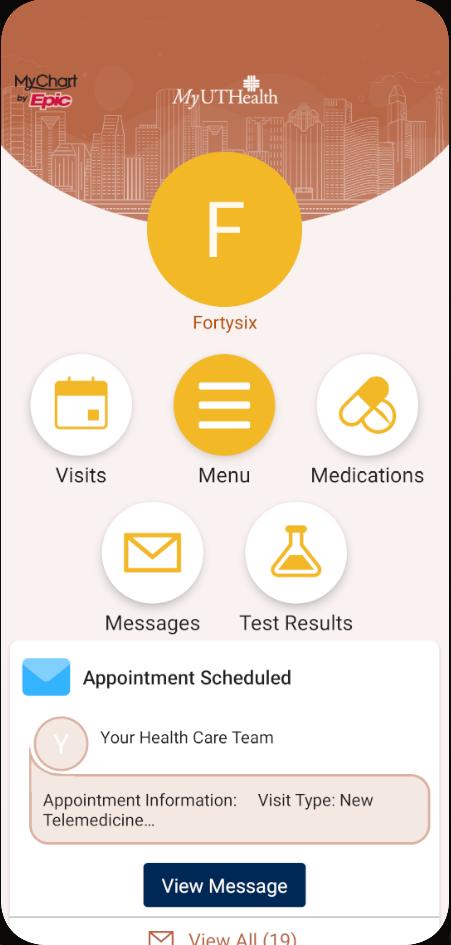
“Our patients needed the portal in their pocket: requesting visits, reading test results, reordering medicines and messaging their care team. AppAgentix built the Android app on our Epic MyChart system, careful where it matters: secure sign-in, no clinical detail on the lock screen, and patients choose what fitness data they share. The app has passed 50,000 downloads with 4.4 stars from over 750 reviews, and every release was tested before it reached our patients.”
“We wanted one streaming service that felt the same on phone, tablet and TV, whether people watch free with adverts, subscribe or rent a film. AppAgentix built the apps for iPhone, iPad, Android and Apple TV and the service behind them. They got the hard parts right: playback that starts quickly, a home screen that works with a TV remote, and billing that stays correct. The Android app has passed 50,000 downloads.”
“Amara is built around creators, so posting had to be effortless: posts, short videos, Stories, recipes and workouts, with each creator deciding who sees what. AppAgentix built it for iPhone and Android from one codebase, and what I value most is the video: uploads process in the background, playback starts fast and holds up on mobile data. Moderation and audience controls were built properly, not as an afterthought. They worked like part of our team.”
A few examples from the many systems we have built. Each has user roles, controlled access and links to the systems around it, the same shape as a policy platform.
Healthcare
Clinic records system
What we built
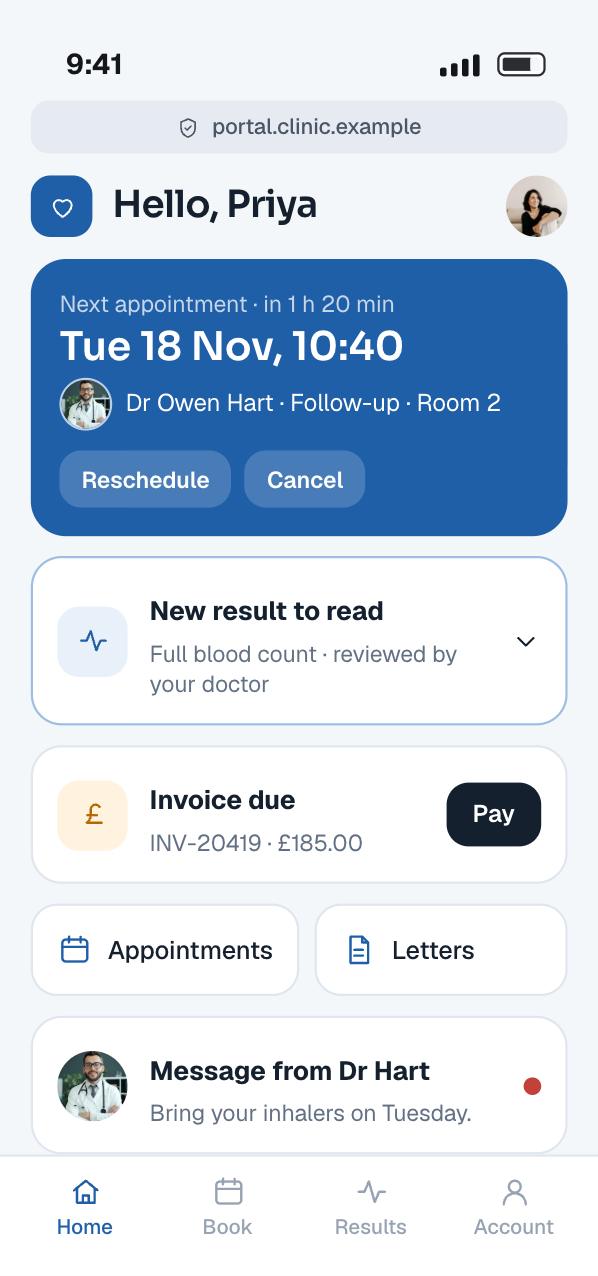
Eight modules take a patient from registration through to billing. Doctors, patients and clinic staff each have their own view, and a link to the laboratory exchanges data over HL7 and FHIR.
A patient portal app joined to a health provider’s record system. Patients ask for visits, read their test results, reorder medicines and write to their care team.
How an insurance software build runs, week by week
A 14-week first release for one line of business. More than 95% of our projects are delivered on or before the agreed date. Two stages set it apart from an app build: migration rehearsals and a parallel run beside your old system.
Week1234567891011121314monthly
01Discovery and system map
02Data model and roles
03Module sprints
04Migration rehearsals
05Test run on your policies
06Parallel run and cut-over
07Run and improve
01Weeks 1 to 2
Discovery and system map
Every system a policy touches goes on a map, and we draft the data model and agree one line and one core module.
You receive: System map, data model, rules map and a fixed quote.
02Weeks 3 to 4
Data model and roles
The dated policy record, staff roles and the audit trail come first, because every module rests on them.
You receive: A signed-off data model and roles.
03Weeks 5 to 10
Module sprints
We build the core module and its system connection in three two-week sprints, and you test each build on sample data.
You receive: A testable build per sprint.
04Weeks 10 to 11
Migration rehearsals
Where old policies move across, we rehearse the move twice on a copy, and policy counts and premium totals must match.
You receive: A reconciliation report per rehearsal.
05Week 12
Test run on your policies
Your own policies run through renewals, changes and claims in the new system, and every miss is listed with its cause.
You receive: A test report, misses included.
06Weeks 13 to 14
Parallel run and cut-over
Old and new systems handle the same work side by side until the figures agree, and you choose the cut-over day.
You receive: A difference log and a cut-over plan.
07Monthly
Run and improve
For 3 months after launch, fixes cost nothing extra, and after that, monthly support starts.
You receive: Monthly figures on errors, data checks and running cost.
How you can work with us
Ways of working
Fixed price, time and materials, or a dedicated team.
Payment
You pay by milestone.
Team
A project team is usually 4 to 6 people.
First conversation
A free 30-minute consultation.
Replies
We reply to new enquiries within 30 minutes.
How much does insurance software development cost in the UK?
A first release costs £20,000 to £40,000, excluding VAT, for insurer, MGA, insurtech and insurance broker software development alike. Each stage below lists what you receive, and the calculator below prices your own mix.
01
Discovery
Deducted from the build
2 weeks
A map of your systems, the data model, a rules map and a fixed quote.
02
Insurance platform first release
Quoted after discovery
12 to 14 weeks, including discovery
One line of business, one core module, roles and audit trail, one system connection, a read-only staff view and a test run on your own policies.
03
Full insurance platform
Quoted after discovery
5 to 8 months
More than one line, the modules you need, more system connections and the reporting feeds.
04
Replacing a core policy system
Quoted after discovery
Set in discovery
Staged replacement with migration rehearsals and a parallel run.
05
One AI feature
Quoted after discovery
6 to 10 weeks
A whole workflow, for example reading claim or submission documents, tested on your closed cases. Reading one claim document type is a smaller job, 3 to 4 weeks. The running cost is on the quote.
06
Support
After launch
monthly
We watch the platform, fix faults, apply updates and send a report each month. A 3-month minimum, then 30 days’ notice.
The first release starts above our general MVP floor because the data model and audit trail come first. Request a quote to book discovery.
Estimate your insurance software build in a minute
Pick the modules your first release needs.
Included to start: Discovery, a systems map, the data model, roles with an audit trail, a staff records view and a first system link. 7 to 8 weeks.
Who owns the code, the data and the accounts, and what is not included?
Whichever insurance software development company you hire in the UK, get ownership in writing. Everything we build belongs to you, in writing.
Code
Held in your own repository from day one and assigned to you on payment.
Data and accounts
Cloud accounts and databases sit in your company’s name, and we join as invited users. An exit is a handover, not a migration.
Supplier register
Lists each service, the data it holds, its region and its owner, ready for your outsourcing review.
Access
Staff work through named roles, and the audit trail logs every change.
Audit
Your accounts, code and logs sit in your name, so your own auditors can inspect them.
Refund
If we do not deliver what the written scope promises, we refund what you paid for the undelivered work within 7 days.
Fixes after launch
Covered by the build price for the first 3 months.
Support terms
A monthly plan. The minimum term is 3 months, then 30 days’ notice ends it.
Not included
Vendor licence fees, regulator submissions and legal advice. Your firm files its own returns.
Three ways to work with us
Pick by how much you can write down today. Prices in pounds, excluding VAT.
Fixed-price build
Best whenYou can say what the product must do, and want one figure before work starts.
Price
MVP from £15,000, 8 to 14 weeks
Two weeks of discovery first, its fee taken off the build price
Full iPhone and Android app in 4 to 8 months
Terms
One fixed figure in writing after discovery
Fixes for 90 days after launch included
If we do not deliver what the written scope promises, we refund what you paid for the undelivered work within 7 days.
You own the code, designs and accounts from the first commit.
The ten questions discovery starts with: users, the jobs they need done, systems to connect, rules, deadline and budget. Fill it in, attach nothing else, and the first call starts at the right place.
Underwriters work with rules and rating tables that price a risk, data checks that flag gaps, and a referral queue for cases outside their authority. The underwriter’s file holds the submission, notes and decision, and an audit trail records who decided what, and why. In the insurance software we build, these sit in one workbench.
Can AI do insurance underwriting?
Partly: rules or a model can settle a standard risk inside every limit, while referred cases go to an underwriter. UK GDPR restricts solely automated decisions, so a model’s decline or price decision has a route to a person, which we test. The rules are first tried on your own closed cases, and you see the misses before launch.
What is an MGA company?
A managing general agent works under delegated authority from an insurer. It can bind cover, and often handle claims, within limits the insurer sets in a binder. Its system must check those limits, send bordereaux to the insurer and refer anything outside its authority.
What is the best software for processing insurance claims?
In our view, the best is the one that fits your line, your claim volume and the systems it must feed. A standard book may suit bought claims management software, while unusual cover or a long delegated chain may need a built module. The decision table above sets out each case.
What is underwriting automation?
It means rules or models settle the clear cases, and a referral queue carries the rest to an underwriter, so a person makes the decisions that matter. UK GDPR restricts solely automated decisions with legal or similarly significant effects, so every decline gets a route to a person.
What is an agency management system for insurance?
It is the system a broker or agent uses to run the business: clients, policies, documents and commission. It tracks renewals and holds each client’s file. We build the portals, data feeds and integrations around it, so it can exchange data with insurers, MGAs and the broker’s own reporting.
Let’s make your software project the one that ships on time.
More than 95% of our projects are delivered on or before the agreed date. About 60% of our clients come back for a second project.
What happens next
1We reply within 30 minutesEvery day of the year. A developer at our software development company, not a sales team, reads your brief.
2A 30-minute callWe ask about users, deadlines and the systems you already run.
3A written view in two working daysScope, timeline and a price range, yours to keep.
Thank you. Your brief is in.
A developer, not a sales team, reads it. We reply within 30 minutes, from info@appagentix.co.uk.
We use cookies to run this site and, with your permission, to understand how it is used. Cookie policy · Privacy policy
Let’s make your software project the one that ships on time.
More than 95% of our projects are delivered on or before the agreed date. About 60% of our clients come back for a second project.
What happens next
1We reply within 30 minutesEvery day of the year. A developer at our software development company, not a sales team, reads your brief.
2A 30-minute callWe ask about users, deadlines and the systems you already run.
3A written view in two working daysScope, timeline and a price range, yours to keep.
We wanted one streaming service that felt the same on phone, tablet and TV, whether people watch free with adverts, subscribe or rent a film. AppAgentix built the apps for iPhone, iPad, Android and Apple TV and the service behind them. They got the hard parts right: playback that starts quickly, a home screen that works with a TV remote, and billing that stays correct. The Android app has passed 50,000 downloads.
Michael S.CEO and Co-Founder, Play Now Media
Thank you. Your brief is in.
A developer, not a sales team, reads it. We reply within 30 minutes, from info@appagentix.co.uk.
 WCAG 2.2 AAAccessibility
 FigmaScreens and clickable prototypes you can test
 ReactThe library for web and native user interfaces
 Next.jsThe React framework for web applications
 TypeScriptTyped JavaScript that catches errors early
 Anthropic ClaudeClaude Fable 5.2, Opus 5.5, Sonnet 5.5, Haiku 5.5
 Google GeminiGemini 4 models for text, images, audio, video and PDF
 Node.jsJavaScript runtime for scalable network applications
 PythonLanguage for web development and scientific work
 PostgreSQLOpen-source database; pgvector adds vector search
 RedisIn-memory store for caching and live messages
 AWSCloud hosting with a London region
 Google CloudCloud hosting with a London region
 DockerPackages and runs an app in a container
 TerraformCloud set-up written as code, repeatable
 GitHub ActionsCI/CD platform to automate build, test and deployment
 SentryCaptures errors and alerts you with full context
 InsuranceQuotes, claims and policy apps.
 Software modernisationRebuild ageing apps without losing users.
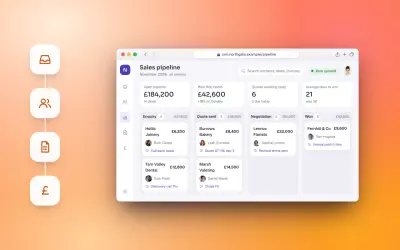 Custom CRM and ERPBusiness systems shaped around how you work.
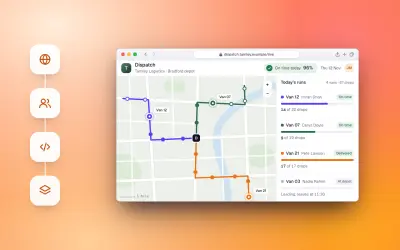 Web app developmentWeb platforms, portals and dashboards.
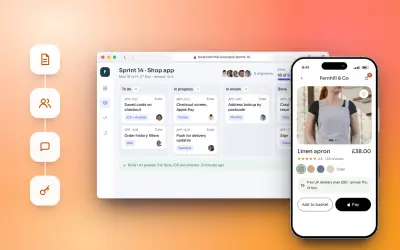 IT staff augmentationEngineers who join your own team.
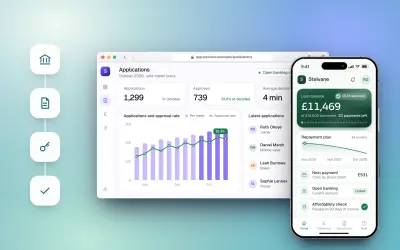 FintechBanking, payments and lending apps.
 Healthcare softwareRecords, scheduling and clinical platforms.