Ecommerce app development UK: shopping apps for iPhone and Android
Our ecommerce app development puts a shopping app on the store you already run. Prices are in pounds and exclude VAT, and you see the price, the weeks and the running costs before you sign.
Works with Shopify, WooCommerce, Magento or your own system
Code, Apple, Google and payment accounts in your name
9:41
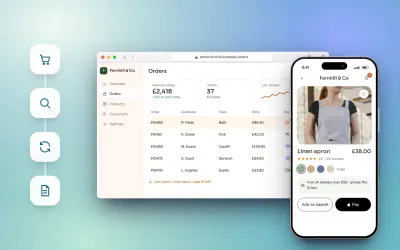
Fernhill & Co2
Linen apron£38.00
★★★★★ 4.8 · 126 reviews
Sage
Free UK delivery over £50 · arrives Thu 19 Nov
Add to basketPay
Rules this build is planned around
Online and distance sellingShops selling goods to UK customers online, including through an app
UK GDPR and PECRAny app that stores or reads data on a customer’s phone
Strong Customer AuthenticationCard and wallet payments taken in the app
Apple App Store reviewEvery app sold through the App Store
Security and compliance
Cyber EssentialsCertified
Cyber Essentials PlusIndependently tested
ISO/IEC 27001:2022Information security
ISO 9001:2015Quality management
ISO/IEC 42001:2023AI management
SOC 2 Type IIAudited controls
UK GDPR andData Protection Act 2018
ICORegistered
NHS DSPTData security toolkit
WCAG 2.2 AAAccessibility
PCI DSSCard data security
How much does it cost to develop a mobile app in the UK?
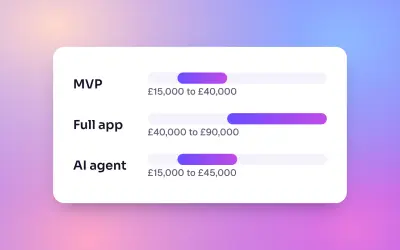
A first shopping app for iPhone and Android costs £15,000 to £40,000 excluding VAT and takes 8 to 14 weeks. A full app takes 4 to 8 months. The price leaves out developer accounts, card fees, your store plan and courier charges. The code and the Apple, Google and payment accounts sit in your name from the first commit.
Discovery
2 weeks, off the build price
Shopping app MVP
8 to 14 weeks
Full shopping app
4 to 8 months
After launch
3 months of fixes included, then optional monthly support
What our ecommerce app development covers
The second phone is one added option, not a second build. Both phones ship from the same Flutter or React Native code, and any Swift or Kotlin work appears as its own line on the quote. iOS ran on 50.13% of UK mobile and tablet web traffic and Android on 49.86% (StatCounter, October 2026).
01
Browse and search
Catalogue
Before launch we time search, category and product screens on a low-cost Android phone, such as a Galaxy A15. Filters cover size, colour and price, and search copes with typing mistakes, while sizes, stock and delivery dates come from your store. The last pages viewed stay on the phone, so a weak signal on a train still shows them. Smartphones accounted for 77% of the time UK online adults spent online in May 2025 (Ofcom Online Nation 2025).
02
Basket and two-tap checkout
Checkout
Apple Pay and Google Pay make a repeat order two taps, while saved cards go through your payment provider, such as Stripe or Worldpay. Before the customer pays, the app shows the price with VAT and the delivery cost, as UK selling rules ask. The basket holds the item for a short time during payment, so a last item is never sold twice. In 2025, 65% of UK adults were registered for at least one mobile payment service (UK Finance Payment Markets Report 2025).
03
Accounts and saved details
Accounts
Guest checkout comes first, and an account stays optional, while customers who sign up get saved addresses, order history and Face ID or fingerprint sign-in. Apple asks for an equivalent login option with set privacy features when an app offers Google sign-in, so Apple sign-in sits beside it. The button to delete the account is in the first version, because Apple requires it.
04
Order tracking and returns
After the order
Each order shows its status from your store and a courier tracking link once the parcel ships. A customer can start a return from order history and get a label or QR code on the phone. The order confirmation states the right to cancel within 14 days of delivery. Your team sees the return in the store admin they already use.
05
Reminders and back-in-stock alerts
Push
Three message types, three switches: order updates, offers, and back-in-stock or basket reminders. Order updates start once the phone allows notifications, while we treat the other two as marketing under Apple’s push rule, so they wait for a yes on an in-app screen. You send them from your admin and see the open count of each message.
06
Store, stock and courier connections
Connections
One store link takes about 5 to 8 days of work. It suits Shopify, WooCommerce, Magento or your own system if it has a documented API. Each paid order is written to that store, so your team keeps one admin. The quote names every link, courier links included, and any monthly fee its provider charges.
Building in ecommerce means rules you cannot get wrong. Talk them through with the developers who would build to them.
Six rules shape the screens, so we map them in discovery. This is not legal advice: your own adviser confirms how each one applies to you.
Online and distance selling
Applies to
Shops selling goods to UK customers online, including through an app
What it changes in the build
GOV.UK says that before an order is placed, the customer must see the price including all taxes and the delivery costs. You must also tell customers they can cancel up to 14 days after their order is delivered. So checkout shows prices with VAT and the delivery cost, and the order confirmation states the right to cancel.
UK GDPR and PECR
Applies to
Any app that stores or reads data on a customer’s phone
What it changes in the build
The ICO says you must not pre-enable storage and access tools that need consent. Analytics and advertising tools that need it stay off until the customer says yes, and the app asks on its own consent screen at first launch.
Strong Customer Authentication
Applies to
Card and wallet payments taken in the app
What it changes in the build
The FCA says these rules apply when a payer starts an electronic payment. Your payment provider runs the bank check, including any exemption, and the app hands over to it and returns to the order without losing the basket. We test this with a real card before launch.
Apple App Store review
Applies to
Every app sold through the App Store
What it changes in the build
Apple requires account deletion inside the app if the app lets people make an account. Tracking a customer across other companies’ apps needs their permission first. Physical goods must be paid for outside in-app purchase, for example with Apple Pay or a card, so your sales do not go through Apple’s in-app purchase system.
Google Play payments
Applies to
Every app on Google Play
What it changes in the build
Google Play’s billing system must not be used when payment is mainly for physical goods, such as clothing or groceries. Checkout runs through your payment provider and Google Pay instead.
Accessibility
Applies to
Customers who use a screen reader, large text or other aids
What it changes in the build
WCAG 2.2 is the W3C’s set of accessibility guidelines, and we test full apps to level AA. Our tests cover labels a screen reader can read, text that grows without breaking the layout, and buttons big enough to tap.
“We wanted one streaming service that felt the same on phone, tablet and TV, whether people watch free with adverts, subscribe or rent a film. AppAgentix built the apps for iPhone, iPad, Android and Apple TV and the service behind them. They got the hard parts right: playback that starts quickly, a home screen that works with a TV remote, and billing that stays correct. The Android app has passed 50,000 downloads.”
“Our patients needed the portal in their pocket: requesting visits, reading test results, reordering medicines and messaging their care team. AppAgentix built the Android app on our Epic MyChart system, careful where it matters: secure sign-in, no clinical detail on the lock screen, and patients choose what fitness data they share. The app has passed 50,000 downloads with 4.4 stars from over 750 reviews, and every release was tested before it reached our patients.”
“Amara is built around creators, so posting had to be effortless: posts, short videos, Stories, recipes and workouts, with each creator deciding who sees what. AppAgentix built it for iPhone and Android from one codebase, and what I value most is the video: uploads process in the background, playback starts fast and holds up on mobile data. Moderation and audience controls were built properly, not as an afterthought. They worked like part of our team.”
A few examples from the many apps we have built where people browse a catalogue, pay in the app and come back for more.
Media and streaming
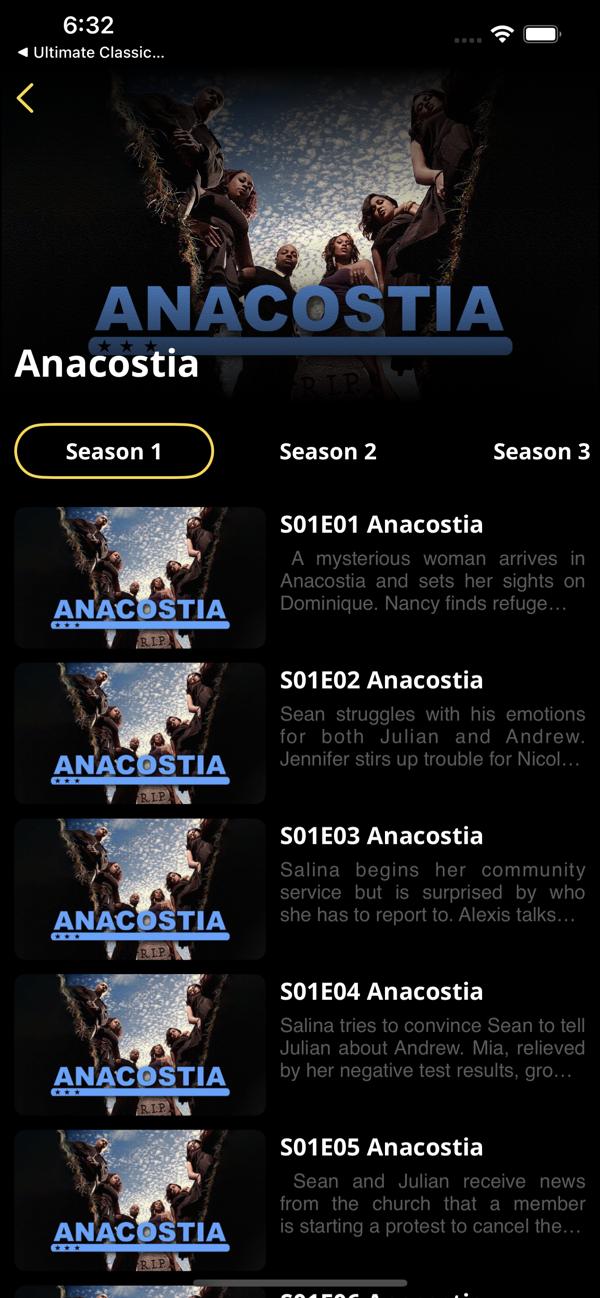
Black Movies & TV: browse, search and pay to watch
What we built
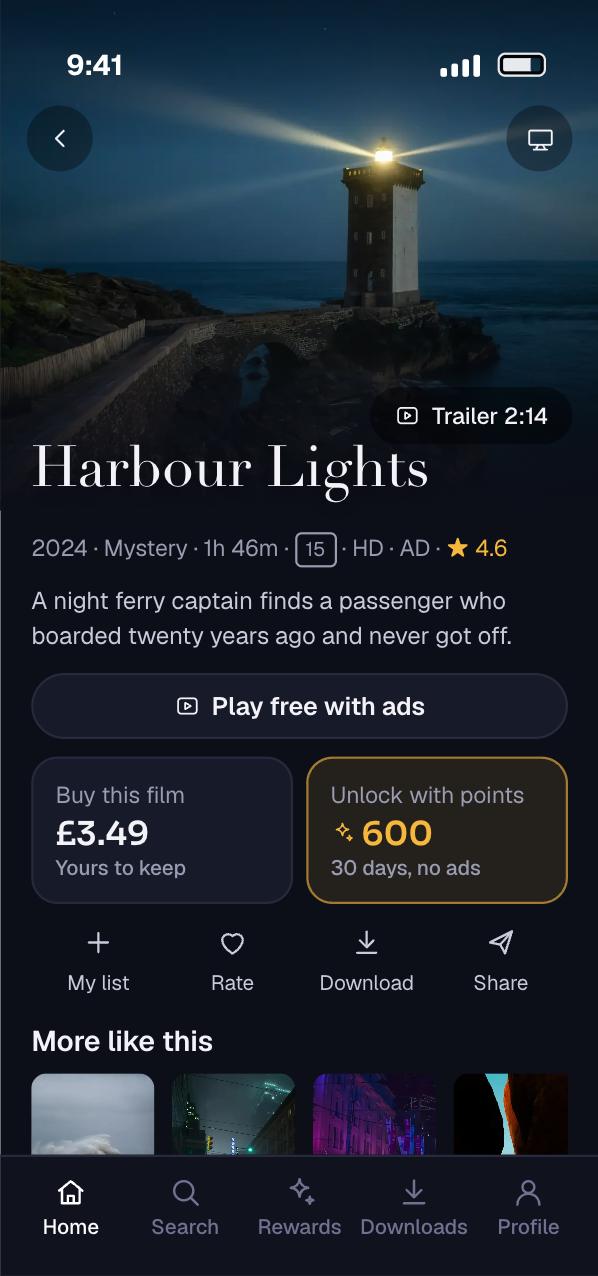
In Black Movies & TV, which we built, viewers find a film quickly in a large catalogue, through genre and decade shelves, hand-picked collections and one search box for films and series. Each title page offers ad-supported viewing, a subscription or a rental, and Apple and Google handle payment through their in-app billing, keeping card numbers away from our servers.
Streaming service app: a rewards store and loyalty points
What we built
Our team gave this streaming service app a rewards store that works like a loyalty scheme. Viewers gather points as they use the app and swap them for chosen films and series or for time-limited premium access, alongside plans and single purchases paid through secure gateway APIs. Push messages and alerts inside the app bring them back.
One order through the app, the shop and the courier.
01Browse
02Basket
03Apple Pay or card
04Packed
05Tracked delivery
admin.fernhill.example/orders
OrdersSearch orders
Revenue today£2,418+12% on last Friday
Orders376 to pack
Last 14 days
Order
Customer
Town
Total
Status
#10482
R. Patel
Bath
£86.40
New
#10481
K. Doyle
York
£42.00
Packed
#10480
M. Evans
Cardiff
£129.90
Shipped
#10479
S. Grant
Norwich
£64.50
Shipped
#10478
L. Hughes
Exeter
£23.80
Delivered
Low stock: Linen apron, sage (4 left)
What does the pre-launch test report show?
You get this report before launch. This one is filled in for an imaginary shop: a shopping app on a Shopify store, on both phones.
ExamplePre-launch test report, shopping app release candidateAppAgentix
Check
Device
Result
Notes
Add to basket with no signal
Galaxy A15
Pass
The item stays in the basket, and the app sends it when the signal returns
Apple Pay checkout
iPhone 15
Pass
Real card, small payment, then a full refund
Google Pay checkout
Pixel 8
Pass
Real card, small payment, then a full refund
Bank approval step (3-D Secure)
iPhone SE (2nd generation)
Pass
The app returns to the order screen after the bank check
Item sells out during checkout
Pixel 8
Pass after fix
Two test customers paid for the last item. A short stock hold at checkout fixed it, and the rerun passed
Account deletion in the app
iPhone 15
Pass
The request reaches your store admin, and the customer sees a confirmation
Marketing push off until opt-in
Galaxy A15
Pass
No offer arrives before the customer says yes, and order updates still arrive
Tracking permission
iPhone SE (2nd generation)
Pass
Ad tracking stays off when the customer declines
Return label from order history
Pixel 8
Pass
The label opens as a PDF and a QR code
Courier tracking link
iPhone 15
Open
Waits for the courier’s live API key. Test orders use the courier’s test service until then, and launch waits for a rerun
Screen reader and large text
iPhone 15 and Pixel 8
Pass
Prices, sizes and buttons read out in order with VoiceOver and TalkBack
An example, not a client record. Anything open is listed with what happens next, and you decide whether the release goes ahead. Nothing goes live until you have read the report.
A regulated launch cannot slip. More than 95% of our projects are delivered on or before the agreed date.
Five accounts touch every order, and all five are opened in your company name, while we join each one as a user you can remove.
01Phone app
Browse, basket and checkout on iPhone and Android, published under your Apple and Google developer accounts.
02Your store platform
Shopify, WooCommerce, Magento or your own system holds products, prices and stock. Your store account.
03Payment provider
Stripe or Worldpay takes each card, Apple Pay or Google Pay payment and runs the bank check. The card number goes to the provider, not to your servers or ours. Your merchant account.
04Courier or fulfilment
Gets the parcel details and sends back the tracking number. Your courier contract.
05Your admin and reports
Paid orders appear in the admin you already use, and app sales sit in your own reports. Your logins.
Ecommerce app vs website: our one-third test
We look at the share of orders that come from returning customers. The line at a third is our own rule of thumb, not a market figure, and discovery replaces it with your own order data. For scale, online sales made up 28.8% of retail sales in Great Britain in September 2026 (ONS retail sales, September 2026).
Which one earns its cost for your shop?
Iffewer than one order in three comes from a returning customer, because most buyers arrive once from search or ads
Choosemobile checkout work, and no app yet
Buyers from search and ads land on your mobile site, so checkout work there pays back on every order. Come back to the app once repeat orders reach a third, and our ecommerce website page covers the site work.
Ifrepeat orders are a third of your orders or more, and you already sell on Shopify, WooCommerce or Magento
Choosean app on your existing store
Nothing is copied into a second database, so your team keeps one stock count and one order list. This is our first-version build, with the store link as one line of it.
Ifyou run a marketplace with many sellers, or no store platform fits how you sell
Choosea standalone app with its own admin
Sellers, payouts and stock need their own system, so expect the full app range, fixed after discovery.
Ifyou have no store platform yet and are still testing products
Choosea hosted store first, then the app
A hosted store tests demand for a monthly fee, and build the app once you know which customers come back.
Estimate your shopping app in a minute
Pick what your first version needs and the range updates as you go. Each option shows the days of work behind its price.
Included to start: Discovery, design, catalogue and product pages, basket, push for order updates, analytics and store launch. 8 to 10 weeks.
How much does an ecommerce app cost with us?
What each stage includes. One worked example, a Shopify-linked shopping app on both phones with wallet checkout, came to £29,000 fixed. Price your own version with the calculator above.
01
First call
Free
30 minutes
A written view on scope, timeline and price within two working days.
02
Discovery
2 weeks
Scope, clickable prototype and a fixed quote. It comes off the build price if you continue.
03
Shopping app MVP
8 to 14 weeks
Both phones or one, catalogue, basket, checkout, push, one store connection and store launch.
04
Full shopping app
4 to 8 months
Both phones, loyalty, several connections, reports and testing to WCAG 2.2 AA.
05
Support and running
monthly
New iOS and Android versions, security fixes, monitoring and a monthly report. 30 days’ notice after a 3-month minimum.
What moves the price: the number of connections, loyalty rules and screens that need custom design. Three months of fixes after launch are included in the build price. Every rate is on our app development cost page.
What do you pay to others?
These bills come from other companies, at their prices as of November 2026, and the quote lists each one with its expected monthly figure.
Apple Developer Program
US$99 a year, paid by you to Apple. Apple lists the price in local currency when you enrol.
Google Play developer account
A one-time US$25 registration fee, paid by you to Google.
Card and wallet fees
Charged by your payment provider on each payment.
Your store plan and courier charges
Paid to your store platform and courier as now. The app adds no store plan of its own.
Product photos and copy
The app uses what your store already holds. New photography is quoted separately.
The 13-week ecommerce app development process
It follows our usual process, and the extra step for a shop is a real-card test of every payment method before the stores see the app. A project team is usually 4 to 6 people. More than 95% of our projects are delivered on or before the agreed date.
Weeks 1 to 201
Discovery
We study your catalogue and order data, agree the first release and write the fixed quote.
Weeks 3 to 402
Design
Five of your customers click through the screens before we build.
Weeks 5 to 1003
Ecommerce app development sprints
App, store link, payments and push. A working build lands on your phone every two weeks.
Weeks 11 to 1204
Test on real phones
Checkout, sign-in and push on old and new phones, through the bank check.
Week 1305
Store submission
We prepare the listings and privacy answers, submit to Apple and Google, and reply to the reviewers.
After launch06
Run and improve
For 90 days we fix faults in what we built at no extra cost. After that, an optional monthly plan covers new phone OS versions, security fixes and monitoring.
The ten questions discovery starts with: users, the jobs they need done, systems to connect, rules, deadline and budget. Fill it in, attach nothing else, and the first call starts at the right place.
It depends which kind you mean. A branded shopping app that reads your Shopify store costs £21,000 to £34,500 with us at the estimator’s default choices, excluding VAT. A tool that adds a feature inside the Shopify admin is a different, smaller build that we quote after a call.
How much does an app cost in the UK?
A shopping app costs £15,000 to £40,000 with us for a first version, excluding VAT. A full app with loyalty and several connections is priced after discovery. Your Apple and Google developer accounts, card fees and Shopify plan are paid on top of that.
How do I create a shopping app?
You create a shopping app by fixing the first release in discovery, then designing, building, testing and submitting it to the stores. In a typical first version, the app reads an existing Shopify store, bringing products, prices and stock in and sending orders back out. Apple, Google and email sign-in and wallet checkout complete the first release.
Does Shopify have a mobile app?
Yes. Shopify has its own mobile app for running your store, where you manage orders, update stock and track sales from a phone. It is for you and your staff, not your customers. A branded app your customers install is a separate build, linked to your Shopify store through one store connection.
Is WooCommerce mobile friendly?
A WooCommerce shop can work well on phones, but in our view, that depends mostly on its theme and checkout set-up, so test your own store on a phone. WooCommerce also offers a free app for store owners to manage products and orders, but customers still shop in the browser unless you build an app.
Can ChatGPT build me an app?
AI tools can produce a prototype, but a production app still needs someone accountable when it breaks. Our example test report shows why: two test customers paid for the last item until a stock hold fixed it. Every payment method is also tested with a real card, a small payment and a full refund.
What are the 7 stages of app development?
In our view, the seven stages are research, planning, design, build, testing, launch and support. Our 13-week shop plan opens with discovery, where we study your catalogue and order data. It adds a real-card test of every payment method. Store submission falls in week 13, and for 90 days after launch we fix faults in what we built at no cost.
Most app projects run late. Let’s make yours the one that ships.
More than 95% of our projects are delivered on or before the agreed date. About 60% of our clients come back for a second project.
What happens next
1We reply within 30 minutesEvery day of the year. A developer at our app development company, not a sales team, reads your brief.
2A 30-minute callWe ask about users, deadlines and the systems you already run.
3A written view in two working daysScope, timeline and a price range, yours to keep.
Thank you. Your brief is in.
A developer, not a sales team, reads it. We reply within 30 minutes, from info@appagentix.co.uk.
We use cookies to run this site and, with your permission, to understand how it is used. Cookie policy · Privacy policy
Most app projects run late. Let’s make yours the one that ships.
More than 95% of our projects are delivered on or before the agreed date. About 60% of our clients come back for a second project.
What happens next
1We reply within 30 minutesEvery day of the year. A developer at our app development company, not a sales team, reads your brief.
2A 30-minute callWe ask about users, deadlines and the systems you already run.
3A written view in two working daysScope, timeline and a price range, yours to keep.
We wanted one streaming service that felt the same on phone, tablet and TV, whether people watch free with adverts, subscribe or rent a film. AppAgentix built the apps for iPhone, iPad, Android and Apple TV and the service behind them. They got the hard parts right: playback that starts quickly, a home screen that works with a TV remote, and billing that stays correct. The Android app has passed 50,000 downloads.
Michael S.CEO and Co-Founder, Play Now Media
Thank you. Your brief is in.
A developer, not a sales team, reads it. We reply within 30 minutes, from info@appagentix.co.uk.

 WCAG 2.2 AAAccessibility
 React NativeNative Android and iOS apps built with React
 FlutterMobile, web and desktop apps from one codebase
 Next.jsThe React framework for web applications
 TypeScriptTyped JavaScript that catches errors early
 PostgreSQLOpen-source database; pgvector adds vector search
 RedisIn-memory store for caching and live messages
 ShopifyStore back end for headless shop apps
 StripeCard, Apple Pay and Google Pay payments
 Apple PayOne-tap checkout in apps and on websites
 Google PayQuick checkout in Android apps and on websites
 AWSCloud hosting with a London region
 CloudflareContent delivery, caching and attack protection
 GitHub ActionsCI/CD platform to automate build, test and deployment
 SentryCaptures errors and alerts you with full context
 Ecommerce website developmentOnline stores, checkout and stock.
 iOS app developmentNative Swift apps for iPhone and iPad.
 Android app developmentNative Kotlin apps for Google Play.
 Flutter app developmentOne Flutter codebase for iOS and Android.
 MVP developmentA first version for users and investors.
 Maintenance and supportUpdates, monitoring and OS releases.
 PricingWhat apps and AI agents cost, in pounds.
 RetailStore, stock and point-of-sale tools.