Our MVP development builds the smallest working version of your product that people can use or pay for. You get the price in pounds before you commit, a working build on your phone every two weeks, and every account in your own name.
MVP at one fixed figure, set in writing after discovery
8 to 14 weeks from kick-off to the app stores, discovery included
Code, designs and store accounts yours from day one
3 months of free fixes after launch
9:41
Your order
Arriving 19:09
B
Bramble Kitchen2 items, £24.60
Paid
Order placed18:42
Being cooked18:44
With your rider18:58
At your door19:09
J
Jamie is on the wayE-bike, 1.2 miles away
14 Hollis Road, Leeds LS6 2AB
Security and compliance
Cyber EssentialsCertified
Cyber Essentials PlusIndependently tested
ISO/IEC 27001:2022Information security
ISO 9001:2015Quality management
ISO/IEC 42001:2023AI management
SOC 2 Type IIAudited controls
UK GDPR andData Protection Act 2018
ICORegistered
NHS DSPTData security toolkit
WCAG 2.2 AAAccessibility
PCI DSSCard data security
How much does MVP cost?
Our MVP service costs £15,000 to £40,000 plus VAT, and the class booking app below, fixed at £30,000, launches in week 12. Price your own version with the calculator on this page. Discovery runs two weeks and ends in the one-page scope; its fee is credited if you continue. That scope carries one fixed figure, and the code, designs and store accounts are in your name from the first commit.
Discovery
Weeks 1 to 2, fee credited
MVP build
8 to 14 weeks in all
After launch
3 months of fixes, then monthly support
Ownership
Code and accounts in your name
What is an MVP, and how is it different from a prototype or proof of concept?
An MVP, short for minimum viable product, is the least you can launch that still does one main job for real users.
Topic
Prototype
Proof of concept
MVP (our service)
Question it answers
Do people understand the idea and want it?
Can the hardest technical part be built at all?
Will real users use it, and pay for it?
Typical cost
Lowest: part of discovery with us
In between: more than a prototype, less than an MVP
Highest: one fixed figure after discovery
When we tell you to wait, and when to build
These are our own rules, which we apply in discovery, before any code is written. UK business births reached 317,000 in 2024, and 38.4% of firms born in 2019 survived five years (ONS Business demography, UK: 2024).
Which of these describes your idea today?
Iffewer than 5 of 10 likely users finish the main task unaided on the clickable prototype
Chooseto fix the prototype first
Our rule: no code until at least half the testers finish unaided.
Ifyou cannot name one action and a number that proves demand
Chooseto wait
An example is "20 members book twice in month one", and we write that pass mark into the scope during discovery.
Ifthe estimate for your choices is above your budget
Chooseto remove a feature tile
We never cut the testing or the admin panel to save money.
Ifthe estimate runs past 14 weeks
Choosetwo releases
Each one fits inside 14 weeks, so real users arrive sooner.
Ifa form tool and a spreadsheet cover your first 50 customers
Chooseto build later
We say so in the written view, even if it ends the project.
From a 12-item wishlist to the 12-week scope: what the week 2 review cut
This is the class booking app from the answer above, and each row shows its days of work at our rate card.
ExampleWishlist review, week 2: class booking appAppAgentix
Item
Decision
Days at the rate card
Why
Booking a class with a reminder
Keep
15 to 26: booking 5 to 8, reminder 10 to 18
The core job the launch tests
Email and password sign-in
Keep
In the base price
A member needs an account to hold a place
Admin panel for classes and members
Keep
In the base price
Staff change the timetable without a developer
Analytics for three questions
Keep
In the base price
They show whether members come back to book
Apple, Google and email sign-in
Version two
4 to 8
Email sign-in is enough to test bookings
Card payments for membership
Version two
5 to 9
Members pay at the desk
Trainer app (a second type of user)
Version two
30 to 50
Staff see bookings in the admin panel
Chat with trainers
Version two
8 to 14
Not needed to book a class
Class photos
Version two
5 to 8
Bookings work without them
Map of the gym
Cut
6 to 10
One address on the class page does the job
Reports with five views
Version two
16 to 28
The CSV export in the admin panel does the job
Waiting lists
Moved out in week 2
Quoted when asked
Kept launch in week 12
Version two holds 68 to 117 days of work, and leaving it out, with the map cut, is what keeps launch in week 12.
The one-page scope you sign after discovery
This is a filled page for the 12-week class booking app above. We fill it in with you in week 2, and anything not on it is quoted before it is built.
ExampleMVP scope, one page: class booking appAppAgentix
Item
What we agree
Status
The one main job the product does
A gym member books a place in a class and gets a reminder before it starts
Agreed
Who uses it (one type of user)
Gym members; staff use the web admin panel only
Agreed
Screens in the first version
Sign-in, class timetable, class details, my bookings and profile; admin: classes, members and export
Agreed
Left out on purpose
Card payments (members pay at the desk), a trainer app, waiting lists and the rest of the version two list
Agreed after change: waiting lists moved out in the week 2 review to keep launch in week 12
Questions the launch must answer
How many members book twice in the first month? How many cancel in the app? Which class times fill first?
Agreed
Fixed price, excluding VAT
One fixed figure, with the discovery fee counted in
Agreed
Weeks to launch
12, on the App Store and Google Play
Agreed
Accounts in your name
Code repository, hosting, analytics, and the Apple and Google Play developer accounts
Open: the Apple account is still being set up in your company name. It is due before the week 11 test run, or launch moves
Signed by you and by us. Each open row says what closes it and by when. Free fixes for 3 months after launch cover what this page lists.
What we refuse to do in MVP development
These are our rules on every first version.
We do not add a second type of user without a written reason
A trainer app or a seller side adds 30 to 50 days of work.
We do not start the build before you sign the scope
Discovery ends with the one-page scope, and code starts after it is signed.
We do not add a feature mid-sprint without a written quote and your yes
The new item goes into a later sprint.
We do not create store, hosting or code accounts in our name
They are opened in your company name, and store fees go to Apple and Google from your accounts.
We do not launch with a blocked main job
The week 11 test report decides, not the calendar.
We do not quote without the hours and rate behind it
You see what each figure is made of.
We do not build integrations nobody has asked for
Each one is quoted when a real user needs it.
From idea to first users
What an MVP keeps, and what waits for version two.
01Idea
02Scope
03Prototype
04Core build
05First users
9:41
Your order
Arriving 19:09
B
Bramble Kitchen2 items, £24.60
Paid
Order placed18:42
Being cooked18:44
With your rider18:58
At your door19:09
J
Jamie is on the wayE-bike, 1.2 miles away
14 Hollis Road, Leeds LS6 2AB
How long should it take to build an MVP?
A first version (MVP) typically takes us 9 to 10 weeks. Our fastest delivery was two weeks. This example runs twelve weeks from kick-off to the app stores, with discovery in the first two. Simpler products finish nearer eight weeks, and payments or an AI feature take up to 14. Plan on about three hours of your time a week.
Week123456789101112monthly
01Discovery
02Design
03MVP development sprints
04Test run
05Launch
06Learn and improve
01Weeks 1 to 2
Discovery
We interview you, list the screens and write the one-page scope.
You receive: The one-page scope, a prototype your users can tap through and a fixed quote you keep, even if you build elsewhere.
02Weeks 2 to 4
Design
We design the screens and test them with five of your users before any code.
You receive: Final screens and a list of changes users asked for.
03Weeks 4 to 11
MVP development sprints
Each two-week sprint ends with a review, and the new class booking build goes on your phone.
You receive: A new build every two weeks and a short written note of what changed.
04Week 11
Test run
We run the launch checks below on real phones.
You receive: A test report you read before launch, with the failures listed.
05Week 12
Launch
We submit to the App Store and Google Play under developer accounts that you own.
You receive: Live listings, the source code in your repository and the admin logins.
06After launch
Learn and improve
We fix defects in the agreed scope free for 3 months and check the analytics against your questions.
You receive: Analytics read against your launch questions, and a monthly report if you take support.
What the week 11 test report checks before we submit to the stores
This is the report for the class booking app, which you read before anything goes to Apple or Google.
ExampleWeek 11 test report: class booking appAppAgentix
Check
How we run it
Pass line
Main job, from sign-up to booking
On six real phones: three iPhone, three Android
No crash and no blocked step
Sign-up with an email already in use
Register a second account with the same email
A clear message and a route to sign in
Connection lost half-way through a booking
Switch on flight mode mid-booking, then off
The place is booked once or not at all
Notifications permission refused
Say no at the prompt
Booking still works
Delete my account
Delete a test member from settings
The member’s data is gone from the app and the admin panel
Analytics consent
Refuse, then accept, at first launch
No analytics event before Accept
Screen readers
The main job read aloud by VoiceOver and TalkBack
Every button on the booking path is named and reachable
Your own cases, if the product has an AI feature
Run them through the AI feature
Every miss listed in the report
Any open defect is listed with a fix date. Nothing with a blocked main job goes to the stores.
MVP development services and what each includes
Each line below is a stage or service we sell, with what it covers and how long it takes. Your quote shows the hours and rate behind each figure, and the price is then fixed for the written scope.
01
First call
Free, 30 minutes. A written view on scope, timeline and price range within two working days.
02
Discovery
Two weeks: scope, clickable prototype and fixed quote. Comes off the build price if you continue.
03
MVP app development
Design, core features, admin panel, analytics, testing and store launch, on one platform or cross-platform, in 8 to 14 weeks.
04
Full app after the MVP
iOS and Android, payments, integrations, analytics and WCAG 2.2 AA, in 4 to 8 months.
05
AI agent on one workflow
Added to an MVP or built alone, with accuracy and monthly cost on the quote, after discovery.
06
Bug fixes after launch
For 3 months, any defect in the agreed scope is fixed at no charge.
07
Support and running
Fixes, updates for new phone software and a monthly report. Minimum 3 months, then 30 days’ notice.
Estimate your MVP in a minute
Tick only what your first version must do, and the MVP range moves with each choice. Each option is priced from its days of work at our day rate. iOS runs on 50.14% of UK mobile web traffic and Android on 49.85% (StatCounter, October 2026), so one phone covers about half of it.
Included to start: Discovery, design, the one core job, email sign-in, admin panel, analytics and store launch. 8 to 10 weeks.
What you pay after launch
You pay these bills directly from accounts in your own name, and we list them on your quote.
Hosting
For the class booking app, servers, database and storage are billed by use and rise as members join.
Tools and payment fees
Sign-in emails, alerts, analytics and card fees are charged by use, at the published rates shown on your quote.
Store accounts
Developer accounts sit in your company name: Apple charges 99 USD a year, listed in local currency at enrolment, and Google Play US$25 once, as of November 2026.
Who owns the code and designs?
You own all of it from the first commit, and we join each account only as invited users. We create the source repository, the Apple and Google Play developer accounts, the hosting account and the analytics property in your company name.
If you want to leave, you remove our access yourself, or we remove it within one working day of your notice. A written hand-over guide, with the build steps and every account listed, follows within 10 working days of your request.
A fixed price means the scope is written down, so no larger invoice arrives at the end. For anything outside it, we send a written quote and wait for your yes before building. If we do not deliver what the written scope promises, we refund what you paid for the undelivered work within 7 days.
Still weighing up how to build your app? Ask the developers who would build it, before you commit to anything.
Three things decide how a first build goes, so ask any agency to put each one in writing, as we do below.
01
A price in pounds, with VAT stated
A quote should give one figure for a written scope and say whether VAT is on top.
Ours: one figure excluding VAT, fixed in writing after discovery.
02
A named owner for code and accounts
Ask whose name the repository, the store accounts and the hosting sit in, and from which day.
Ours: your company name on all of them, from the first commit.
03
A working build every two weeks
A build you can tap on your own phone shows progress better than any status report.
Ours: a build on your phone at the end of each two-week sprint, with a short note of what changed.
Apps we have built
A few examples from the many apps we have built and put in front of real users.
Social app
Amara Social: creator platform app
What we built
We built Amara Social. In one app, creators share posts, short videos, Stories, recipes, workouts and blogs, with settings for who can see each item and templates that keep each format tidy. Video is compressed and cached so playback stays quick on slow connections. Built with React Native, Node.js, PostgreSQL and AWS.
Stated results: 1K+ downloads on Google Play with a 4.4 rating, creators publishing 60% more content a month after launch, and monthly active users up 30% within 6 months.
We built Tiger Charge so a driver can complete a charge without ringing anyone: find a free charger on the map, check the connector, start it from the phone, follow the session live and settle the cost from a prepaid wallet. It is an Android app in Kotlin, with a Node.js backend talking to the chargers over OCPP.
10,000+Google Play downloads and a 4.1 star average from drivers
“Amara is built around creators, so posting had to be effortless: posts, short videos, Stories, recipes and workouts, with each creator deciding who sees what. AppAgentix built it for iPhone and Android from one codebase, and what I value most is the video: uploads process in the background, playback starts fast and holds up on mobile data. Moderation and audience controls were built properly, not as an afterthought. They worked like part of our team.”
“Drivers want three things: find a working charger, start charging without fuss and pay without surprises. AppAgentix built the Android app, the prepaid wallet and the link to our chargers. Live charger status is accurate, starting a session is a scan and a tap, and the wallet settles the right amount even if the connection drops. The app has passed 10,000 downloads with a 4.1 star rating, and our manual billing work has dropped sharply.”
“We wanted one streaming service that felt the same on phone, tablet and TV, whether people watch free with adverts, subscribe or rent a film. AppAgentix built the apps for iPhone, iPad, Android and Apple TV and the service behind them. They got the hard parts right: playback that starts quickly, a home screen that works with a TV remote, and billing that stays correct. The Android app has passed 50,000 downloads.”
Each rule or standard, and what it means on screen or on your launch list, as of November 2026.
UK rule or standardWhat your users see or what you do
01UK rule or standardICO data protection fee
What your users see or what you doNo screen: it sits on your launch list. You pay it unless you are exempt, and the ICO offers a self-assessment.
An app that takes sign-ups uses personal information.
02UK rule or standardPECR: cookies and similar technologies
What your users see or what you doA consent screen at first launch, and analytics start only after Accept. Cookies essential to a service the user asked for need no consent.
The ICO is reviewing this guidance after the 2025 Data (Use and Access) Act.
03UK rule or standardPrivacy notice
What your users see or what you doA link on the sign-up screen and in settings.
A solicitor writes the text.
04UK rule or standardRight to erasure
What your users see or what you doA "Delete my account" button in settings.
The ICO says people can ask verbally or in writing, the right applies only in certain circumstances, and you have one month to respond.
05UK rule or standardWCAG 2.2 AA accessibility standard
What your users see or what you doOur designs target it, checked on real devices.
GOV.UK names it as the standard public sector websites and apps must meet.
06UK rule or standardHealth, payment or lending data
What your users see or what you doTell us on the first call, because the scope and price change.
If the app might be a medical device, that work comes first. The MHRA publishes when apps are regulated.
When an MVP is the wrong thing to buy
We say so in discovery, before you spend on a build. 23% of UK SME employers had introduced new or improved services in the last three years (DBT Longitudinal Small Business Survey 2024).
01
You have not spoken to users
Talk to ten likely users and watch them try a clickable prototype, and if fewer than five finish the main task, fix that first.
We will point you to a prototype test first.
02
A no-code tool covers your first 50 customers
If a form tool, a spreadsheet and an automation do the job for them, build later.
We say so in the written view, even if it ends the project.
03
You need regulated approval on day one
Some health apps count as medical devices, so if yours might, that approval work comes first, and it is not a normal MVP.
We scope the compliance step separately.
Not sure what your app would cost? Send us the idea and get scope, timeline and a price range in writing within two working days.
The ten questions discovery starts with: users, the jobs they need done, systems to connect, rules, deadline and budget. Fill it in, attach nothing else, and the first call starts at the right place.
An MVP with us costs £15,000 to £40,000, excluding VAT at 20%. A two-week discovery comes first, and its fee comes off the build price if you continue.
How long should it take to build an MVP?
An MVP should be live 8 to 14 weeks after kick-off, and with us that includes the two-week discovery that fixes the scope. That is our range, and a first version typically takes us 9 to 10 weeks. More than 95% of our projects are delivered on or before the agreed date. Agencies serving UK founders most often publish 8 to 12 weeks. Payments, a second type of user or an AI feature push a build towards fourteen.
What does MVP mean in app development?
In app development, the letters MVP mean minimum viable product: the smallest working app that lets real users do its one main job. Ours goes live on the App Store and Google Play, so it shows whether real users will use the app, and pay for it, before the full version is built.
What's the difference between MVP and PoC?
A proof of concept (PoC) tests whether the hardest technical part can be built at all. An MVP is a small live product that real customers use, so it tests whether people want it.
Is MVP the same as prototype?
No: a prototype checks that people understand and want the idea, while an MVP checks that real users will use and pay. With us, the clickable prototype is part of the two-week discovery. The MVP that follows is a small live product for one main job, with one fixed price.
How do I build an MVP?
Write down the one job your product must prove, talk to about ten likely users and test a clickable prototype with them. Then build only the screens that job needs, launch to a small group and measure the three to five questions you agreed at the start.
What are the top MVP development companies in the UK?
We build MVPs ourselves, so we cannot grade our own field fairly. Judge any company on what it puts in writing: price in pounds, weeks, ownership and what follows launch. Ours are one fixed figure excluding VAT, 8 to 14 weeks, everything in your name and 3 months of free fixes.
Most app projects run late. Let’s make yours the one that ships.
More than 95% of our projects are delivered on or before the agreed date. About 60% of our clients come back for a second project.
What happens next
1We reply within 30 minutesEvery day of the year. A developer at our app development company, not a sales team, reads your brief.
2A 30-minute callWe ask about users, deadlines and the systems you already run.
3A written view in two working daysScope, timeline and a price range, yours to keep.
Thank you. Your brief is in.
A developer, not a sales team, reads it. We reply within 30 minutes, from info@appagentix.co.uk.
We use cookies to run this site and, with your permission, to understand how it is used. Cookie policy · Privacy policy
Most app projects run late. Let’s make yours the one that ships.
More than 95% of our projects are delivered on or before the agreed date. About 60% of our clients come back for a second project.
What happens next
1We reply within 30 minutesEvery day of the year. A developer at our app development company, not a sales team, reads your brief.
2A 30-minute callWe ask about users, deadlines and the systems you already run.
3A written view in two working daysScope, timeline and a price range, yours to keep.
We wanted one streaming service that felt the same on phone, tablet and TV, whether people watch free with adverts, subscribe or rent a film. AppAgentix built the apps for iPhone, iPad, Android and Apple TV and the service behind them. They got the hard parts right: playback that starts quickly, a home screen that works with a TV remote, and billing that stays correct. The Android app has passed 50,000 downloads.
Michael S.CEO and Co-Founder, Play Now Media
Thank you. Your brief is in.
A developer, not a sales team, reads it. We reply within 30 minutes, from info@appagentix.co.uk.
 WCAG 2.2 AAAccessibility

 SwiftGeneral-purpose language for all Apple platforms and servers
 SwiftUIDeclarative screens for every Apple platform
 KotlinGoogle’s preferred language for Android
 Jetpack ComposeAndroid’s current toolkit for screens
 FlutterMobile, web and desktop apps from one codebase
 React NativeNative Android and iOS apps built with React
 FigmaScreens and clickable prototypes you can test
 TypeScriptTyped JavaScript that catches errors early
 Node.jsJavaScript runtime for scalable network applications
 PythonLanguage for web development and scientific work
 PostgreSQLOpen-source database; pgvector adds vector search
 RedisIn-memory store for caching and live messages
 FirebaseFirestore and Realtime Database: store and sync app data
 AWSCloud hosting with a London region
 CloudflareContent delivery, caching and attack protection
 GitHub ActionsCI/CD platform to automate build, test and deployment
 SentryCaptures errors and alerts you with full context
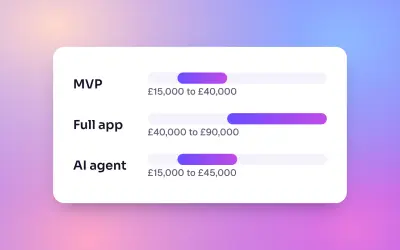 PricingWhat apps and AI agents cost, in pounds.
 Flutter app developmentOne Flutter codebase for iOS and Android.
 React Native app developmentCross-platform apps written in React Native.
 iOS app developmentNative Swift apps for iPhone and iPad.
 Android app developmentNative Kotlin apps for Google Play.
 Web app developmentWeb platforms, portals and dashboards.
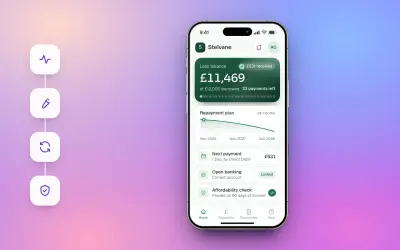 Maintenance and supportUpdates, monitoring and OS releases.
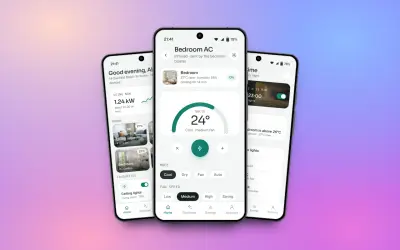 DigiliteAppliance control, routines, energy graphs and family access.
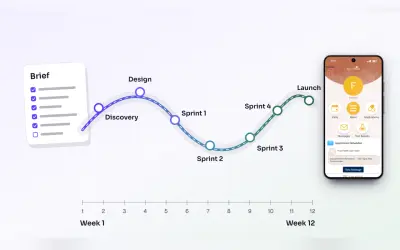 How to make an app: the routes, the cost and a 12-week planHow to make an app in the UK: pick a route by budget, fill a one-page brief, see one example priced line by line and a 12-week plan.
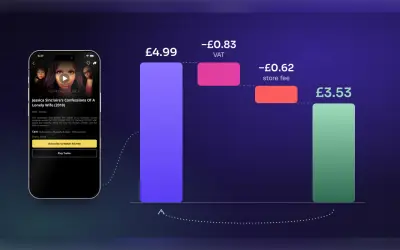 How do free apps make money? How do free apps make money? See what a UK sale leaves after VAT and store fees, the audience each model needs, and what each adds to the build.
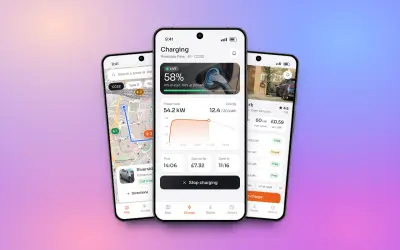 Tiger ChargeLive charger status, scan to charge and a prepaid wallet.