Food delivery app development for UK restaurants and food brands, with ordering, kitchen and courier apps
Our food delivery app development covers the customer ordering app, the restaurant order screen, the courier app and the admin panel behind them. Prices are in pounds, UK allergen and rider data rules are planned from week one, and the code is yours.
Allergens shown before the order and again at the door
Code, store accounts and customer list in your name from the first commit
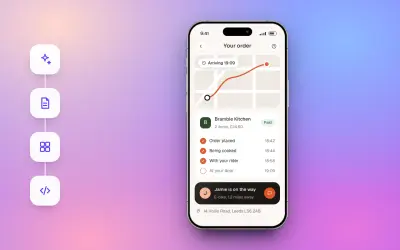
9:41
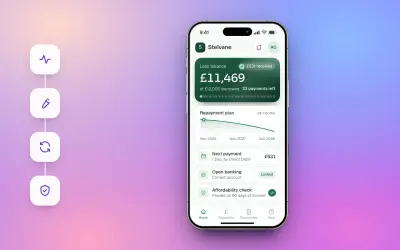
Your order
Arriving 19:09
B
Bramble Kitchen2 items, £24.60
Paid
Order placed18:42
Being cooked18:44
With your rider18:58
At your door19:09
J
Jamie is on the wayE-bike, 1.2 miles away
14 Hollis Road, Leeds LS6 2AB
Rules this build is planned around
Allergens at two pointsFood businesses in England, Northern Ireland and Wales that sell food online or by phone
Natasha’s Law and packed foodBusinesses that pack food on site before it is ordered, such as sandwiches, salads or pizzas
Rider location and UK GDPRAny business that tracks riders or shows customers a live map
Monitoring riders at workBusinesses whose riders deliver on their behalf, employed or not
Security and compliance
Cyber EssentialsCertified
Cyber Essentials PlusIndependently tested
ISO/IEC 27001:2022Information security
ISO 9001:2015Quality management
ISO/IEC 42001:2023AI management
SOC 2 Type IIAudited controls
UK GDPR andData Protection Act 2018
ICORegistered
NHS DSPTData security toolkit
WCAG 2.2 AAAccessibility
PCI DSSCard data security
How much does it cost to develop a food delivery app?
An ordering app for one restaurant or a small group costs £15,000 to £30,000 and takes 8 to 12 weeks. A marketplace with restaurant panels and a courier app costs £40,000 to £60,000 over 4 to 5 months. A full platform with live rider tracking costs £55,000 to £90,000 over 4 to 8 months. Prices exclude VAT, and every build starts with a two-week discovery that ends in one fixed price. An ordering app for an imaginary two-site takeaway whose own staff deliver comes to £25,500 fixed. Price your own version with the calculator on this page, and see every price line we sell on our app development cost page.
Discovery
2 weeks, ending in a fixed price
Ordering app
8 to 12 weeks
Marketplace with courier app
4 to 5 months
Full platform, live tracking
4 to 8 months
Our food delivery app development services
A delivery product is several apps that talk to each other, and each one names who uses it. Trust shapes where people order: 48% of respondents considered the food hygiene rating when choosing a takeaway (FSA Food and You 2 hygiene rating report, September 2026).
01
Customer ordering app
Customer
Customers browse the menu, fill a basket, pick delivery or collection and pay by card, Apple Pay or Google Pay. They see each dish's allergens before they pay and follow the order step by step, and a repeat order starts from their history. One Flutter codebase covers iPhone and Android. UK phones split almost evenly, with iOS on 50.14% and Android on 49.85% (StatCounter, October 2026).
02
Restaurant order screen
Kitchen
A tablet at the pass rings when a new order lands. Staff accept it, set a prep time and mark a dish sold out, which takes it off the menu at once. Big buttons and a loud alert suit a hot, noisy kitchen.
03
Courier app
Rider
Riders get job offers and move through pickup and drop-off steps. Directions open in the phone's own map app, and proof of delivery is a photo or a code. Location is shared only while a job is active. If your own staff or a partner firm deliver, you can skip this app.
04
Admin and dispatch panel
Operations
One web panel holds orders, refunds, menus, opening hours, delivery zones and fees, and dispatch sends each job to a free rider. Every refund and menu change is logged with who made it.
05
Promotions and repeat orders
Marketing
Discount codes, loyalty points, push messages and a nudge to customers who have gone quiet. Marketing goes only to customers who said yes, and the app stores the date.
06
Links to tills, payments and maps
Links
Menus can sync from your till or POS system, and payments run through a provider on an account in your name. Each link needs the supplier to grant access, so we ask in week 2 and list each fee on the quote.
Building in food delivery means rules you cannot get wrong. Talk them through with the developers who would build to them.
Which UK rules shape food delivery app development?
We plan these rules in discovery. We are a software team, not a law firm, so your adviser confirms what applies.
Allergens at two points
Applies to
Food businesses in England, Northern Ireland and Wales that sell food online or by phone
What it changes in the build
The Food Standards Agency says allergen information must be given before the purchase is completed and again on delivery. It advises giving it in writing both times, so our checkout shows each dish’s allergens before payment, and the order slip carries them to the door. Both points are checked on every release. Around 6% of UK adults, about 2.4 million people, are estimated to have a clinically confirmed food allergy (FSA PAFA study, 2024).
Natasha’s Law and packed food
Applies to
Businesses that pack food on site before it is ordered, such as sandwiches, salads or pizzas
What it changes in the build
Food packed where it is sold, before anyone orders it, is prepacked for direct sale. Over the counter it needs a label with its name and full ingredients, with the 14 allergens emphasised. Sold online or by phone, the label rule does not apply, but allergen information is still due before purchase and at delivery. So each dish gets a field: made to order or packed in advance.
Rider location and UK GDPR
Applies to
Any business that tracks riders or shows customers a live map
What it changes in the build
The ICO says tracking location, combined with another risk factor, calls for a data protection impact assessment (DPIA). The app shares a rider’s location only during a job and stops on delivery. A deletion date for location history goes into the spec, and a draft DPIA is ready by week 2.
Monitoring riders at work
Applies to
Businesses whose riders deliver on their behalf, employed or not
What it changes in the build
The ICO’s guidance on monitoring workers covers anyone who does work on your behalf. It says consent is not usually right at work, because of the imbalance of power. Workers must be told about monitoring before it starts, so a notice screen at first sign-in says what is tracked and why. You and your adviser choose the lawful basis.
The data protection fee
Applies to
Organisations, including sole traders, that use personal information
What it changes in the build
The ICO says these organisations must pay a data protection fee unless they are exempt. You hold the customer list, so the fee sits with you, and it appears on our quote under costs paid to others.
Which screen does each UK rule change?
Each rule lands on one screen or field, so you can check it before launch.
UK ruleScreen or field
01UK ruleAllergens before the purchase
Screen or fieldCheckout lists each dish’s allergens before payment
In writing, as the Food Standards Agency advises.
02UK ruleAllergens at delivery
Screen or fieldOrder slip printed from the restaurant screen
It lists the allergens of every dish in the bag.
03UK ruleNatasha’s Law
Screen or fieldDish type field: made to order or packed in advance
04UK ruleRider location and the DPIA
Screen or fieldLocation shared only during a job
Deletion date in the spec; draft DPIA by week 2.
05UK ruleMonitoring workers
Screen or fieldRider notice screen at first sign-in
06UK ruleData protection fee
Screen or fieldCosts paid to others, listed on the quote
Three apps, one order
Customer, restaurant and rider see the same order live.
“Drivers want three things: find a working charger, start charging without fuss and pay without surprises. AppAgentix built the Android app, the prepaid wallet and the link to our chargers. Live charger status is accurate, starting a session is a scan and a tap, and the wallet settles the right amount even if the connection drops. The app has passed 10,000 downloads with a 4.1 star rating, and our manual billing work has dropped sharply.”
“We wanted one streaming service that felt the same on phone, tablet and TV, whether people watch free with adverts, subscribe or rent a film. AppAgentix built the apps for iPhone, iPad, Android and Apple TV and the service behind them. They got the hard parts right: playback that starts quickly, a home screen that works with a TV remote, and billing that stays correct. The Android app has passed 50,000 downloads.”
“Our patients needed the portal in their pocket: requesting visits, reading test results, reordering medicines and messaging their care team. AppAgentix built the Android app on our Epic MyChart system, careful where it matters: secure sign-in, no clinical detail on the lock screen, and patients choose what fitness data they share. The app has passed 50,000 downloads with 4.4 stars from over 750 reviews, and every release was tested before it reached our patients.”
Apps we have built for ordering, tracking and paying
A few examples from the many apps we have built where people find something nearby on a map, book it, follow it live and pay in the app.
EV charging
Tiger Charge: map, live status and in-app payment
What we built
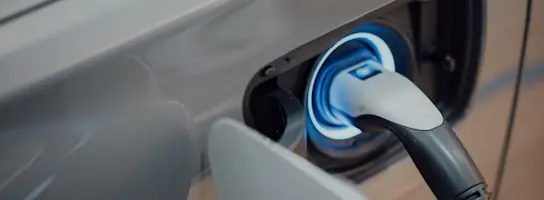
In Tiger Charge, which we built, drivers see nearby chargers on a Google Maps view and confirm one is free before setting off, then follow their session live on the phone until it ends. Payment comes from a prepaid wallet, an invoice follows each session, and alerts reach them as push notifications, texts or emails. Kotlin powers the Android app and Node.js the server side.
More than 40% of sessions now begin in the app without anyone phoning support
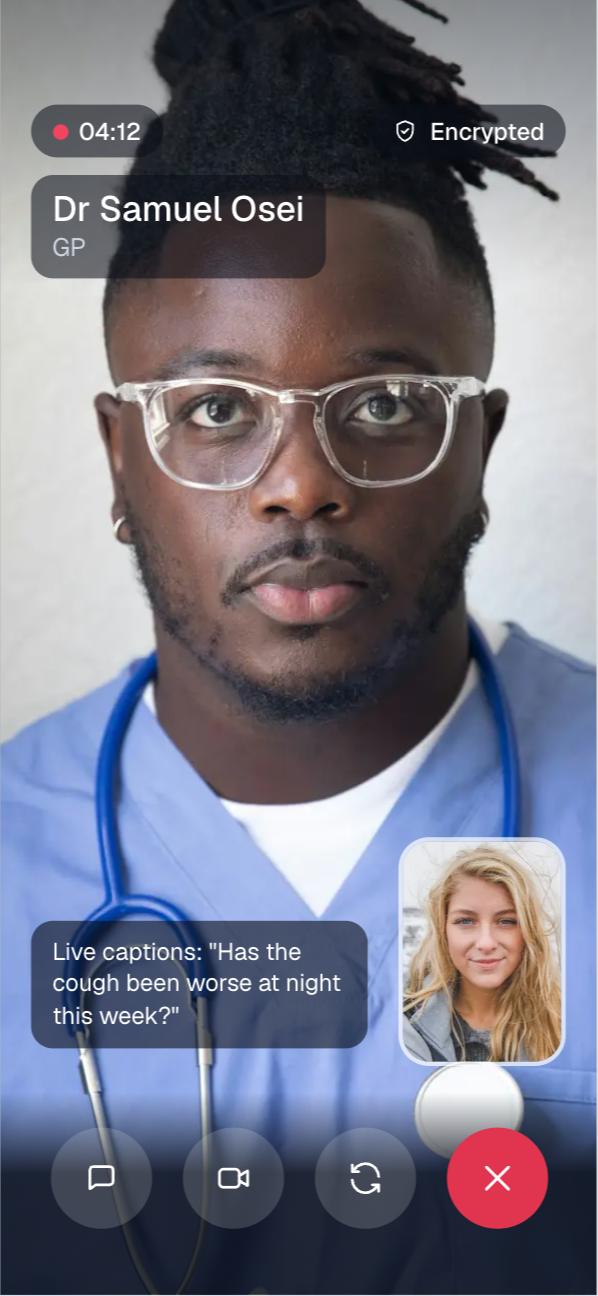
Telehealth app: book a slot, pay and get reminders
What we built
Patients using this telehealth app, which we built for Android and iOS, choose a clinician, pick an open time and pay their bill without leaving it. Reminders and notifications keep them on schedule, and doctors and administrators sign in with their own roles to manage appointments on the other side.
Five screens pass one order along, and the customer sees every step.
01Customer app
Basket, allergens and payment confirmed; the order goes out with the address
02Restaurant screen
It rings, staff accept and set a prep time, and the customer sees it
03Dispatch panel
It sends the job offer to a free rider near the shop
04Courier app
The rider collects, delivers and takes a photo or code; location sharing ends
05Order status
The customer sees it delivered and can rate the meal
Step 05 feeds step 01: the loop repeats
Marketplace, template or your own app: how does the money work?
Three ways to take orders online, side by side.
Topic
Listing on a delivery marketplace
Ordering template or white label
Your own app with us
What you pay
A commission on each order, no build cost
A monthly licence
One build price, then a monthly support plan
Costs that grow with orders
The commission
Payment fees, plus what the licence sets
Payment, mapping and text fees
Who holds the customer list
The marketplace
Set by the vendor contract
You, from the first commit
Main drawback
Less margin on each order
Screens and delivery rules are set by the product
It brings no new customers by itself
These routes can run side by side: a marketplace listing for new customers and your own app for regulars.
Marketplace listing, template or your own app?
Pick the row that sounds most like your business today. Trust also differs by channel. Of respondents, 45% were confident that food delivery services ensure food is safe, against 60% for takeaways (FSA Food and You 2 annual report, 2025).
Which route fits your food business now?
IfMost orders come from people who have not heard of you yet
ChooseStay on a delivery marketplace
The marketplace brings the demand, and your own app would not replace that on day one.
IfYou run one shop with a simple menu and need online ordering soon
ChooseAn ordering template or white label
It is ready-made, so there is nothing to build first.
IfYou have regulars, several sites, or a delivery model no template supports
ChooseYour own app with us
You own the customer list and the code, and you set the fees and delivery rules.
IfYour monthly commission is above the running cost of your own app
ChooseYour own app for regulars, a marketplace for new customers
Repeat orders through your app keep the margin, once the build and running cost are covered.
IfYour monthly commission is below that running cost
ChooseDo not build yet
Spend on the menu or on marketing, and check again when orders grow.
What does the kitchen test report show?
You get this before launch, and the example is an imaginary two-site pizza takeaway.
ExampleKitchen test report, ordering app release candidateAppAgentix
Check
Device
Result
Expected result
New order rings and is accepted
Samsung Galaxy Tab A9+ at the pass
Pass
The alert sounds at full volume, and the customer app shows the order as accepted.
Sold-out switch removes a dish
Galaxy Tab A9+ and iPhone 15
Pass after fix
The dish leaves the menu within 3 seconds. Marked as a pass only after a fix and a retest.
Card payment fails, then retries
Pixel 8
Pass
The basket is kept, and the card is charged once.
Allergens shown at both stages
iPhone 15 and the slip printer
Pass
Checkout and the order slip list the allergens of each dish.
Tablet loses Wi-Fi mid-service
Galaxy Tab A9+
Pass
A warning shows, and orders arrive in full once it reconnects.
Customer changes the order after it is accepted
iPhone 13 and the tablet
Open
The changed order rings on the tablet. Launch waits until this check passes on a retest.
An example, not a client record, and nothing goes live until you have read the report, misses included.
How can I develop a food delivery app?
It follows our usual process with one change: the restaurant screen is tried in a working kitchen, and the courier app on a real route. A project team is usually 4 to 6 people. More than 95% of our projects are delivered on or before the agreed date.
Weeks 1 to 201
Discovery
We map one order from tap to doorstep and write the fixed quote.
Weeks 3 to 402
Design and kitchen test
Five customers try the screens, and kitchen staff try the order screen in a service.
Weeks 5 to 903
Food delivery app development sprints
Two-week sprints for menus, basket, payment and the restaurant screen.
When included04
Courier app and dispatch
Job offers and dispatch, tried on a real route, which adds weeks.
Weeks 10 to 1105
Test run
Failed payments, sold-out dishes and changed orders are tried on purpose.
Week 1206
Launch
Store listings go live under accounts in your company name.
What does each food delivery app development package include?
Each package below lists what you receive. Discovery ends with one fixed figure, and the calculator below prices your own mix.
01
Discovery
Comes off the build price
2 weeks
Scope, clickable prototype and a fixed quote.
02
Restaurant app development, one site or a small group
Quoted after discovery
8 to 12 weeks
Customer app on both phones, restaurant order screen, card payments, allergen fields and store launch.
03
Marketplace with restaurant panels and a courier app
Quoted after discovery
4 to 5 months
Many restaurants, each with a panel, a courier app with proof of delivery, and an admin panel.
04
Full platform with live rider tracking
Quoted after discovery
4 to 8 months
A live map for customers and dispatch, several areas, till links, promotions and reports.
05
AI feature on one workflow
Quoted after discovery
6 to 10 weeks added
For example delivery-time prediction, tested on your own past orders.
06
Support and running
After launch
monthly
Fixes, updates, monitoring and a monthly report. 30 days' notice after a 3-month minimum.
Three months of fixes after launch are in the build price, while couriers, the number of restaurants and live tracking move the price the most.
Estimate your food delivery app in a minute
Pick who delivers, how people pay and what the first version needs.
Included to start: Discovery, design, the customer app, a restaurant order screen, allergen fields and store launch. 8 to 10 weeks.
What does the quote not include?
These costs sit outside our fixed price, so you can plan for them.
Alcohol licensing and age checks
A licensing matter for you and your licensing authority. We build the screens.
Rider insurance and employment status
Whether riders are employed or self-employed, and their cover, is for you and your adviser.
Payment, mapping and text-message fees
Charged by those providers on accounts in your name, with a monthly estimate on the quote.
Hosting
Paid at cost in a cloud account in your company name.
The ICO data protection fee
Paid by you as the business that holds the customer list.
Food safety and allergen advice
You enter and check every allergen; we build and test the fields.
Who owns the code, the menu data and the customer list?
You do, from the first commit, because source code sits in your repository, and the licence is assigned to you on payment. Apple, Google, payment and cloud accounts are opened in your company name, with us as invited users you can remove.
Menu data, order history and the customer list export to a spreadsheet at any time. Customer data is kept in the UK or EU cloud region you choose in discovery.
At handover you get a runbook, a system diagram and a recorded walkthrough.
Need a price before you go to the board? A two-week discovery ends in one fixed figure, and you own the code from the first commit.
The ten questions discovery starts with: users, the jobs they need done, systems to connect, rules, deadline and budget. Fill it in, attach nothing else, and the first call starts at the right place.
How much does it cost to make a food delivery app?
With us, an ordering app for one restaurant or a small group costs £15,000 to £30,000, excluding VAT. A marketplace with a courier app or a full platform with live rider tracking costs more, and the calculator above prices your own mix.
How much does it cost to build an app for a restaurant?
An ordering app with a restaurant order screen, card payments and allergen fields costs £15,000 to £30,000 and takes 8 to 12 weeks. A two-week discovery fixes the price and comes off the build price. Table booking can be added to the same app.
What are apps for food delivery?
Food delivery apps let customers order meals from a restaurant on their phone and have them delivered or collected. Behind the customer ordering app sit three more: the restaurant order screen, the courier app for riders and a web admin panel. A restaurant whose own staff or a partner firm deliver can skip the courier app.
How can I develop a food delivery app?
First decide who delivers: your own staff, a partner firm or riders on your own courier app, then a two-week discovery fixes the scope and price. Build in two-week sprints, test in a working kitchen and launch with your store listings. An ordering app takes 8 to 12 weeks.
Can I create my own food delivery app?
Yes, since you can start with an ordering app for regulars and keep a marketplace listing for new customers. With us, the code and the customer list are yours from the first commit. First check that your monthly commission is above the cost of running your own app.
How does restaurant delivery work?
Restaurant delivery works as a hand-off: the customer pays in the app, and the restaurant’s tablet rings so staff accept it and set a prep time. The dispatch panel then offers the job to a free rider near the shop, who collects and delivers. The rider proves delivery with a photo or a code, and the customer sees the order marked delivered.
How do food delivery apps make money?
A marketplace earns a commission on each order placed through it. An app for your own restaurant keeps the margin on repeat orders instead, once that margin covers the app’s running cost.
How to build a food ordering app?
Start with the menu data: every dish, option, price and allergen, then build the basket and payment, the restaurant order screen and the store listing. Test each part with real customers and kitchen staff. With us, that takes 8 to 12 weeks for one restaurant or a small group.
Most app projects run late. Let’s make yours the one that ships.
More than 95% of our projects are delivered on or before the agreed date. About 60% of our clients come back for a second project.
What happens next
1We reply within 30 minutesEvery day of the year. A developer at our app development company, not a sales team, reads your brief.
2A 30-minute callWe ask about users, deadlines and the systems you already run.
3A written view in two working daysScope, timeline and a price range, yours to keep.
Thank you. Your brief is in.
A developer, not a sales team, reads it. We reply within 30 minutes, from info@appagentix.co.uk.
We use cookies to run this site and, with your permission, to understand how it is used. Cookie policy · Privacy policy
Most app projects run late. Let’s make yours the one that ships.
More than 95% of our projects are delivered on or before the agreed date. About 60% of our clients come back for a second project.
What happens next
1We reply within 30 minutesEvery day of the year. A developer at our app development company, not a sales team, reads your brief.
2A 30-minute callWe ask about users, deadlines and the systems you already run.
3A written view in two working daysScope, timeline and a price range, yours to keep.
We wanted one streaming service that felt the same on phone, tablet and TV, whether people watch free with adverts, subscribe or rent a film. AppAgentix built the apps for iPhone, iPad, Android and Apple TV and the service behind them. They got the hard parts right: playback that starts quickly, a home screen that works with a TV remote, and billing that stays correct. The Android app has passed 50,000 downloads.
Michael S.CEO and Co-Founder, Play Now Media
Thank you. Your brief is in.
A developer, not a sales team, reads it. We reply within 30 minutes, from info@appagentix.co.uk.
 WCAG 2.2 AAAccessibility
 SwiftGeneral-purpose language for all Apple platforms and servers
 SwiftUIDeclarative screens for every Apple platform
 KotlinGoogle’s preferred language for Android
 Jetpack ComposeAndroid’s current toolkit for screens
 FlutterMobile, web and desktop apps from one codebase
 React NativeNative Android and iOS apps built with React
 FigmaScreens and clickable prototypes you can test
 TypeScriptTyped JavaScript that catches errors early
 Node.jsJavaScript runtime for scalable network applications
 PythonLanguage for web development and scientific work
 PostgreSQLOpen-source database; pgvector adds vector search
 RedisIn-memory store for caching and live messages
 FirebaseFirestore and Realtime Database: store and sync app data
 AWSCloud hosting with a London region
 CloudflareContent delivery, caching and attack protection
 GitHub ActionsCI/CD platform to automate build, test and deployment
 SentryCaptures errors and alerts you with full context
 MVP developmentA first version for users and investors.
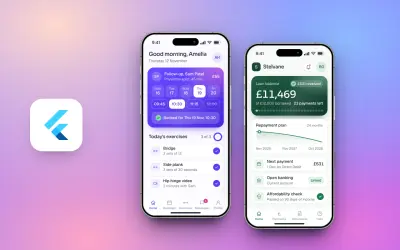 Flutter app developmentOne Flutter codebase for iOS and Android.
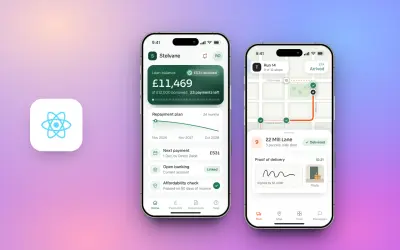 React Native app developmentCross-platform apps written in React Native.
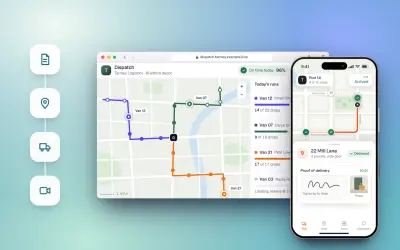 LogisticsDriver, depot and tracking apps.
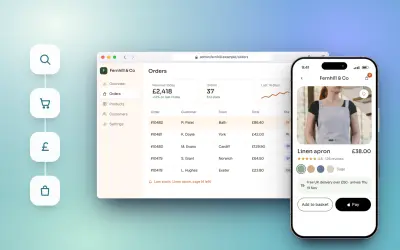 EcommerceShopping apps and online stores.
 Maintenance and supportUpdates, monitoring and OS releases.
 PricingWhat apps and AI agents cost, in pounds.