Aviation software development company for UK ramp, crew and maintenance teams
Our aviation software development team builds ramp, hangar, crew and safety apps for UK airlines, airports, ground handlers and maintenance organisations. Prices are in pounds, the UK record periods are built into each screen, and the code and accounts are yours.
Aviation MVP in 8 to 14 weeks, one app and one system link
3-year, 5-year, 24-month and 72-hour rules built into the records
Code, designs and accounts in your name from the first commit
ops.example-regional.example/board
Ops controlBrackmoor Air · Fri 13 Nov · early waveSafety report SR-041261h 12m61h 11m left of 72h06:58LF
Departures today18On time so far3 of 3Turnarounds live4Crew duty flags1
StandFlightRegSTDTurnaroundTeamDuty plan
Stand 1214InvernessEX-0306:55Off stand 06:54Team AK. Walsh9:10 / 13:00
Stand 2305JerseyEX-0507:10BoardingDoors closedTeam CD. Okafor8:25 / 12:30
Stand 4118BelfastEX-0207:25FuellingTeam BH. Pryce12:05 / 12:15Near limit
Stand 5422NewquayEX-0607:40CleaningTeam AK. Walsh10:20 / 13:00
Stand 7230CardiffEX-0407:55Unloading · +14Team DS. Mahon7:45 / 13:00
Hangar 2511AberdeenEX-0108:10Release due 07:30Team BH. PryceReports 07:10Crew of 3
Rules this build is planned around
Part-145 maintenance records (145.A.55)Maintenance organisations approved under UK Part-145
Part-CAMO record keeping (CAMO.A.220)Continuing airworthiness management organisations
Electronic flight bag approval (CAT.GEN.MPA.141, SPA.EFB.100)Commercial air transport operators using an EFB
Crew duty records (ORO.FTL.245)Operators and crew under the UK flight time rules
Security and compliance
Cyber EssentialsCertified
Cyber Essentials PlusIndependently tested
ISO/IEC 27001:2022Information security
ISO 9001:2015Quality management
ISO/IEC 42001:2023AI management
SOC 2 Type IIAudited controls
UK GDPR andData Protection Act 2018
ICORegistered
NHS DSPTData security toolkit
WCAG 2.2 AAAccessibility
PCI DSSCard data security
What does our aviation software development work include for UK operators?
Our aviation software development work covers the tools used around the aircraft: ramp checklists, hangar task cards, crew duty records, safety reports and flight bag support apps. A two-week discovery fixes the scope and price. A first app with sign-in, an admin screen and one system link takes 8 to 14 weeks. We do not build certified avionics.
Discovery
2 weeks, ends in a fixed quote
Aviation MVP
8 to 14 weeks, one app
Full platform
4 to 8 months, several system links
Support
Monthly
What type of software is used in aviation?
Six apps we build around the aircraft, and each one starts from the check, clock or keep date it has to enforce.
01
Ramp and turnaround app
Ground team
A turnaround step counts as done only when someone ticks it with their name and the time. A missed step stays red on the control-room board, and step times flow to your ops control system.
02
Maintenance task cards and sign-off
Technician
A task that needs a second-person check cannot close until that person signs with their own PIN. Each card shows its last backup time against the 24-hour limit for electronic work cards, and work packages come from your maintenance system.
03
Crew duty and rest records
Crew
Every record shows its own keep date: 24 months for flight times, duty, flight duty periods, rest, days free and home base. Reports on reduced rest and extended flight duty periods sit beside it.
04
Safety reports with a 72-hour clock
Safety
The 72-hour clock starts at the time the reporter became aware, not when the form is sent. Anyone on the ramp, hangar or crew files from a phone with photos, and the safety manager is alerted before the clock ends.
05
Electronic flight bag support apps
Pilot
Every version of a flight bag app ships with a release note. It says whether the version needs new hardware or a new operating system or adds a Type B application, the changes that repeat the CAA approval.
06
Operations control board
Control room
The board is read-only and shows today's flights by stand, turnaround progress, open defects and crew duty flags. Every change is made in the app that owns the record, so each entry keeps one name and time.
Is your team working around software that no longer fits the business? Tell us where it hurts and we will say what to build first.
Which UK rules shape aviation software development?
We are an engineering team, not a regulator, safety consultant or legal adviser: your accountable manager and quality manager confirm your position. Figures follow the published UK text as of November 2026.
Part-145 maintenance records (145.A.55)
Applies to
Maintenance organisations approved under UK Part-145
What it changes in the build
Detailed maintenance records and each certificate of release to service: 3 years from that release. Management system records and contracts: at least 5 years. Staff records: 3 years after the person leaves.
Part-CAMO record keeping (CAMO.A.220)
Applies to
Continuing airworthiness management organisations
What it changes in the build
Work records: until 3 years after responsibility for the aircraft passes for good to someone else. Management records and contracts: at least 5 years. If the organisation stops, records go to the aircraft owner, so the app exports a full set per aircraft.
Electronic flight bag approval (CAT.GEN.MPA.141, SPA.EFB.100)
Applies to
Commercial air transport operators using an EFB
What it changes in the build
Prior CAA approval, repeated after a change of hardware or operating system or a new Type B application. A Type B application also needs an EFB administration system, so the app keeps a version list per device.
Crew duty records (ORO.FTL.245)
Applies to
Operators and crew under the UK flight time rules
What it changes in the build
Flight times, duty and flight duty periods, rest, days free and home base: 24 months per crew member. Reports on extended flight duty periods and reduced rest are kept too, and crew get copies on request.
Occurrence reporting (UK Reg 376/2014, Article 4)
Applies to
Pilots in command, maintenance and ground handling staff and others named, and UK organisations that collect reports
What it changes in the build
Those named report within 72 hours of becoming aware, unless exceptional circumstances prevent this. A UK organisation then tells the CAA as soon as possible and no later than 72 hours after becoming aware, and our clock starts at the time of awareness.
UK GDPR and staff monitoring
Applies to
Employers that monitor staff or crew, whatever the contract
What it changes in the build
The ICO's guidance on monitoring workers covers the UK GDPR and the Data Protection Act 2018. It is under review after the Data (Use and Access) Act. Our apps record device location only on shift, with a data map of every stored field.
“Drivers want three things: find a working charger, start charging without fuss and pay without surprises. AppAgentix built the Android app, the prepaid wallet and the link to our chargers. Live charger status is accurate, starting a session is a scan and a tap, and the wallet settles the right amount even if the connection drops. The app has passed 10,000 downloads with a 4.1 star rating, and our manual billing work has dropped sharply.”
“A smart home app only works if the whole family trusts it. AppAgentix built our Android app so every appliance and routine sits in one place, with each family member given the right access. Commands reach the device in a moment, the app shows honestly when something is offline, and voice control works through Google Assistant and Alexa. The listing holds a 4.9 star rating. Every release was tested on real devices in real homes.”
“We wanted one streaming service that felt the same on phone, tablet and TV, whether people watch free with adverts, subscribe or rent a film. AppAgentix built the apps for iPhone, iPad, Android and Apple TV and the service behind them. They got the hard parts right: playback that starts quickly, a home screen that works with a TV remote, and billing that stays correct. The Android app has passed 50,000 downloads.”
A few examples from the many apps we have built, each sharing a mechanic aviation apps need: full record history, live equipment status or shared access.
Healthcare
Clinic records system
What we built
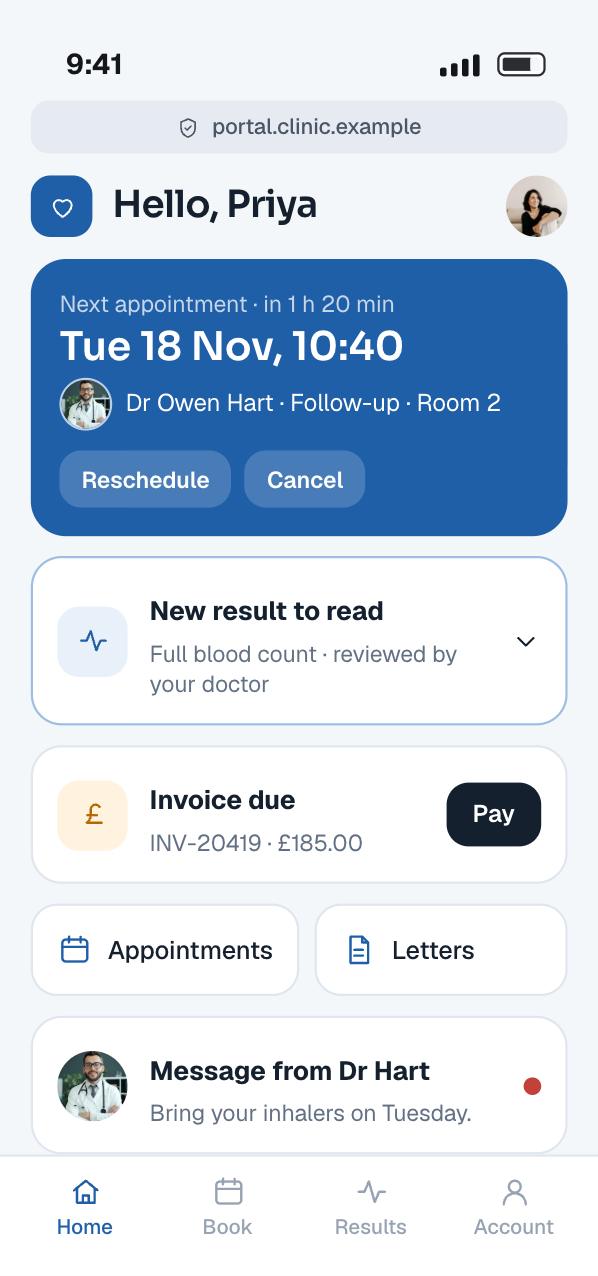
We built a records platform for a healthcare business. Staff keep each patient's history, notes and appointments in one place, and lab results arrive through HL7 and FHIR links.
We built Tiger Charge for a charging network. Drivers see every station on one map with live charger status, scan a charger to start or stop a session and pay from a prepaid balance.
Over 40% of charging sessions begin in the app with no call to support, and manual billing work fell by 70%.
We built Digilite for a home automation company, where owners switch and schedule appliances from anywhere, watch live energy use and give family members their own access.
In our builds, each rule becomes a screen, a record or a keep date.
RuleScreen or record
01RulePart-145 maintenance records
Screen or recordTask card with photos, a locked sign-off and a keep date 3 years after the release
02RulePart-145 work cards, 145.A.45(e)
Screen or recordBackup database updated within 24 hours of each entry
03RulePart-CAMO record keeping
Screen or recordAircraft record set kept 3 years after responsibility passes
04RuleFlight bag administration, SPA.EFB.100
Screen or recordAdmin screen showing which app version runs on which device
05RuleCrew duty records
Screen or recordCrew record with a 24-month history and a copy on request
06RuleOccurrence reporting
Screen or recordSafety report form with a 72-hour clock from the time of awareness
What keep date does each record get?
The app sets each keep date from the event that starts the rule, shows it on the record and blocks deletion before then. The records are imaginary.
ExampleKeep-date schedule, six imaginary recordsAppAgentix
Record
Event date
Rule
Keep until
Certificate of release to service with its detailed maintenance records
12 March 2026
145.A.55: 3 years from the certificate of release to service
12 March 2029
Management system process record
3 June 2026
145.A.55: at least 5 years
At least 3 June 2031
Crew member's flight and duty record
14 November 2026
ORO.FTL.245: 24 months
14 November 2028
Continuing airworthiness record, aircraft responsibility passes for good to another organisation
30 September 2026
CAMO.A.220: until 3 years after the permanent transfer
30 September 2029
Part-CAMO personnel record, the person leaves
31 August 2026
CAMO.A.220: until 3 years after the person has left
31 August 2029
Continuing airworthiness record, aircraft still managed
Not fixed yet
CAMO.A.220: until 3 years after the permanent transfer
Open: date set when the aircraft transfer is confirmed
An example, not a client record. Your quality manager confirms which periods apply to your approval.
What are electronic flight bags?
An electronic flight bag (EFB) is a device used on the flight deck that hosts EFB apps and other software, and the CAA describes two kinds.
An electronic flight bag (EFB) is a device used on the flight deck that hosts EFB apps and other software, and the CAA describes two kinds. A portable EFB is not part of the certified aircraft and, if mounted, the crew must be able to remove it without tools. An installed EFB is an aircraft part, covered by the aircraft's airworthiness approval.
For commercial air transport, CAT.GEN.MPA.141 requires prior CAA approval. The operator sends the SRG1849 checklist, an EFB policy and procedures manual and a risk assessment, then runs an operational evaluation test. Once its final report is accepted, the approval is added to its operations specification, while we build the app on a portable device, never the approval.
When does an app update repeat the CAA approval?
The CAA page names three changes after which the EFB approval process must be repeated, and each release note we write checks the version against them. The app is imaginary.
Flagged as an approval change. The release waits until your EFB administrator confirms.
Operating system update
Change to the operating system: approval repeated
Flagged the same way, with the old and new version for each device.
New Type B application
New Type B application: approval repeated
Flagged the same way. It reaches no device until your EFB administrator confirms.
Fix inside an already approved app
Not one of the three changes the page names
Open: listed in the release note, and your EFB administrator and flight operations inspector confirm what it needs.
An example, not a client record. The operator holds the CAA approval and settles each change with the CAA.
Which work needs a new app, and which stays in your current system?
Before any quote, discovery checks whether your current system has an API, and if it does, the app fills only the gap.
Where does your current software stop fitting the work?
IfYour maintenance or rostering system suits the office, but the hangar or ramp uses paper
ChooseKeep it and add a companion app
The app reads work through its API and writes results back, and you own the app.
IfNo product fits one narrow process, such as a turnaround checklist
ChooseBuild one narrow app
One build price, then running costs, and 8 to 14 weeks to a first release.
IfYou need an app on the crew's portable flight bag
ChooseA flight bag support app from us
The operator holds the CAA approval, and we supply release notes and test results.
IfThe software runs inside the aircraft or touches flight controls or navigation data
ChooseA certified avionics supplier, not us
That software is certified with the aircraft under its airworthiness approval.
What does a filled maintenance task card look like?
One night shift on our hangar task card app. The organisation, aircraft and people are imaginary.
ExampleMaintenance task card, night shift, one imaginary aircraft (EX-01)AppAgentix
Task
Who
Signed
Records kept
Result
Wheel and brake change, left main gear
Technician B. Hale; certifying engineer R. Osei
22:40 and 23:05, PIN and name
Task reference, part and batch numbers, 2 photos
Pass
Engine oil top-up and leak check
Technician S. Clarke
00:15, PIN and name
Quantity added, photo of the sight glass
Pass after fix: a photo taken where the hangar had no signal did not upload. The fixed build holds it until the server confirms, and the rerun synced at 00:52.
Cabin emergency light test
Technician A. Novak
01:30, PIN and name
Result for each light, 1 light replaced
Pass
Control cable tension check
Technician T. Brooks; second check not yet signed
02:10, technician only
Tension readings, tool number
Open: the second-person check is not done, so the card stays open for the morning shift lead.
Backup of the night shift entries
The app
02:14
Every entry copied to the backup database
Pass: backup updated 4 minutes after the last entry, inside the 24-hour limit
An example, not a client record. The card keeps a date 3 years after the release to service, which your certifying staff sign, never the software.
What does a crew duty record hold?
The first week of a 28-day record for one imaginary crew member, home base Base A. Each row holds the fields ORO.FTL.245 names: flight time, duty and flight duty period (FDP), rest and days free.
ExampleCrew duty record, one imaginary crew member, first 7 of 28 daysAppAgentix
Date
Duty start to end
Rest before
Days free
Flag
Day 1
05:10 to 13:40: duty 8h30, FDP 7h50, flight time 5h05
48h00
blank
None
Day 2
06:00 to 14:30: duty 8h30, FDP 7h55, flight time 5h15
16h20
blank
None
Day 3
13:00 to 22:45: duty 9h45, FDP 9h05, flight time 6h10
22h30
blank
Night stop away from home base
Day 4
08:15 to 13:45: duty 5h30, FDP 4h50, flight time 2h55
9h30, away from base
blank
Open: reduced rest under your scheme. The report awaits the crew planning lead, so the flag stays on.
Days 5 and 6
Free of all duties
blank
2
None
Day 7
05:30 to 12:10: duty 6h40, FDP 6h00, flight time 4h00
63h45
blank
None
An example, not a client record. Kept for 24 months, with a copy for the crew member on request.
How does an aviation software development project run?
Before launch, the app runs through a real shift, and every failed sync is logged and fixed.
Weeks 1 to 201
Discovery
We watch a real shift, list your systems and write the scope.
Weeks 3 to 402
Design and technician tests
Five of your staff try the screens on their own devices.
Weeks 5 to 1003
Build
A new working build reaches your own devices every two weeks.
Weeks 11 to 1204
Field test on a real shift
A night shift or a busy turnaround, signal gaps included.
Week 1305
Launch
Private release to your managed devices, under accounts in your company name.
How is aviation software development priced in the UK?
What each stage includes and how long it takes. Many published aviation software development prices are in US dollars, while ours are in pounds and exclude VAT. Price your own version with the calculator below.
01
Discovery
2 weeks
Scope, clickable prototype, system list and a fixed quote. Comes off the build price.
02
Aviation MVP
8 to 14 weeks
One app, such as a ramp checklist, task cards or crew records, with sign-in, an admin screen and one system link.
03
Full platform
4 to 8 months
Ramp, hangar, crew and control-room apps, several system links and audit trails.
04
AI feature, one workflow
6 to 10 weeks
For example a task code suggested from technician notes, with the running cost on the quote.
05
Support and running
monthly
Fixes, updates and a monthly report. Hours and response targets are set in the written scope. 30 days' notice after 3 months.
Three months of fixes after launch are included in the build price. Hosting, device management and vendor fees are extra. Every rate is on our app development cost page.
Estimate your aviation app in a minute
Pick what your ramp, hangar or crew teams need first.
Included to start: Discovery, design, one core aviation app with sign-in, a simple admin screen, a test on a real shift and launch. 8 to 10 weeks.
What is paid to others, and who owns the code and accounts?
Settled in writing before the build. The first three lines are paid to others, and the rest are yours.
Hosting and monitoring
Paid at cost in your own cloud account, as a monthly line on the quote.
Device management and app store fees
Billed by those providers.
Your system vendors' API fees
If a system vendor charges for API access, discovery names that fee.
Source code
In your repository from the first commit, with the licence assigned to you on payment.
Apple, Google and cloud accounts
In your company name, with us as invited users you can remove.
Your data
Held in the UK region you choose, written on the quote.
Refund promise
If we do not deliver what the written scope promises, we refund what you paid for the undelivered work within 7 days.
Which aviation software do we build, and which is not included?
We build the software used around the aircraft, while certified avionics goes to a certified avionics supplier.
Ground and ramp tools
Maintenance record software
Crew record software
Safety report apps
Flight bag support apps on portable devices
Control-room tools
Not included: certified avionics
It follows its own assurance standard and the aircraft airworthiness approval.
Not included: software installed in the aircraft
Or anything that touches flight controls or navigation data.
Not included: signing a release to service
Your certifying staff sign it, never software on their behalf.
Not included: the CAA approvals
The operator or organisation holds them.
Need a figure for the board? Get a written view of scope, time and price within two working days, yours to keep.
The ten questions discovery starts with: users, the jobs they need done, systems to connect, rules, deadline and budget. Fill it in, attach nothing else, and the first call starts at the right place.
Around the aircraft: ramp checklists, maintenance task cards, crew duty records, safety reports, control-room boards and flight bag apps for pilots. Inside it sits certified avionics, which has its own approval route and is outside what we build.
What are electronic flight bags?
A device on the flight deck that hosts EFB apps and other software. A portable one is not part of the certified aircraft, while an installed one is an aircraft part. Commercial air transport operators need prior CAA approval to use one.
Which software do pilots use?
Pilots use electronic flight bag (EFB) apps on a device used on the flight deck. Commercial air transport operators need prior CAA approval to use an EFB, and that approval repeats after certain changes. A new device, operating system or Type B application repeats it, so each version we ship carries a release note saying which.
How much does it cost to build an app in the UK?
In UK aviation, one example we priced, a hangar task card app, costs £26,000 excluding VAT and launches in week 13. It runs on Android phones and iPads, with photos, a locked sign-off, offline reading and one maintenance system link. A first app takes 8 to 14 weeks, and a full platform with several system links takes 4 to 8 months.
The design, build, testing and support of software made for one organisation's own process. In aviation, it can fill a gap a bought system leaves, such as task cards on a hangar tablet, and you own the code.
What is the best ERP software for the aviation industry?
Compare systems on four points. Does it cover Part-145 or Part-CAMO records, with the 3-year and 5-year keep periods and a full export per aircraft? Does it work at the aircraft without signal? Does it have an API an app can write task cards back to? If it falls short in the hangar or on the ramp, keep it and add a narrow app.
Let’s make your software project the one that ships on time.
More than 95% of our projects are delivered on or before the agreed date. About 60% of our clients come back for a second project.
What happens next
1We reply within 30 minutesEvery day of the year. A developer at our software development company, not a sales team, reads your brief.
2A 30-minute callWe ask about users, deadlines and the systems you already run.
3A written view in two working daysScope, timeline and a price range, yours to keep.
Thank you. Your brief is in.
A developer, not a sales team, reads it. We reply within 30 minutes, from info@appagentix.co.uk.
We use cookies to run this site and, with your permission, to understand how it is used. Cookie policy · Privacy policy
Let’s make your software project the one that ships on time.
More than 95% of our projects are delivered on or before the agreed date. About 60% of our clients come back for a second project.
What happens next
1We reply within 30 minutesEvery day of the year. A developer at our software development company, not a sales team, reads your brief.
2A 30-minute callWe ask about users, deadlines and the systems you already run.
3A written view in two working daysScope, timeline and a price range, yours to keep.
We wanted one streaming service that felt the same on phone, tablet and TV, whether people watch free with adverts, subscribe or rent a film. AppAgentix built the apps for iPhone, iPad, Android and Apple TV and the service behind them. They got the hard parts right: playback that starts quickly, a home screen that works with a TV remote, and billing that stays correct. The Android app has passed 50,000 downloads.
Michael S.CEO and Co-Founder, Play Now Media
Thank you. Your brief is in.
A developer, not a sales team, reads it. We reply within 30 minutes, from info@appagentix.co.uk.
 WCAG 2.2 AAAccessibility


 FigmaScreens and clickable prototypes you can test
 ReactThe library for web and native user interfaces
 Next.jsThe React framework for web applications
 TypeScriptTyped JavaScript that catches errors early
 Anthropic ClaudeClaude Fable 5.2, Opus 5.5, Sonnet 5.5, Haiku 5.5
 Google GeminiGemini 4 models for text, images, audio, video and PDF
 Node.jsJavaScript runtime for scalable network applications
 PythonLanguage for web development and scientific work
 PostgreSQLOpen-source database; pgvector adds vector search
 RedisIn-memory store for caching and live messages
 AWSCloud hosting with a London region
 Google CloudCloud hosting with a London region
 DockerPackages and runs an app in a container
 TerraformCloud set-up written as code, repeatable
 GitHub ActionsCI/CD platform to automate build, test and deployment
 SentryCaptures errors and alerts you with full context
 LogisticsDriver, depot and tracking apps.
 TravelBooking, check-in and guest apps.
 MVP developmentA first version for users and investors.
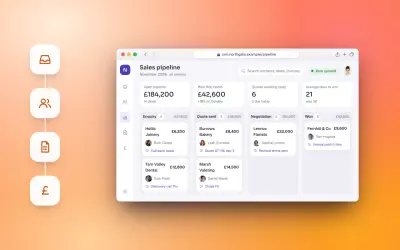 Custom CRM and ERPBusiness systems shaped around how you work.
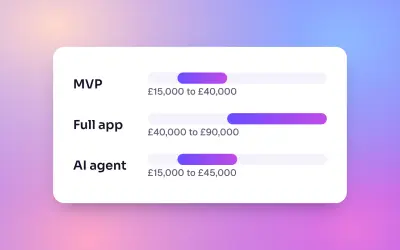 PricingWhat apps and AI agents cost, in pounds.
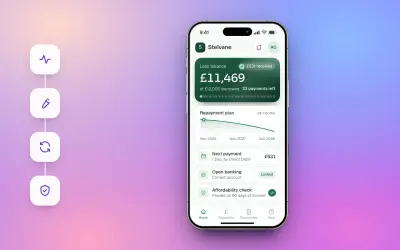 Maintenance and supportUpdates, monitoring and OS releases.
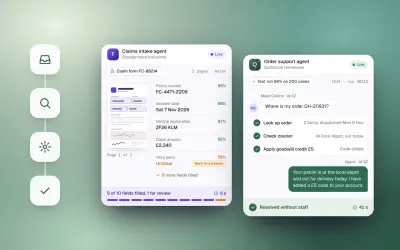 Agentic AI developmentAI agents that complete tasks in your systems.
 BristolMobile apps for Bristol businesses.