AppAgentix is an app development company for Liverpool founders, venues and firms. We design and build iPhone and Android apps, publish them on Google Play and the App Store, then look after them once people use them. Discovery lasts two weeks and closes with one fixed price, so you know the cost before the build starts.
A first version (MVP) typically takes us 9 to 10 weeks
Code, designs and store accounts in your company’s name
A test build to install every fortnight
Security and compliance
Cyber Essentials Certified
Cyber Essentials Plus Independently tested
ISO/IEC 27001:2022 Information security
ISO 9001:2015 Quality management
ISO/IEC 42001:2023 AI management
SOC 2 Type II Audited controls
UK GDPR and Data Protection Act 2018
ICO Registered
NHS DSPT Data security toolkit
WCAG 2.2 AA Accessibility
PCI DSS Card data security
What does an app development company in Liverpool do for you?
It takes your idea from a sketch to an app on people’s phones. We agree the scope and one fixed price in a two-week discovery, then design the screens and let real users try them before any code. We build the app with its server and staff panel and test every release on real iPhones and Android phones. Then we publish it on both stores and keep it updated.
First conversation
Free, 30 minutes
Quote
One fixed price after discovery
You see
A test build every fortnight
Once live
Fixes for 3 months included
Liverpool
An app development company for Liverpool founders, venues and firms
We are an app development company working with Liverpool businesses. We build the apps your customers, guests and staff use every day, and our Liverpool representative meets you in person, usually within a day or two of your first message.
Many mobile app development projects here start with a founder who has the idea and needs a team to build a first version. Others come from venues, port operators and health teams that want an app people keep opening. Either way, one named contact stays with you from the first call to launch day, and we reply to new enquiries within 30 minutes.
The first meeting can be at your office or your venue. Any regular visits are written into the scope before the price is fixed.
We plan each app around its sector. A guest booking a timed ticket, a driver at a gate with no signal and a patient checking an appointment need very different screens. These are the sectors that bring us the most Liverpool work.
professionals, 20,000 of them freelancers, at the city region’s digital and creative firms: the media and gaming market a creator app serves (Invest Liverpool City Region)
Mobile apps for iPhone and Android. Flutter or React Native gives you both from one codebase, which keeps the two versions in step and costs less than building twice. Swift or Kotlin is used where a feature needs the phone’s own hardware.
In Liverpool
For a city-centre retailer or leisure venue, an ordering app with saved baskets, Apple Pay and offers that reach only the customers who said yes to them.
Why it pays
An app on the home screen brings customers back without paying for another advert, so we plan the reasons to return before the first screen is drawn.
The one journey your first users need most, with sign-in, the data behind it and a store launch, so you learn from real people before paying for the rest.
In Liverpool
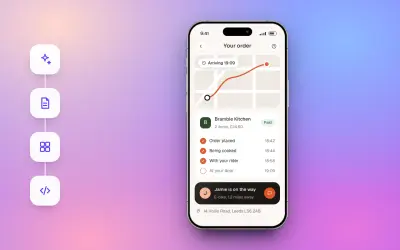
A founder with a car-servicing idea might launch with bookings and repair approvals first, as in the garage app shown here, and add loyalty rewards in version two.
Time
A first version (MVP) typically takes us 9 to 10 weeks. What waits for version two is listed in the written scope, so nothing is forgotten.
Everything behind the screens: database, server and sign-in, a staff panel for users, bookings and records, and connections to the software your business already runs.
In Liverpool
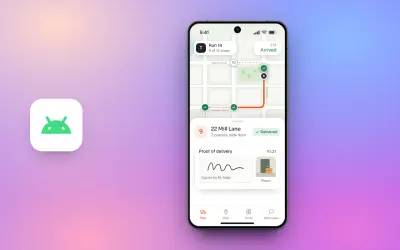
For a haulier collecting from the port, a driver app that opens its job list with no signal. Photo proof goes back to the dispatch panel, as in the run shown here.
Decided in discovery
App data and sign-in on Firebase or Supabase, or on your own server where the data has to stay with you.
AI that does one job well in the app: a tutor that explains a wrong answer, or an assistant that sorts incoming messages, while a person checks anything that matters.
In Liverpool
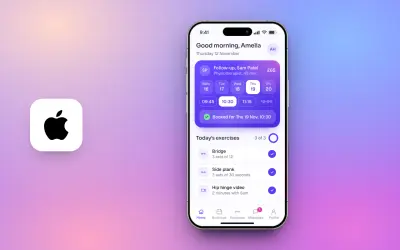
For a training provider or a university spin-out, a course app like the one shown here, where an AI tutor explains a quiz answer in plain words.
How we test
We try each AI feature against real cases you give us before it goes live, with its monthly running cost written into the quote.
App development for the sectors that drive Liverpool
01
Hotels, venues and attractions
Visitors
The Liverpool City Region Combined Authority puts the visitor economy at a record £6.834 billion in 2025. We build guest apps around one booking calendar, so rooms, tables and timed tickets never sell twice, and offers go only to guests who opted in.
02
Maritime and port
Port
A maritime project reported by the University of Liverpool found a £1.9 billion innovation pipeline in AI, digitalisation and automation. The sector supports more than 48,000 jobs, and Peel Ports has invested £400m in the Liverpool2 terminal. For hauliers we build driver apps with offline job lists and photo proof, typically in 13 to 16 weeks.
03
Health and life sciences
NHS
KQ Liverpool calls Paddington Village its £1bn flagship site, close to the new £429m Royal Hospital, and the Combined Authority says the city region holds one of Europe’s largest pharma clusters. A patient app with bookings and secure messages takes us 12 to 17 weeks and links to the NHS App rather than copying it.
Ticket types, time slots and staff roles mapped with your front-of-house team.
You receive: Written scope, clickable prototype and the fixed price
02
Weeks 2 to 4
Design
Booking, sign-in and consent screens tried with guests before code.
You receive: Approved screens for both phones
03
Weeks 4 to 11
Build sprints
Four two-week sprints: tickets, sign-in, staff admin panel, booking notifications.
You receive: A build on your phone after each sprint
04
Weeks 11 to 12
Testing and launch
Real phones, a busy-day booking run and both store reviews.
You receive: Live on both stores under your accounts
05
Months 1 to 3
Fixes and support
Fixes after launch come inside the price; a support plan can follow.
You receive: A monthly note of what changed
Technology we use for app development in Liverpool
Discovery settles the tools, against what the app must do and who will run it after us.
Screens you can click before code
Figma
Figma holds the designs and a clickable prototype, so guests, drivers or patients can try the journey before anything is built.
One codebase, or native where needed
Flutter
Dart
React Native
React
Swift
Kotlin
Flutter, written in Dart, and React Native, built on React, each give iPhone and Android from one codebase. Swift and Kotlin cover features that need the phone’s own hardware.
Payments and app data
Stripe
Apple Pay
Google Pay
Firebase
PostgreSQL
Stripe takes card, Apple Pay and Google Pay payments. Firebase or a PostgreSQL database holds the bookings, jobs or records behind the app.
Releases and crash alerts
Fastlane
TestFlight
Sentry
Fastlane automates code signing and store releases. TestFlight puts beta builds in front of up to 100 internal testers, and Sentry alerts us to errors with the context to fix them.
Three ways to work with our Liverpool app development team
Pick the way of paying for app development that fits how fixed your plan is and who runs the product from day to day.
Topic
How it works
Best for, in Liverpool
What it saves you
Fixed price
Discovery ends in one price for the written scope, paid by milestone.
A venue or operator that knows the app it wants, such as the guest app priced on this page.
One known bill: every change gets a written quote before anyone works on it.
Time and materials
Billing follows the days actually worked, and priorities can shift after each fortnightly build.
A founder still learning from early users, who expects the first version to shift.
You stop paying for features nobody uses as soon as the test builds show it.
Dedicated team
Our developers join your team and work from your own backlog.
A Liverpool startup that has a product lead but no mobile developers yet.
You skip recruitment fees and the hiring wait, and the code stays in your name for future hires.
A few apps from our app development work
A few examples from the many apps we have shipped, picked because Liverpool’s creative and digital firms ask for apps like them.
21:4178%
Bedroom ACInfrared · sent by the bedroom blaster
Bedroom27°C now · humidity 58% · cooling for 14 min
On
Set to24°Cool · medium fan
Mode
CoolDryFanAuto
Fan speed
LowMediumHighSwingSleep
Turn off at 06:30Mon to Fri · next tomorrow
Smart home devices
Digilite
What we built
Smart devices drop offline after a Wi-Fi or power cut, and owners cannot tell what to fix. We built Digilite, the kind of companion app device firms need, on Android. It controls and schedules appliances over Zigbee and Wi-Fi, works infrared devices, and adds routines, energy graphs, voice assistants and family sharing.
Endless scrolling leaves many people drained rather than inspired. We built Amara Social so creators share videos, Stories, recipes and workouts in one app, and pick who sees each post.
“Amara is built around creators, so posting had to be effortless: posts, short videos, Stories, recipes and workouts, with each creator deciding who sees what. AppAgentix built it for iPhone and Android from one codebase, and what I value most is the video: uploads process in the background, playback starts fast and holds up on mobile data. Moderation and audience controls were built properly, not as an afterthought. They worked like part of our team.”
“A smart home app only works if the whole family trusts it. AppAgentix built our Android app so every appliance and routine sits in one place, with each family member given the right access. Commands reach the device in a moment, the app shows honestly when something is offline, and voice control works through Google Assistant and Alexa. The listing holds a 4.9 star rating. Every release was tested on real devices in real homes.”
“We wanted one streaming service that felt the same on phone, tablet and TV, whether people watch free with adverts, subscribe or rent a film. AppAgentix built the apps for iPhone, iPad, Android and Apple TV and the service behind them. They got the hard parts right: playback that starts quickly, a home screen that works with a TV remote, and billing that stays correct. The Android app has passed 50,000 downloads.”
Liverpool City Region programmes that help founders bring an app to market
No programme here funds the app build itself. Each can lower what a founder or firm spends around the build, through investment, advice or help finding finance.
Topic
Who is behind it
What a founder gets
Eligible
Status (16 November 2026)
Baltic Ventures Accelerator
Baltic Ventures, launched in 2023 with £4.1m from the Combined Authority; by January 2026 it had supported 54 companies and helped create 98 jobs
A three-month cohort with £25k investment, coaching, masterclasses and investor meetings, and the chance of a further £75k from its angel syndicate
High-potential tech founders
2026 cohort chosen: 8 companies from 400 applications
LCR Finance Hub
LCR Finance Hub
One access point for outside finance, with free one-to-one sessions of up to 30 minutes with an adviser
New and existing SMEs in the Liverpool City Region
Contact the hub through its site: the clinic dates it listed on 16 November were September ones
Business Support Service
Liverpool City Council, funded through the Combined Authority
Advice on starting up, workshops for early-stage founders, growth advice and referrals into other programmes
People starting a business and growing firms in Liverpool
Open: request support through the council’s enquiry form
Our written scope can serve as the project plan an application asks for. No programme decision can be promised; each body judges its own applicants, and terms change, so read the funder’s page before you apply.
How much does it cost to develop an app in the UK?
A made-up Liverpool hotel or attraction app: both phones, email sign-in, timed tickets and an admin panel.
Worked example, excluding VAT
DiscoveryWeeks 1 to 2£4,000
DesignWeeks 2 to 4+ £3,500
Four two-week build sprintsWeeks 4 to 11+ £17,500
Phone testing and store launchWeeks 11 to 12+ £3,500
Fixed price, 12 weeks= £28,500
Excluding VAT, the price includes three months of fixes after launch, and you own the code, designs and accounts. If we do not deliver what the written scope promises, we refund what you paid for the undelivered work within 7 days.
Estimate your Liverpool visitor, quayside or patient app
Included to start: Discovery, design, the core journey, notifications and store launch. 9 to 10 weeks.
Local data we check
Merseyside sources we check before a build
Local data and services that change what a Liverpool app needs, and what we do with each.
Merseyside sourceOur view: what it changes
01Merseyside sourceThe Combined Authority’s mobile coverage map from a Streetwave survey
Our view: what it changesWe check signal at your gates, yards or venues before deciding how much the app stores offline
02Merseyside sourceLiverpool BID live footfall data and weekly reports across its BID areas
Our view: what it changesStaff screens and booking slots are tested at the busiest footfall your venue expects
03Merseyside sourceThe 2022 to 2025 NHS Cheshire and Merseyside digital strategy: the NHS App as front door
Our view: what it changesA patient app links to the NHS App, not a copy of it
04Merseyside sourceThe UK’s first Civic Data Cooperative, based in the City Region
Our view: what it changesHealth and civic data apps follow the data-sharing terms the data owner sets, agreed in discovery
05Merseyside sourceThe LCR Finance Hub, a single access point for SMEs seeking outside funding
Our view: what it changesOur quotes split by stage, so a funder can see what each stage delivers
UK rules for health and guest apps
UK rules that change a Merseyside health or guest app
On our estimator, a simple app with one main journey, notifications and a store launch starts at £12,000 to £18,000 before VAT. The guest app on this page, with timed tickets and a staff panel on both phones, is £28,500 fixed over 12 weeks. A free 30-minute call comes first, and the discovery fee counts towards the build price when the build goes ahead. Store accounts and hosting are extra.
How can I develop an app for both Android and iOS?
Use a cross-platform framework such as Flutter or React Native, so one codebase produces both apps and each release reaches both stores together. You still need an Apple developer account and a Google Play account in your company’s name. Go fully native only when a feature depends on the phone’s hardware.
How much does it cost to develop an app for Android?
How much does it cost to hire a mobile app developer?
The guest app above needs nobody hired by the day: one fixed £28,500 covers discovery, design, four build sprints and the store launch, paid by milestone. A venue that already employs developers can borrow one of ours instead, at the rates on our hiring page.
Discovery agrees the scope and the price. Design follows, with screens tried by real users, then a build in two-week sprints with a test build after each. Testing on real phones comes next, then the store launch and support. For the guest app on this page those steps take 12 weeks, and a first version (MVP) typically takes us 9 to 10 weeks.
Can a regular person create an app?
Yes. No-code tools let anyone put together a simple app that lists information or takes bookings. Once it has to take payments, hold user accounts, work without signal or connect to your other software, most people hire developers. Keep the code in your own name so you can bring it in-house later.
Can AI build me an app?
AI can draft screens and code, which helps us work faster, but it cannot test the quayside job list at a gate with no signal. Nor can it sign off the guest app against the consent rules above, so we do both before store launch.
Most app projects run late. Let’s make yours the one that ships.
More than 95% of our projects are delivered on or before the agreed date. About 60% of our clients come back for a second project.
What happens next
1We reply within 30 minutesEvery day of the year. A developer at our app development company, not a sales team, reads your brief.
2A 30-minute callWe ask about users, deadlines and the systems you already run.
3A written view in two working daysScope, timeline and a price range, yours to keep.
Thank you. Your brief is in.
A developer, not a sales team, reads it. We reply within 30 minutes, from info@appagentix.co.uk.
We use cookies to run this site and, with your permission, to understand how it is used. Cookie policy · Privacy policy
Most app projects run late. Let’s make yours the one that ships.
More than 95% of our projects are delivered on or before the agreed date. About 60% of our clients come back for a second project.
What happens next
1We reply within 30 minutesEvery day of the year. A developer at our app development company, not a sales team, reads your brief.
2A 30-minute callWe ask about users, deadlines and the systems you already run.
3A written view in two working daysScope, timeline and a price range, yours to keep.
We wanted one streaming service that felt the same on phone, tablet and TV, whether people watch free with adverts, subscribe or rent a film. AppAgentix built the apps for iPhone, iPad, Android and Apple TV and the service behind them. They got the hard parts right: playback that starts quickly, a home screen that works with a TV remote, and billing that stays correct. The Android app has passed 50,000 downloads.
Michael S.CEO and Co-Founder, Play Now Media
Thank you. Your brief is in.
A developer, not a sales team, reads it. We reply within 30 minutes, from info@appagentix.co.uk.

 WCAG 2.2 AA Accessibility

 Figma
 Flutter
 Dart
 React Native
 Swift
 Kotlin
 Stripe
 Apple Pay
 Google Pay
 Firebase
 PostgreSQL
 Fastlane
 TestFlight
 Sentry
 Creators and media

 MVP developmentA first version for users and investors.
 iOS app developmentNative Swift apps for iPhone and iPad.
 Android app developmentNative Kotlin apps for Google Play.
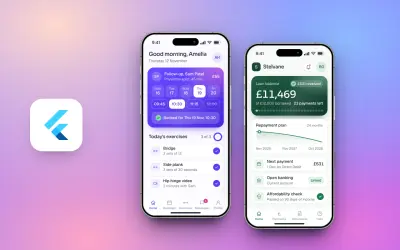 Flutter app developmentOne Flutter codebase for iOS and Android.
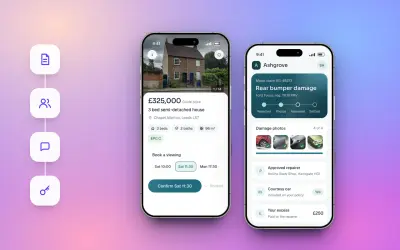 Hire mobile app developersiOS, Android and Flutter engineers for your team.
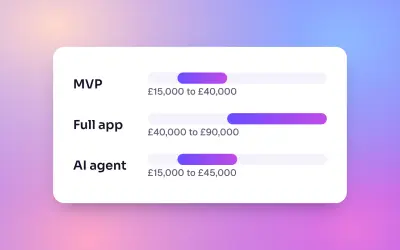 PricingWhat apps and AI agents cost, in pounds.
 LondonMobile apps for London businesses.
 ManchesterMobile apps for Manchester businesses.
 LeedsMobile apps for Leeds businesses.
 BirminghamMobile apps for Birmingham businesses.
 NewcastleMobile apps for Newcastle businesses.
 GlasgowMobile apps for Glasgow businesses.