Travel app development for UK tour operators, hotels and agents: booking and trip-day apps
Our travel app development builds booking, trip-day and back-office apps for UK tour operators, hotels, agents and attractions. On your build we map the package travel and ATOL rules before any screen is drawn.
Travel MVP price fixed after every basket is package-tested
A package test on every basket, ready for 6 April 2027
Resort fees in the first price, and no card surcharge
No booking confirmed to a guest before the supplier confirms
9:41
Lisbon4 nights · 2 adults · from Gatwick
Thu3Fri4Sat5Sun6Mon7Dec
Outbound · Thu 3 Dec
07:05LGW2h 40m · direct09:45LIS
WF 318 · 23 kg bag eachReturn Mon 18:20
Casa Alfama RoomsAlfama · 6 min walk to the river4.6 · 1,284 reviews · breakfast
Flights + hotel for 2£612ATOL protectedPrice held 14:52
Book trip · £612
Rules this build is planned around
Package Travel RegulationsOrganisers and retailers selling travel to UK travellers
The 6 April 2027 changeEvery trader under the Package Travel Regulations, for contracts made from that date
ATOL certificatesTravel firms selling trips that include a flight, as an ATOL holder or its agent
Total price displayAny trader showing prices to UK consumers
Security and compliance
Cyber EssentialsCertified
Cyber Essentials PlusIndependently tested
ISO/IEC 27001:2022Information security
ISO 9001:2015Quality management
ISO/IEC 42001:2023AI management
SOC 2 Type IIAudited controls
UK GDPR andData Protection Act 2018
ICORegistered
NHS DSPTData security toolkit
WCAG 2.2 AAAccessibility
PCI DSSCard data security
What does travel app development cost and include?
Travel app development for a UK tour operator, hotel or agent starts with a two-week discovery that package-tests every basket the app can sell. The fixed price is written from that test sheet and the scope. A first release costs £15,000 to £40,000 excluding VAT and takes 10 to 14 weeks. A small tour operator booking app with both phones, instant booking, card checkout and one channel manager link comes to £26,500 fixed. Price your own version with the calculator on this page, and see every price line we sell on our app development cost page.
Discovery
2 weeks, ending in a fixed quote
Travel MVP
10 to 14 weeks
Full app
4 to 8 months
Which apps does our travel app development cover?
What each screen does, and the line it will not cross.
01
Booking app for stays or tours
Guests
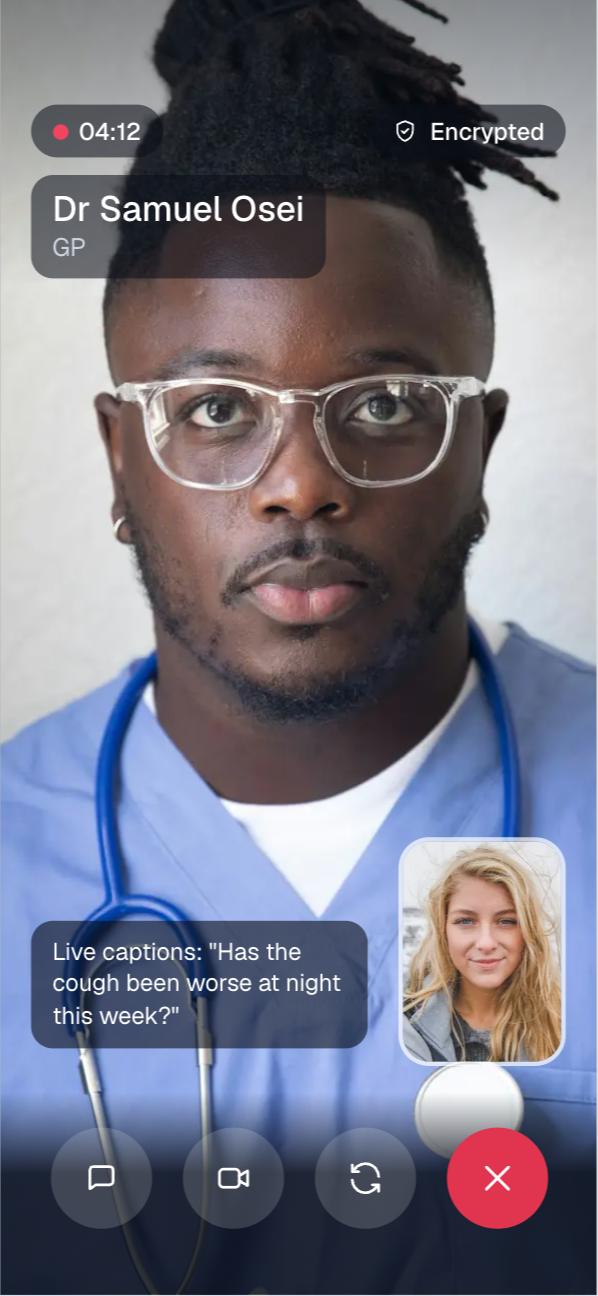
Guests search dates, see live space and book. On your build a hold on the last room or seat lasts only while the payment page is open. The app never shows "only 2 left" unless the supplier feed says so. The same pieces, a date strip, free slots and reminders, run in the telehealth app we built.
02
Trip-day guest app
Guests
Itinerary, tickets, meeting points and alerts in one place. On your build the offline copy shows meeting points and booking references, never a price that could be stale. Guests stop ringing to ask where the coach leaves.
03
Arrival and check-in forms
Hotels
Guests send their details before arrival, so reception checks instead of typing, while the app keeps no guest register of its own; the hotel does.
04
Supplier and channel links
Operations
On your build a failed supplier write goes to a queue your staff can see, and no guest is confirmed before the supplier confirms. Each link is tested in the supplier test system first.
05
Payments, deposits and refunds
Finance
Card and Apple Pay checkout, deposits with a balance date, and refunds from the booking. The app refuses to add a card fee or any charge the guest did not see before paying.
06
Operator back office
Staff
On your build each rooming list and manifest line prints the guest's package flag and ATOL cover, and supplier payment dates come from the same bookings.
07
AI in travel app development
AI
An AI helper drafts itinerary ideas or support replies for a person to approve, while on your build it never quotes a price or promises a refund. It is tested on your own past bookings, and every miss is listed.
Building in travel means rules you cannot get wrong. Talk them through with the developers who would build to them.
They decide when a mix of travel services is a package, and what the seller then owes. This is our view; your adviser confirms how each rule applies to you.
Package Travel Regulations
Applies to
Organisers and retailers selling travel to UK travellers
What it changes in the build
A package is two or more types of travel service for one trip, such as a flight and a hotel. It counts, for example, when they are sold in one booking process or at a total price. The organiser is then liable for all of it, so each basket carries a package flag.
The 6 April 2027 change
Applies to
Every trader under the Package Travel Regulations, for contracts made from that date
What it changes in the build
Linked travel arrangements are abolished, and services chosen and paid for separately in one visit to one point of sale become a package. Contracts made before 6 April 2027 stay under the old rules. The app stores the contract date on every booking, and each cross-sell offer is tested against the new rule.
ATOL certificates
Applies to
Travel firms selling trips that include a flight, as an ATOL holder or its agent
What it changes in the build
The certificate must be issued at the first payment, by email if the traveller is not present. Without it, the booking is not ATOL protected, so the app sends it when payment is taken and marks which items it covers.
Total price display
Applies to
Any trader showing prices to UK consumers
What it changes in the build
A headline price followed by extra mandatory charges is banned. The CMA counts local taxes and resort fees paid at a hotel in the total, and card surcharges are banned for most consumer payments. No fee first appears at the pay step.
Cancellation and add-ons
Applies to
Traders selling travel online to consumers
What it changes in the build
The 14-day right to cancel does not apply to packages, or to dated hotel, car hire and activity bookings. Any extra payment needs express consent, so insurance, seats and bags are unticked opt-in boxes.
Guest data and access
Applies to
Travel firms that collect guest details, send offers or serve the public
What it changes in the build
Marketing emails and texts need specific consent, apart from the soft opt-in for past customers. The Equality Act requires reasonable adjustments but names no technical level, so WCAG 2.2 AA is our own target.
Which screen does each travel rule change?
On your build we check each pair in the test run before launch.
UK ruleScreen or feature
01UK ruleWhat counts as a package
Screen or featurePackage flag on every basket
Set by rules you sign off in discovery.
02UK ruleInformation before the contract
Screen or featureInformation screen before the pay button
A copy is kept with the booking.
03UK ruleCharges not shown before payment
Screen or featurePrice and fee breakdown frozen at booking
A fee the guest never saw cannot be added later.
04UK ruleThe 6 April 2027 change
Screen or featureContract date on every booking, cross-sell offers retested
05UK ruleATOL certificates
Screen or featureCertificate sent at first payment, with a badge per item
06UK ruleTotal price, resort fees and surcharges
Screen or featureAll-in price in search and basket, no card fee
07UK ruleConsent for extra payments
Screen or featureUnticked boxes for insurance, seats and bags
“Drivers want three things: find a working charger, start charging without fuss and pay without surprises. AppAgentix built the Android app, the prepaid wallet and the link to our chargers. Live charger status is accurate, starting a session is a scan and a tap, and the wallet settles the right amount even if the connection drops. The app has passed 10,000 downloads with a 4.1 star rating, and our manual billing work has dropped sharply.”
“We wanted one streaming service that felt the same on phone, tablet and TV, whether people watch free with adverts, subscribe or rent a film. AppAgentix built the apps for iPhone, iPad, Android and Apple TV and the service behind them. They got the hard parts right: playback that starts quickly, a home screen that works with a TV remote, and billing that stays correct. The Android app has passed 50,000 downloads.”
“Our patients needed the portal in their pocket: requesting visits, reading test results, reordering medicines and messaging their care team. AppAgentix built the Android app on our Epic MyChart system, careful where it matters: secure sign-in, no clinical detail on the lock screen, and patients choose what fitness data they share. The app has passed 50,000 downloads with 4.4 stars from over 750 reviews, and every release was tested before it reached our patients.”
Apps we have built for bookings, journeys and payments
A few examples from the many apps we have built where people plan a journey, book ahead, fill in forms before they arrive and pay in the app.
EV charging
Tiger Charge: planning stops on a journey
What we built
With Tiger Charge, the app we built for a charging network, drivers plan charging stops along a journey: nearby stations appear on the map with waiting times, fast-charging details, ratings and reviews. They pay from a wallet topped up in advance, and each trip leaves a history with invoices. Kotlin on Android, Node.js and OCPP do the work behind it.
Telehealth app: bookings, forms before arrival and payments
What we built
This telehealth app handles a visit from start to finish on Android and iOS, and we built every step of it. Patients book ahead with the clinician they choose, complete their forms before the appointment, pay bills in the app and receive reminders as the date approaches. Records, results and prescriptions stay in the app afterwards.
It means two or more types of travel service sold for one trip in a way the rules list. On your build we run every basket the app can make through this sheet in discovery. This example is for an imaginary walking-holiday operator.
ExamplePackage test sheet, walking-holiday booking appAppAgentix
Basket in the app
Booked
Our reading
Result
Flight and hotel in one checkout
Any date
Package: two types of service in one booking process. ATOL certificate at first payment.
Pass
Hotel plus airport transfer, one checkout
Any date
Package: a room and transport sold in one booking process.
Pass after fix: the transfer price first appeared at the pay step. It now sits in the total from the first screen.
Hotel only, resort fee paid on arrival
Any date
Not a package: one service. The resort fee still counts in the total shown.
Pass
Hotel, then a personal car hire offer, paid separately in the same visit
Before 6 April 2027
Linked travel arrangement under the current rules, with its own information screens.
Pass
The same hotel and car hire offer, paid separately in the same visit
From 6 April 2027
Package: one visit, one point of sale, separate payments.
Open: the offer still treats car hire as an add-on. Organiser terms go in, or it becomes a general banner. You decide with your adviser; launch waits.
Hotel, then a general safari banner clicked later
From 6 April 2027
Unlikely to be a package: the offer is not personal to the booking.
Pass
An example, not a client record, and your adviser signs off every reading before launch.
Three travel app development claims the rules do not support
"Every booking gets a 14-day cooling-off period.
"Every booking gets a 14-day cooling-off period." Not for packages, which fall outside the Consumer Contracts Regulations, and not for dated stays. Packages have their own cancellation route, and the contract may set fees by days before departure.
"The card surcharge ban is in the Consumer Contracts Regulations." It is not there. The ban sits in regulation 6A of the 2012 Payment Surcharges Regulations.
"Every travel app must legally meet WCAG 2.2 AA." That duty is written for public sector bodies; a private travel firm answers to the Equality Act. On your build we still use WCAG 2.2 AA as the clearest test.
Should you buy a platform or commission travel app development?
Our view: buy where a ready platform fits, and build only what it cannot do.
Which route fits your travel business?
IfYour trips, rates and suppliers fit what a ready booking platform already handles
ChooseA ready platform
You pay a licence instead of a build price, and in your discovery we would tell you to buy.
IfYour packages, allotments or supplier mix cannot be set up in any platform you have tried
ChooseA custom build
You pay one build price, own the code, and the rules are built around your own baskets.
IfYour platform suits the office and has an API, but its guest side is weak
ChooseYour platform plus a custom guest app
The app reads bookings through the API and adds itinerary, tickets and alerts, and you own the app.
IfGuests book once and need nothing from you until they arrive
ChooseNo app yet: a fast mobile booking site
An app earns its cost when guests use it during the trip.
IfYou cannot yet say whether you sell packages
ChooseSettle that with your adviser first
The answer changes the checkout and terms, so building first means building twice.
How a booking moves through a travel app
01Search
All-in prices for the dates searched
02Basket
Package test and protection type
03Information screen
Standard form before the pay button
04Payment
Card checks by your provider, no surcharge, ATOL certificate sent at once
05Supplier booking
Space confirmed in the supplier system
06Confirmation
Supplier reference and contract date stored
Need a price before you go to the board? A two-week discovery ends in one fixed figure, and you own the code from the first commit.
What does each stage of travel app development include?
Each stage below lists what you receive. Discovery ends with one fixed figure, and the calculator below prices your own mix.
01
Discovery
Comes off the build price
2 weeks
Scope, clickable prototype, supplier list, package test and a fixed quote.
02
Travel MVP
Quoted after discovery
10 to 14 weeks
One booking journey on iPhone and Android, payments, one supplier link and an admin panel.
03
Full travel app
Quoted after discovery
4 to 8 months
Booking and guest apps, several supplier links, offline trip-day use and reports.
04
AI agent on one workflow
Quoted after discovery
6 to 10 weeks
Itinerary help or support replies, tested on your own bookings. The price depends on how many records and actions it reaches.
05
Support and running
After launch
monthly
Fixes, operating system updates, monitoring and a monthly report. 30 days' notice after a 3-month minimum.
Three months of fixes after launch are included.
Estimate your travel app development cost in a minute
Pick what your first release needs.
Included to start: Discovery, design, a search and request-to-book journey for stays or tours, guest accounts, confirmation emails, analytics and store launch. 6 to 8 weeks.
What is paid to others, and who owns the travel app?
Agreed in writing before the build starts.
Payment fees
Charged per transaction by your provider, estimated on the quote.
Map, text and email fees
Billed by usage, with a monthly estimate on the quote.
Supplier and channel manager fees
Some charge for API access. Discovery names each fee before you commit.
ATOL, protection and advice
Your ATOL, insolvency cover and adviser stay with you. The app shows them but does not provide them.
Hosting
Paid by you at cost, in a cloud account in your company name.
Code and accounts
Code in your repository from the first commit; Apple, Google and cloud accounts in your company name.
Our refund promise
If we do not deliver what the written scope promises, we refund what you paid for the undelivered work within 7 days.
Three ways to work with us
Pick by how much you can write down today. Prices in pounds, excluding VAT.
Fixed-price build
Best whenYou can say what the product must do, and want one figure before work starts.
Price
MVP from £15,000, 8 to 14 weeks
Two weeks of discovery first, its fee taken off the build price
Full iPhone and Android app in 4 to 8 months
Terms
One fixed figure in writing after discovery
Fixes for 90 days after launch included
If we do not deliver what the written scope promises, we refund what you paid for the undelivered work within 7 days.
You own the code, designs and accounts from the first commit.
The ten questions discovery starts with: users, the jobs they need done, systems to connect, rules, deadline and budget. Fill it in, attach nothing else, and the first call starts at the right place.
A travel MVP costs £15,000 to £40,000 with us over 10 to 14 weeks, excluding VAT. A full travel app with booking and guest apps, several supplier links and offline trip-day use is priced in the calculator above.
How much does it cost to develop a hotel booking app?
With us, a hotel booking app with live availability, card checkout and one channel manager link usually sits in our travel MVP range of £15,000 to £40,000, excluding VAT. Offline use, several supplier links and reports move it into the full app range.
What are the Package Travel regulations?
The Package Travel Regulations decide when travel services sold together become a package, and what the seller then owes. A package is two or more types of travel service for one trip, and the organiser is liable for all of it. From 6 April 2027, services chosen and paid for separately in one visit to one point of sale also become a package.
What is an ATOL protection?
ATOL is financial protection for a package trip that includes a flight, and it is not travel insurance. If the ATOL holder fails while you are abroad, the CAA helps you continue the trip or get home. In an app, the certificate goes out at the first payment and names who protects the trip.
What is a good travel app development company?
One that gives a fixed price in pounds after discovery and puts the code and accounts in your name. It should explain the package and ATOL rules for your own baskets, test in your suppliers' test systems and show you the report, misses included.
What is the best custom itinerary software for tour operators?
No single product suits every operator, and we do not sell or rank any. A ready tool is the right first choice when your trips fit its templates. A custom build earns its cost when your rates, allotments or supplier mix will not fit.
How can I build a travel booking app?
Start with one booking journey, not every feature. Work out which baskets form packages and check that each supplier has an API and a test system. Test the screens with five real users, then build in two-week sprints.
Most app projects run late. Let’s make yours the one that ships.
More than 95% of our projects are delivered on or before the agreed date. About 60% of our clients come back for a second project.
What happens next
1We reply within 30 minutesEvery day of the year. A developer at our app development company, not a sales team, reads your brief.
2A 30-minute callWe ask about users, deadlines and the systems you already run.
3A written view in two working daysScope, timeline and a price range, yours to keep.
Thank you. Your brief is in.
A developer, not a sales team, reads it. We reply within 30 minutes, from info@appagentix.co.uk.
We use cookies to run this site and, with your permission, to understand how it is used. Cookie policy · Privacy policy
Most app projects run late. Let’s make yours the one that ships.
More than 95% of our projects are delivered on or before the agreed date. About 60% of our clients come back for a second project.
What happens next
1We reply within 30 minutesEvery day of the year. A developer at our app development company, not a sales team, reads your brief.
2A 30-minute callWe ask about users, deadlines and the systems you already run.
3A written view in two working daysScope, timeline and a price range, yours to keep.
We wanted one streaming service that felt the same on phone, tablet and TV, whether people watch free with adverts, subscribe or rent a film. AppAgentix built the apps for iPhone, iPad, Android and Apple TV and the service behind them. They got the hard parts right: playback that starts quickly, a home screen that works with a TV remote, and billing that stays correct. The Android app has passed 50,000 downloads.
Michael S.CEO and Co-Founder, Play Now Media
Thank you. Your brief is in.
A developer, not a sales team, reads it. We reply within 30 minutes, from info@appagentix.co.uk.


 WCAG 2.2 AAAccessibility

 SwiftGeneral-purpose language for all Apple platforms and servers
 SwiftUIDeclarative screens for every Apple platform
 KotlinGoogle’s preferred language for Android
 Jetpack ComposeAndroid’s current toolkit for screens
 FlutterMobile, web and desktop apps from one codebase
 React NativeNative Android and iOS apps built with React
 FigmaScreens and clickable prototypes you can test
 TypeScriptTyped JavaScript that catches errors early
 Node.jsJavaScript runtime for scalable network applications
 PythonLanguage for web development and scientific work
 PostgreSQLOpen-source database; pgvector adds vector search
 RedisIn-memory store for caching and live messages
 FirebaseFirestore and Realtime Database: store and sync app data
 AWSCloud hosting with a London region
 CloudflareContent delivery, caching and attack protection
 GitHub ActionsCI/CD platform to automate build, test and deployment
 SentryCaptures errors and alerts you with full context
 MVP developmentA first version for users and investors.
 Flutter app developmentOne Flutter codebase for iOS and Android.
 Agentic AI developmentAI agents that complete tasks in your systems.
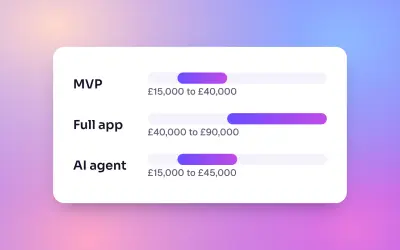 PricingWhat apps and AI agents cost, in pounds.
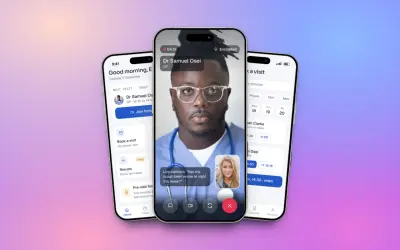 Telehealth appOnline booking, video visits, prescriptions and results.
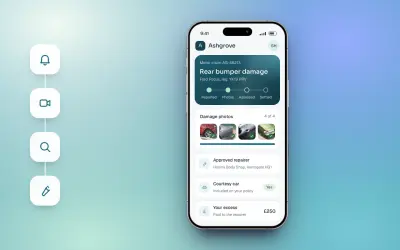 InsuranceQuotes, claims and policy apps.
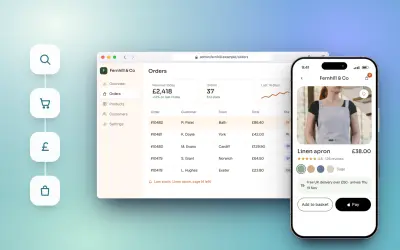 EcommerceShopping apps and online stores.
 AviationMaintenance, crew and ground software.