Healthcare software development company UK for records, scheduling and clinical platforms.
AppAgentix is a healthcare software development company for UK clinic groups, NHS suppliers, healthtechs and care providers. We build systems of record and the platforms around them, with each UK rule tied to something the system does.
First release in 10 to 12 weeks, discovery included
NHS number, roles and audit trail designed into the data model
Code, data and accounts in your name from the first commit
app.larkmoor.example/today
Thursday 12 NovemberTodayBooked in app today61 2%HP
SPSam PatelARAisha RahmanTRTom Rees
09:0010:0011:0012:00
Oliver BennettInitial assessment
Amelia HartFollow-upApp
Priya ShahSports massage
Grace O'NeillFollow-upApp
Tom FletcherBack pain assessment
Leah BurrowsVideo
Daniel MarshFollow-upApp
Lunch
Kwame AsanteApp
Sophie LennoxInitial assessment
Hannah PriceFollow-upApp
Ruth OkoyeFollow-upApp
Isla MorganPost-op review
10:24
New booking from the appHannah Price, 10:30 with Tom Rees
Rules this build is planned around
DCB0129 and DCB0160 clinical safetyHealth IT makers (DCB0129) and deploying organisations (DCB0160)
DTAC, 2026 formDigital health software sold or supplied to NHS organisations
Data Security and Protection ToolkitSuppliers whose staff can reach NHS patient data
UK GDPR health data and the DPIAAny organisation that records or uses information about a patient’s health
Security and compliance
Cyber EssentialsCertified
Cyber Essentials PlusIndependently tested
ISO/IEC 27001:2022Information security
ISO 9001:2015Quality management
ISO/IEC 42001:2023AI management
SOC 2 Type IIAudited controls
UK GDPR andData Protection Act 2018
ICORegistered
NHS DSPTData security toolkit
WCAG 2.2 AAAccessibility
PCI DSSCard data security
What does a healthcare software development company build for UK providers?
A healthcare software development company builds the systems staff work in all day: patient records, scheduling, orders and results, referrals, interfaces, reporting and billing. Patient-facing mobile apps sit on our healthcare app development page. A first release covers one care setting and one core module, and a two-week discovery fixes its price. A diary and rota system for a six-site clinic group comes to £37,000 fixed. Price your own version with the calculator on this page, and see every price line we sell on our app development cost page.
Discovery
2 weeks, ending in a fixed quote
First release
10 to 12 weeks
Full clinical platform
5 to 8 months
Healthcare software development services, system by system
HM Treasury’s 2025 Spending Review committed up to £10 billion to NHS technology and digital transformation by 2028-29, almost 50% more than in 2025-26. We build each system below as a module with its own data and roles.
01
Patient administration and records
Clinicians and admin staff
Registration, history and notes keyed on the NHS number, each entry dated from when it takes effect.
02
Scheduling, rotas and capacity
Booking teams
Clinic templates, staff rotas and room capacity across sites, with booking rules held in settings.
03
Orders and results
Clinicians and laboratories
Requests go to the laboratory, and results return to the clinician who asked, abnormal flags first.
04
Referrals and clinical messaging
Care teams
Referrals between teams show a status at every stage, and tasks stay tied to the patient.
05
Interoperability layer
Integration teams
A FHIR UK Core and HL7 v2 gateway that keeps every message, plus GP Connect where you use it.
06
Reporting and data platform
Managers and analysts
Operational and quality returns from a separate data store, so reports never slow the clinic.
07
Billing and funding
Finance teams
Invoices for private and insured care, with payment status tied to each appointment.
Is your team working around software that no longer fits the business? Tell us where it hurts and we will say what to build first.
No single product, because care runs on a stack: records, scheduling, order and results links, and messaging, joined by interfaces.
No single product, because care runs on a stack: records, scheduling, order and results links, and messaging, joined by interfaces.
In NHS hospitals the centre of that stack is the electronic patient record. NHS England’s Digitising the frontline programme expected 95% of trusts to have implemented or upgraded one by March 2026.
So the useful question is which part to build and which to keep or buy. For healthtech software development, ask which part is your product, and the decision table below sets out each case.
How clinical software sits between your existing systems and your teams
Where your current system has an API, we connect to it. Where it has none, new modules work from a read-only copy or nightly export, and write back only by a route you approve. The Department of Health and Social Care estimates the Single Patient Record will save doctors around 500,000 hours a year (June 2026).
01Your current records system
Keeps working while new parts arrive
02Interface layer (FHIR, HL7, GP Connect)
Every message stored and counted
03Records and scheduling services
Patient, diary and results modules
04Staff consoles
One screen per role
05Reporting and data store
Built from a copy
06NHS and partner services
Laboratories and GP records
Which UK rules change how healthcare software is built?
We are an engineering team, not a regulated firm or a clinical safety officer, so your clinical safety officer, data protection officer or adviser confirms which rules apply. Dates are as given in November 2026, and NHS England’s standards directory is still in beta.
DCB0129 and DCB0160 clinical safety
Applies to
Health IT makers (DCB0129) and deploying organisations (DCB0160)
What it changes in the build
DCB0129 helps manufacturers of health IT software evidence the clinical safety of their products, and its current version has applied since 1 July 2018. DCB0160 covers deployment, use, maintenance and decommissioning, so every change ticket carries a clinical safety impact field.
DTAC, 2026 form
Applies to
Digital health software sold or supplied to NHS organisations
What it changes in the build
NHS England refreshed the form in March 2026 with 25% fewer questions, and full transition was due by 6 April 2026. We keep one evidence file per system for DTAC, the DSPT and buyer questionnaires.
Data Security and Protection Toolkit
Applies to
Suppliers whose staff can reach NHS patient data
What it changes in the build
The current toolkit is the 2026-27 version 9. Its access standard says all access to personal data held in confidence on IT systems can be attributed to individuals, so we build named accounts and logged support sessions. It also warns that logs can be as sensitive as the records, so logs get access rules of their own.
UK GDPR health data and the DPIA
Applies to
Any organisation that records or uses information about a patient’s health
What it changes in the build
Health data, including an NHS number joined to health information, is special category data. It needs a lawful basis under Article 6 plus a separate condition under Article 9, and high-risk processing needs a DPIA first. Some ICO pages are under review after the Data (Use and Access) Act. Go-live waits for a signed DPIA.
Caldicott Principles and the NHS number
Applies to
Anyone using patient-identifiable information in care
What it changes in the build
The eight Caldicott Principles (2020) limit each use to the minimum necessary. They rank the duty to share for care alongside the duty to protect. The NHS number is the primary identifier of a patient in England and Wales, ten numeric characters long.
Software as a medical device
Applies to
Software with a medical purpose, such as a dose or diagnosis
What it changes in the build
MHRA guidance (updated July 2023, so we re-check it) says device software must be UKCA marked under UK MDR 2002. Every device must be registered before it reaches the Great Britain market. Software that only reproduces a paper document is unlikely to be a device, but software that influences a dose is likely to be.
UK Core FHIR, SNOMED CT and dm+d
Applies to
Systems that exchange clinical data in England
What it changes in the build
New NHS APIs should use FHIR UK Core and structured data, not PDFs. Suppliers must plan for UK Core, though no conformance date is set. SNOMED CT is the only current clinical terminology standard, while medicines travel with dm+d identifiers, refreshed weekly, so our import runs weekly.
Where each rule lands in the system
Supplier security is part of patient safety: a ransomware attack on a pathology supplier in June 2024 delayed over 11,000 outpatient and elective appointments, NHS England reported. Discovery ends with this map filled in for your service.
RuleSystem behaviour
01RuleDCB0129 and DCB0160
System behaviourA hazard log, and intended use and known limits for your deployment team
02RuleDTAC, 2026 form
System behaviourOne evidence file per system, reused across questionnaires
03RuleDSPT
System behaviourNamed accounts, logged support sessions and access rules for audit logs
04RuleUK GDPR and the DPIA
System behaviourHealth fields tagged, with the legal basis recorded per use
05RuleCaldicott Principles
System behaviourSeparate read scopes for clinical, admin and billing roles
06RuleMedical device rules
System behaviourIntended purpose written at scoping, dose features flagged
07RuleUK Core FHIR, SNOMED CT and dm+d
System behaviourCoded fields, FHIR at the API edge, a weekly medicines import
A hazard log extract from a records and results platform
Part of the clinical safety evidence we help a supplier prepare; the supplier’s clinical safety officer signs it off. An example, not a client record.
ExampleHazard log extract, records and results platform, release 1.3AppAgentix
ID
Hazard
Cause in the system
Possible effect
Control built in
Status
HZ-07
Wrong patient chosen at booking
Two similar names in one search list
Care filed against the wrong person
NHS number and date of birth on every action, plus a confirm step
Closed after test
HZ-12
Blood result in the wrong clinician’s queue
Results routed by clinic, not by orderer
Abnormal value not seen in time
Routed to the order owner; alert if unclaimed past a set time
Closed after test
HZ-15
Retired drug code still selectable
Medicines list not refreshed
A withdrawn medicine is prescribed
Weekly dictionary import; retired codes blocked
Open (needs clinical review)
HZ-19
Two staff edit one record at once
No version check on save
One change silently replaces another
Version check; the later save is held for review
Closed
HZ-23
Interface message dropped
Network failure to the laboratory
A result never arrives
Every message stored, counted and re-sent; alarm on any gap
Closed after test
Each change ticket names the hazards it touches.
How to build your own EHR?
Build it in five moves, and leave the screens until last, because they are the easiest part to change.
First, the records model, each entry dated from when it takes effect. Second, the NHS number as a checked field, with SNOMED CT for clinical terms and dm+d for medicines.
Third, roles and the audit trail. Fourth, interfaces to your laboratory and the GP record, and fifth, the screens each role works in.
Buy what is the same everywhere, such as payments and hosting. If a bought record already fits your pathway, do not build one: the decision table below shows when building pays.
Software projects slip when the scope is vague. Ours start with a two-week discovery that ends in one fixed price.
One sheet per system, agreed in discovery: the standard, our gateway’s check and what happens on a failure.
ExampleInterface specification, records and results platform, version 0.4AppAgentix
Message
Direction
Standard
Our check
If it fails
Patient lookup by NHS number
In
PDS FHIR API, patient search
Ten numeric characters checked first
Held, reason shown to staff
Medicines order
Out
dm+d identifiers and descriptions
Code checked against this week’s import
Retired code refused, prescriber told
GP record read
In
GP Connect Access Record: Structured (FHIR)
User role checked first
Refused and logged
Results feed
In
HL7 v2 or FHIR
Duplicates and out-of-order messages caught
Queued, gap alarm raised
Appointment update
Out
FHIR UK Core
NHS number present, structured, no PDF
Retried, then shown on the dashboard
Every row is tested against your test endpoints before live use.
One blood test, from order to result
How a request leaves your clinic and its result finds the right clinician.
01Order placed
02Sent to the laboratory
03Result returned
04Flag to the clinician
05Reviewed and filed
app.larkmoor.example/today
Thursday 12 NovemberTodayBooked in app today61 2%HP
SPSam PatelARAisha RahmanTRTom Rees
09:0010:0011:0012:00
Oliver BennettInitial assessment
Amelia HartFollow-upApp
Priya ShahSports massage
Grace O'NeillFollow-upApp
Tom FletcherBack pain assessment
Leah BurrowsVideo
Daniel MarshFollow-upApp
Lunch
Kwame AsanteApp
Sophie LennoxInitial assessment
Hannah PriceFollow-upApp
Ruth OkoyeFollow-upApp
Isla MorganPost-op review
10:24
New booking from the appHannah Price, 10:30 with Tom Rees
Build, buy, extend or wrap your records system?
The National Audit Office reported in 2020 that local NHS organisations faced outdated IT systems that did not connect to other systems. Custom healthcare software development pays off where a system must connect or your workflow differs.
What should you do with your records system?
IfYour needs are standard and a bought system fits
ChooseBuy and extend
We add what it lacks: portals, interfaces and reports.
IfYour pathway rules set your service apart
ChooseBuild that module, buy the rest
The part that makes you different stays yours to change.
IfThe old system works but has no API
ChooseWrap it
New modules use a read-only copy and move across one at a time.
IfThe old system blocks every change and its support is ending
ChooseReplace in stages, with a parallel run
Each stage runs beside the old one until both agree, so it is quoted after discovery.
IfOne team needs a fix this quarter
ChooseA single module on its own data
A referral tracker can work alone now and join a platform later.
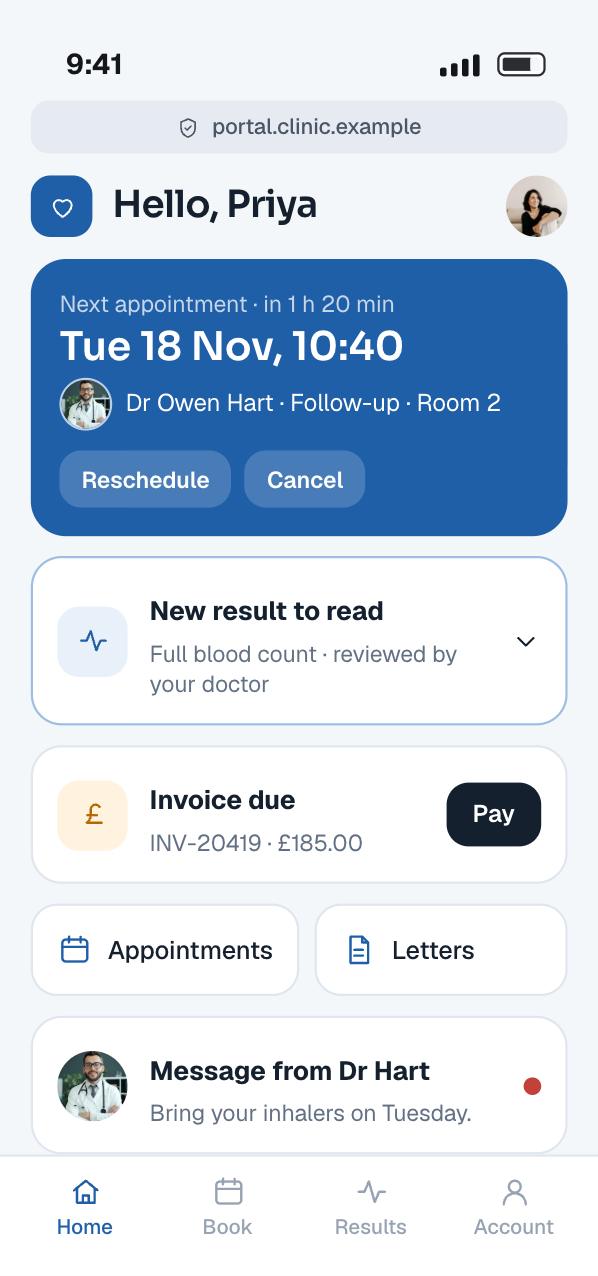
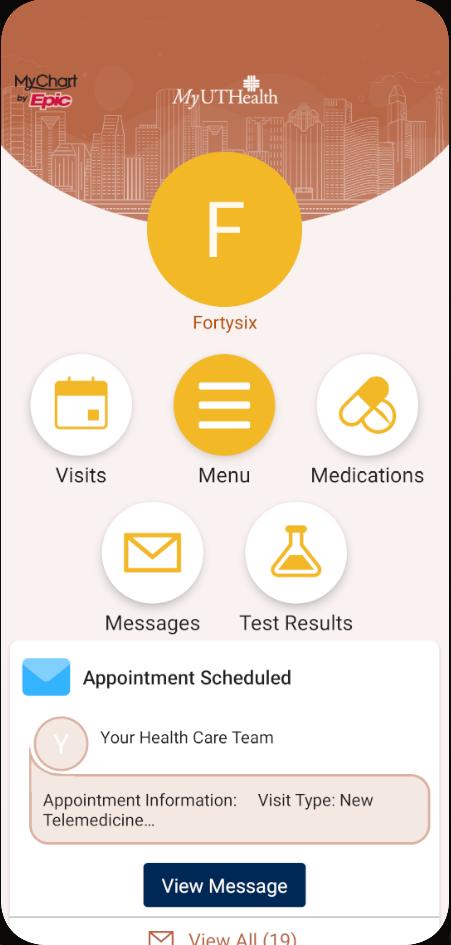
“Our patients needed the portal in their pocket: requesting visits, reading test results, reordering medicines and messaging their care team. AppAgentix built the Android app on our Epic MyChart system, careful where it matters: secure sign-in, no clinical detail on the lock screen, and patients choose what fitness data they share. The app has passed 50,000 downloads with 4.4 stars from over 750 reviews, and every release was tested before it reached our patients.”
“We wanted one streaming service that felt the same on phone, tablet and TV, whether people watch free with adverts, subscribe or rent a film. AppAgentix built the apps for iPhone, iPad, Android and Apple TV and the service behind them. They got the hard parts right: playback that starts quickly, a home screen that works with a TV remote, and billing that stays correct. The Android app has passed 50,000 downloads.”
“Amara is built around creators, so posting had to be effortless: posts, short videos, Stories, recipes and workouts, with each creator deciding who sees what. AppAgentix built it for iPhone and Android from one codebase, and what I value most is the video: uploads process in the background, playback starts fast and holds up on mobile data. Moderation and audience controls were built properly, not as an afterthought. They worked like part of our team.”
A few examples from the many systems we have built.
Healthcare
Clinic records system
What we built
One system follows a patient from registration to billing across eight modules. Doctors, patients and clinic staff each have a view of their own, and laboratory results arrive over HL7 and FHIR.
The portal links to the provider’s record system through HL7 FHIR APIs, and patients use it for visit requests, test results, medicine reorders and messages to their care team.
50,000+Google Play downloads and an average of 4.4 stars from 750+ reviews
A 12-week first release for one care setting. A first version (MVP) typically takes us 9 to 10 weeks; a records platform adds a rehearsal and a parallel run. More than 95% of our projects are delivered on or before the agreed date.
Week123456789101112monthly
01Discovery and system map
02Data model and audit trail
03First modules on test data
04Interface testing
05Rehearsal and safety review
06Parallel run
07Cut-over and read-only
01Weeks 1 to 2
Discovery and system map
Every system a patient record touches goes on one map, and we agree the core module.
You receive: System map, rules map and a fixed quote.
02Weeks 3 to 4
Data model and audit trail
The NHS number key, dated entries, roles and audit trail come first.
You receive: A signed-off data model.
03Weeks 5 to 7
First modules on test data
Every sprint closes with a working release on a test system for your staff to try.
You receive: A working release per sprint.
04Weeks 8 to 9
Interface testing
Each interface runs against your test endpoints, including duplicate and late messages.
You receive: An interface test log.
05Week 10
Rehearsal and safety review
We rehearse any data move on a copy, and your clinical safety officer reviews the hazard log.
You receive: A reconciliation report.
06Week 11
Parallel run
Old and new systems run the same clinics, and the old one stays the record.
You receive: A difference log.
07Week 12
Cut-over and read-only
On the day you choose, the old system goes read-only, with a rollback agreed beforehand.
You receive: A go-live record and handover pack.
How much does healthcare software development cost in the UK?
A first release costs £20,000 to £40,000, excluding VAT. Each stage below lists what you receive, and the calculator below prices your own mix.
01
Discovery
Comes off the build price
2 weeks
System map, data model, rules map and a fixed quote.
02
Healthcare software first release
Quoted after discovery
10 to 12 weeks, discovery included
One care setting, one core module, roles and audit trail, one system connection, a read-only staff view and a rehearsal on your own data.
03
Full clinical platform
Quoted after discovery
5 to 8 months
Several sites, the modules you need, more connections and a reporting store.
04
Replacing a core records system
Quoted after discovery
Set in discovery
Staged replacement with rehearsals and a parallel run.
05
AI feature on one workflow
Quoted after discovery
6 to 10 weeks
For example, sorting incoming referrals. A person approves every output, after a test run on your own cases with the misses listed. Running cost is on the quote.
06
Support
After launch
monthly
Monitoring, fixes and updates. A 3-month minimum, then 30 days’ notice.
Not included: licence fees for systems you keep and your clinical safety officer’s time. Request a quote to book discovery.
Estimate your clinical software build in a minute
Choose what your first release needs.
Included to start: Discovery, data model, roles, audit trail, a staff view, one connection and cut-over. 8 to 9 weeks.
Who owns the code, the data and the accounts, and what is not included?
Whichever healthcare software development company you hire, put ownership in writing.
Code
In your own repository from the first commit, assigned to you on payment.
Data and accounts
Opened in your organisation’s name, with us as invited users.
Clinical safety file
The hazard log, interface sheets and DPIA inputs we write are yours.
Refund
If we do not deliver what the written scope promises, we refund what you paid for the undelivered work within 7 days.
Fixes after launch
Included for 3 months.
Support terms
Monthly, with a 3-month minimum, then 30 days’ notice.
Not included
Licence fees for systems you keep, your clinical safety officer’s sign-off, legal advice, regulator submissions and hosting.
Three ways to work with us
Pick by how much you can write down today. Prices in pounds, excluding VAT.
Fixed-price build
Best whenYou can say what the product must do, and want one figure before work starts.
Price
MVP from £15,000, 8 to 14 weeks
Two weeks of discovery first, its fee taken off the build price
Full iPhone and Android app in 4 to 8 months
Terms
One fixed figure in writing after discovery
Fixes for 90 days after launch included
If we do not deliver what the written scope promises, we refund what you paid for the undelivered work within 7 days.
You own the code, designs and accounts from the first commit.
The ten questions discovery starts with: users, the jobs they need done, systems to connect, rules, deadline and budget. Fill it in, attach nothing else, and the first call starts at the right place.
How much does healthcare software development cost?
With us, a first release for one care setting costs £20,000 to £40,000 before VAT and takes 10 to 12 weeks. A full clinical platform costs more, and discovery fixes the price and comes off the build.
What software does the NHS use?
Many systems, not one: hospital trusts run electronic patient records, and each GP practice keeps its own record, which other services read through GP Connect. The NHS number and FHIR UK Core join systems up, so a supplier plans for those interfaces and the DSPT from week one.
Which company is best for software development?
In our view, the best healthcare software company is one that shows you its safety and data-move work before you sign, not just a price. We show a filled hazard log extract on this page, and every first release includes a rehearsal on your own data.
Is HL7 in demand?
Yes. The clinic records system we built takes laboratory results over HL7 and FHIR. For new APIs, the NHS service standard asks for FHIR UK Core, and suppliers must plan for it, so a build may need both.
What is the best software for healthcare?
In our view, the one that fits your pathway and connects to what you already run. A bought system suits standard work; a built module suits the rules that set you apart. Judge any product on the NHS number, roles, audit and interfaces.
How much is medical software?
Bought software is priced by each supplier, often as a per-user licence fee. A custom build with us is priced as a project, from £20,000 to £40,000 for a first release before VAT. Compare total cost over five years, including licences and support.
Let’s make your software project the one that ships on time.
More than 95% of our projects are delivered on or before the agreed date. About 60% of our clients come back for a second project.
What happens next
1We reply within 30 minutesEvery day of the year. A developer at our software development company, not a sales team, reads your brief.
2A 30-minute callWe ask about users, deadlines and the systems you already run.
3A written view in two working daysScope, timeline and a price range, yours to keep.
Thank you. Your brief is in.
A developer, not a sales team, reads it. We reply within 30 minutes, from info@appagentix.co.uk.
We use cookies to run this site and, with your permission, to understand how it is used. Cookie policy · Privacy policy
Let’s make your software project the one that ships on time.
More than 95% of our projects are delivered on or before the agreed date. About 60% of our clients come back for a second project.
What happens next
1We reply within 30 minutesEvery day of the year. A developer at our software development company, not a sales team, reads your brief.
2A 30-minute callWe ask about users, deadlines and the systems you already run.
3A written view in two working daysScope, timeline and a price range, yours to keep.
We wanted one streaming service that felt the same on phone, tablet and TV, whether people watch free with adverts, subscribe or rent a film. AppAgentix built the apps for iPhone, iPad, Android and Apple TV and the service behind them. They got the hard parts right: playback that starts quickly, a home screen that works with a TV remote, and billing that stays correct. The Android app has passed 50,000 downloads.
Michael S.CEO and Co-Founder, Play Now Media
Thank you. Your brief is in.
A developer, not a sales team, reads it. We reply within 30 minutes, from info@appagentix.co.uk.
 WCAG 2.2 AAAccessibility
 FigmaScreens and clickable prototypes you can test
 ReactThe library for web and native user interfaces
 Next.jsThe React framework for web applications
 TypeScriptTyped JavaScript that catches errors early
 Anthropic ClaudeClaude Fable 5.2, Opus 5.5, Sonnet 5.5, Haiku 5.5
 Google GeminiGemini 4 models for text, images, audio, video and PDF
 Node.jsJavaScript runtime for scalable network applications
 PythonLanguage for web development and scientific work
 PostgreSQLOpen-source database; pgvector adds vector search
 RedisIn-memory store for caching and live messages
 AWSCloud hosting with a London region
 Google CloudCloud hosting with a London region
 DockerPackages and runs an app in a container
 TerraformCloud set-up written as code, repeatable
 GitHub ActionsCI/CD platform to automate build, test and deployment
 SentryCaptures errors and alerts you with full context
 Software modernisationRebuild ageing apps without losing users.
 Custom CRM and ERPBusiness systems shaped around how you work.
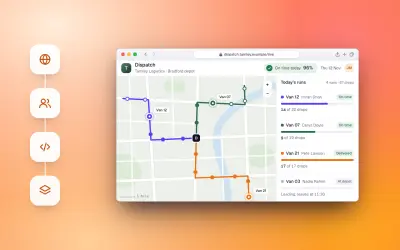 Web app developmentWeb platforms, portals and dashboards.
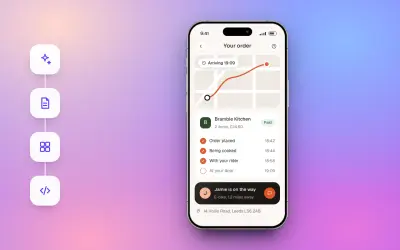 MVP developmentA first version for users and investors.
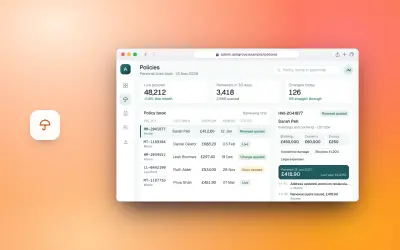 Insurance softwarePolicy, claims, underwriting and broker platforms.