As a software development company for UK businesses, we build bespoke software around the way your teams already work. One system replaces the copied spreadsheets and the same details typed into three places, so work moves faster and you stop paying people to fix records twice.
A written view on scope and price within 2 working days
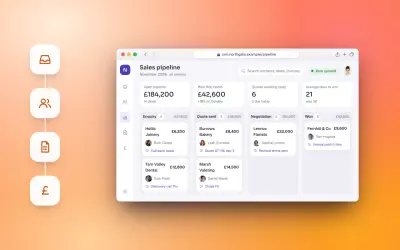
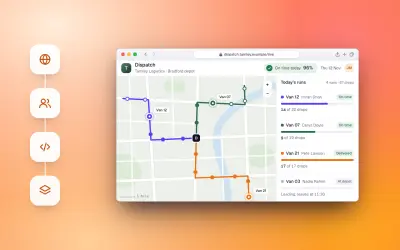
dispatch.tarnley.example/live
TDispatchTarnley Logistics · Bradford depotOn time today96%Thu 12 NovJM
+−1 mile
Today’s runs4 vans · 67 drops
Van 12Imran Shah On time
13 4 of 22 drops
Van 07Carys Doyle On time
8 9 of 19 drops
Van 21Pete Lawson 1 drop leftDelivered
16 7 of 17 drops
Van 03Nadia RahimAt depot
Loading, leaves at 11:30
Security and compliance
Cyber EssentialsCertified
Cyber Essentials PlusIndependently tested
ISO/IEC 27001:2022Information security
ISO 9001:2015Quality management
ISO/IEC 42001:2023AI management
SOC 2 Type IIAudited controls
UK GDPR andData Protection Act 2018
ICORegistered
NHS DSPTData security toolkit
WCAG 2.2 AAAccessibility
PCI DSSCard data security
What does a UK software development company do?
A software development company turns the way your business runs into software your staff and customers can use. We start with two weeks of discovery that end in a written scope and one fixed price. Then we build in two-week releases you can try, test every rule in the scope, launch, and look after the system once it is live. A first stage usually costs £15,000 to £40,000 excluding VAT.
First call
Free, 30 minutes
Discovery
2 weeks, its fee taken off the build
First version
9 to 10 weeks
After launch
90 days of fixes included
Software development across the UK
A software development company for UK businesses
We are a software development company working with UK businesses. We build the systems your staff use every day, and our UK representative meets you in person, usually within a day or two of your first message.
Our representatives meet clients face to face in the UK cities we cover. If a video call suits you better for the first conversation, we start there.
Every sector brings its own regulator, its own older systems and its own peak weeks, so discovery starts from yours. These are the sectors we build for most often.
Eight kinds of software development work, each shaped around the business it serves. The example in each card shows what it looks like for one kind of firm.
01
Custom business software, CRM and ERP
We build the system your work actually runs on: a custom CRM, an ERP add-on, or one workflow for cases, jobs, bookings or stock. Staff stop keeping their own copies in spreadsheets, because every record has one home. An insurance broker, for example, might hold each policy, its renewal date and every change with who made it, in one searchable screen. Software development projects with us start from about £12,000.
02
Software integration and APIs
We connect the subscriptions and systems your business already runs, such as accounts, CRM, stock and your online shop, so a detail typed once reaches every system that needs it. Where a product publishes an API, the link follows its documented rules. A courier firm could see a web order become a delivery job on the dispatch screen without anyone copying it across. Older systems with no API take longer, and discovery prices that before you commit.
03
Web applications and customer portals
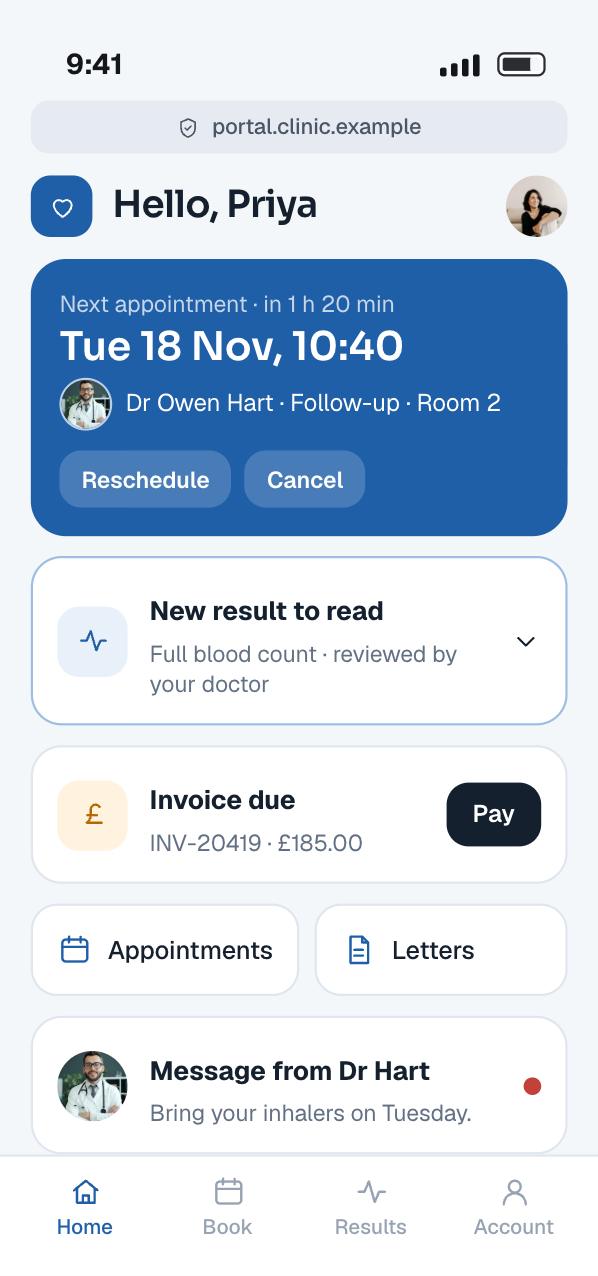
We build browser-based systems that staff, customers and partners sign in to, each seeing only what their role allows. A private clinic could let patients book, read released results and update their details, while reception works from the same diary. If your users also need it on their phones, we build the mobile app as part of the same project, on the same records.
04
AI and automation inside your systems
We add AI where people spend their day reading, sorting and answering the same things: emails, forms, claims or support requests. The software drafts the next step and a person approves it, so nothing leaves without a human check. A lender’s support team, for instance, could get each incoming question sorted and a reply drafted from its own policy pages. An AI feature added to software you already run takes 6 to 10 weeks, and its monthly running cost is on the quote.
05
Legacy software modernisation and data migration
We replace a system your business depends on but nobody wants to touch, then move its records across and check the totals match. The old and new versions run side by side until you sign off, so work never stops for the switch. A transport operator still planning its day on an ageing desktop tool could move to a browser board without losing a single record.
06
Dashboards, reports and data
We build reports that count straight from your live records, so nobody rebuilds the same spreadsheet on a Monday morning. Managers see the figures they need, and scheduled reports can arrive by email without anyone opening the system. An energy firm running charge points could watch faults, usage and earnings across its whole network on one screen.
07
Cloud hosting, support and maintenance
We run your system on AWS or Google Cloud under a cloud account that belongs to your business, apply security patches and fix what breaks. Each month you get a short report on what changed and what it cost to run. A law firm’s matters system, for example, stays patched and available while fee earners rely on it all day. The first 90 days of fixes are in the build price, and we look after 20 to 40 live apps at any time.
08
Software consultancy, discovery and design
Good software development starts before any code: we work out with you what the software must do and what it must not. Discovery maps your process, your systems and your rules, and design turns them into a clickable prototype your own staff try. If a ready-made product covers most of your needs, we say so in writing rather than quote a build. A services firm unsure whether to replace its CRM would leave with that answer and a price.
Is your local team working around software that no longer fits? Tell us where it hurts, and we will say what to fix first.
One software development process, applied to six sectors that each bring their own rules and systems.
01
Healthcare and clinics
Patient records, online booking and results from the lab, sent and received in HL7 and FHIR, two of the formats health systems use to talk to each other. Our clinic records build below is one example. More on our healthcare software page.
02
Insurance
Policy, renewal and claims screens with an audit trail of every change, and AI that reads a claim form and flags what is missing. More on our insurance software page.
03
Banking and lending
Application queues, affordability checks and customer portals, where each person sees only what their role allows. More on our fintech software page.
04
Construction
Site boards for snags, inspections and sign-offs that work on a tablet in the site office as well as on a desktop. More on our construction software page.
05
Logistics and delivery
Dispatch boards, route planning and proof-of-delivery links between your shop, your warehouse and your drivers.
06
Education and training
Course, admissions and learner platforms with separate portals for staff, tutors and employers, like the coding school platform below.
Why UK firms choose AppAgentix for software development
01
Building software since 2019
We have built software and apps since 2019, for clients across more than 11 countries, the UK included. More than 95% of our projects arrive on or before the agreed date, and our fastest delivery took two weeks.
02
Clients come back
About 60% of our clients return for a second project, and our longest client relationship is now in its seventh year. That is why the first version is planned with the second one in mind.
Testing runs through our software development from the first release. Every rule written in your scope gets tested, and you read the results before launch, including anything that failed and how we fixed it. Nothing goes live until it passes a test run you can read.
05
A working release every two weeks
From week 3, each release is something you can open and use, checked against the date the plan gave it. You can change priorities between releases, because you see progress rather than read about it.
06
The people who write the code
A project team is usually 4 to 6 people, and you talk to the software developers on it, not to a chain of account managers. We reply to new enquiries within 30 minutes.
07
A fixed price and a written promise
Discovery ends in one fixed price, paid by milestone, and any change is priced in writing before work on it begins. If we do not deliver what the written scope promises, we refund what you paid for the undelivered work within 7 days.
08
Yours to keep
The code, the designs and the cloud accounts sit in your name from the first commit. If you build your own team later, they take over software you already own, with nothing to transfer.
What are the downsides of using off-the-shelf software?
We still advise buying a ready-made product when it fits most of your process, and building custom software when the process itself sets your business apart. The downsides of off-the-shelf software start where your rules differ from the product, users multiply the fees, and links stop at the vendor’s connectors.
Topic
Custom software
Off-the-shelf software
Low-code platform
Fit to your process
Every rule mapped in a two-week discovery and written into the scope
Your rules change to match the product’s settings
Simple rules fit; complex ones meet the platform’s limits
Cost over time
One fixed first-stage price after discovery, then an optional support plan
Your users times the monthly fee per user, times 12, times the years you plan to use it
The same per-user sum, plus a rebuild if you ever leave
Personal data
Where we process your personal data, UK GDPR requires a written contract covering the ICO checklist, and we bring in another processor only with your prior written authorisation
If the vendor processes personal data for you, it is your processor: check its terms against the same checklist
If the platform processes personal data for you, the same check applies
Ownership
The code, designs and accounts are yours from the first commit
You hold a licence; the vendor keeps the product
Your app runs only inside the platform
Integrations
Linked through each system’s own API, with every link listed in the scope
Only the connectors the vendor offers
Ready-made connectors; others take custom work
Speed to start
A first version typically in 9 to 10 weeks
Set up in days or weeks
Weeks for a simple app
Leaving
Repositories and cloud accounts are already in your name
You take whatever export the vendor allows
Leaving often means building the app again
Risk
Measured stage by stage against the scope you signed
The vendor can change prices or features, or close the product
The platform sets prices and limits for every app on it
To redo the cost row with your own numbers, multiply your users by the monthly fee per user, then by 12 and by the years you plan to run it. If that total passes our first stage price plus support for the same years, the custom build is the cheaper of the two over that period.
How our software development process runs
Our software development process has five stages. Each ends in something you can read or use, and releases are dated so you can check progress against the plan.
Weeks 1 to 201
Discovery
The output is a written scope and a clickable prototype, priced as one fixed figure, with the discovery fee deducted from it.
From week 302
Build in dated releases
Every two weeks from week 3, you get a working release, checked against the date the plan gave it.
Before launch03
Test run you read
We test each rule in the scope and hand you the results to read before launch.
Agreed date04
Launch
Launch goes live in cloud accounts registered to your business, so nothing needs transferring to you afterwards.
After launch05
90 days of fixes
The 90 days of fixes run from launch day, and a support plan, if you want one, starts when they end.
Discovery picks the stack for your software development project to match the languages and systems you already run, and the builds below show some of these in use.
01
Web front end
React and Next.js for web screens: the coding school website uses both, alongside a React Native app for study.
02
Back end
Business rules, sign-in and system links run on Node.js, Python, Java or .NET. Our clinic records build uses Java, where the open-source HAPI libraries handle HL7 and FHIR messages.
03
Data
PostgreSQL holds people, courses and progress on the coding school platform. Its row-level security policies restrict, per user, which rows a query can read or change.
04
Cloud and releases
The three builds below are hosted on AWS. Yours goes on AWS or Google Cloud under an account registered to your business, each part ships in a Docker container, and GitHub Actions runs every build, test and release.
Three ways to pay us for software development
The right one depends on how settled your requirements are and who will run the system later.
Topic
How it works
Suits which UK buyer
What to know
Fixed price after discovery
Discovery ends in one fixed figure for the stage, paid by milestone. Any change is priced in writing before work on it starts.
A firm that can describe the process it wants on screen, such as a broker’s renewals or a clinic’s bookings.
You know the full cost of the stage before the build begins, and the refund promise covers anything undelivered.
Time and materials
You are billed for the days we work, and priorities can shift between two-week releases.
A business still learning what the system must do, such as a logistics firm trying a new way to plan routes.
A working release every two weeks lets you stop, carry on or change direction at each one.
A dedicated development team
Our developers join your team, work from your list and take part in your planning.
A company whose own engineers are busy on the product its customers use, with staff screens waiting behind it.
Code, designs and accounts stay in your name, so your own people can take the work over later.
Software projects slip when the scope is vague. Ours start with a two-week discovery that ends in one fixed price.
A few examples from the many systems our software development team has built. Most of our work is under NDA, so the three below stand for many more we cannot show.
Healthcare
Records system for a medical clinic
What we built
We built one system that keeps patient files, consultation notes, the clinic diary and invoicing together for doctors, clinic staff and patients. Patients book and read released results in their own portal, while test orders and results travel to and from the laboratory.
Scope: 8 modules for 3 user groups, exchanging data over HL7 and FHIR
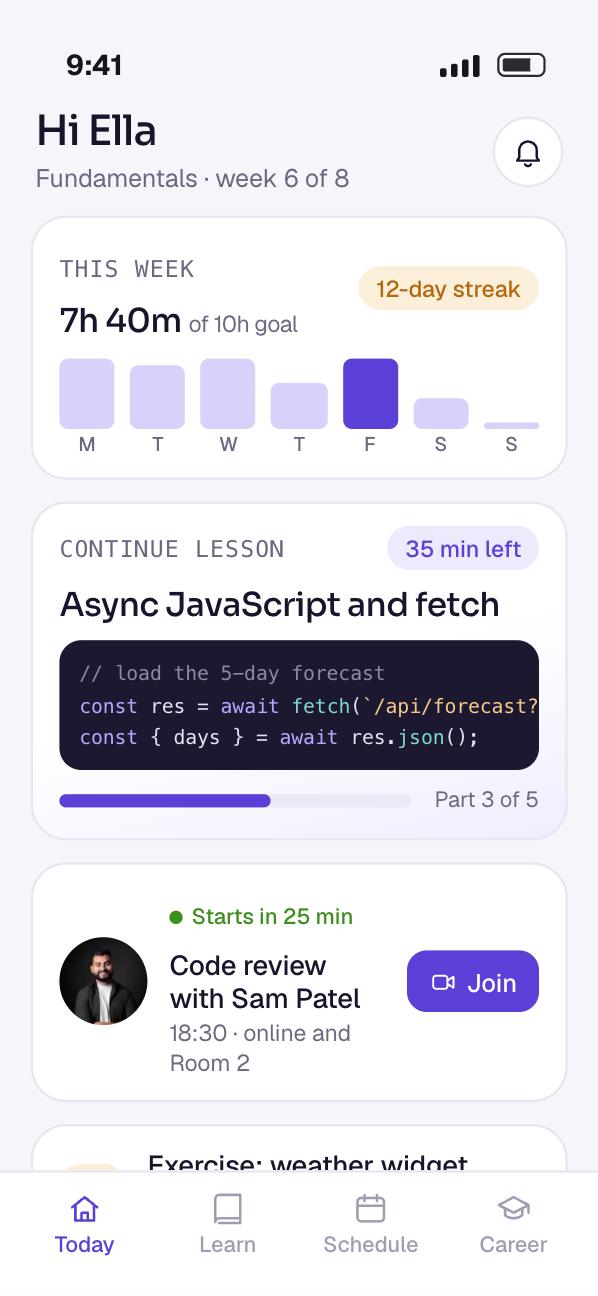
Coding school platform: courses, admissions and study
What we built
We built the school’s website, a React Native app for study, and separate portals for admissions staff, instructors and hiring partners. Together they carry a person from comparing courses and booking an advice call to enrolling, learning in a cohort and meeting an employer.
Scope: a public website, a study app and three portals on one set of records
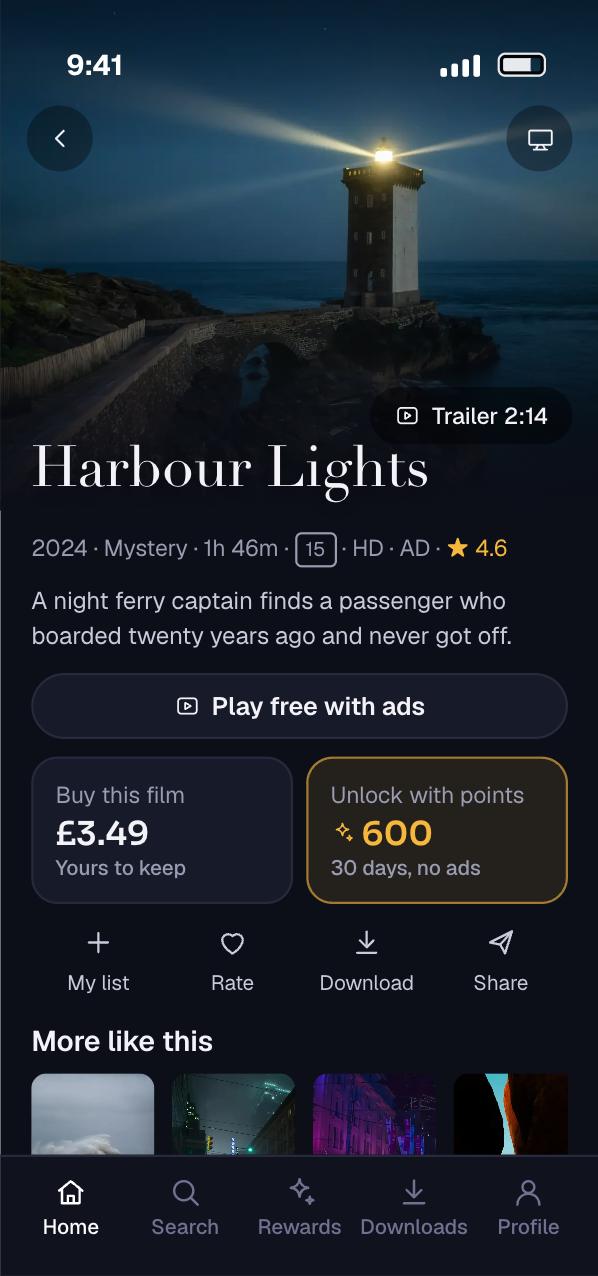
We built a service for films, series and live channels that people watch on their phones and on the TV screens at home. Each viewer chooses to watch free with adverts, take a monthly or yearly plan, buy a single title or use reward points.
Scope: 4 ways to watch, 2 kinds of video and 8 core features
“We needed one platform for the whole journey: comparing courses, booking a call, applying, then learning. AppAgentix built the website, the learning hub and the mobile app. Admissions now move 45% faster and information calls are up 38%. More than 5,000 learners use it, and 92% complete their course. They understood how a school actually runs, not just how to write the code.”
“We wanted one streaming service that felt the same on phone, tablet and TV, whether people watch free with adverts, subscribe or rent a film. AppAgentix built the apps for iPhone, iPad, Android and Apple TV and the service behind them. They got the hard parts right: playback that starts quickly, a home screen that works with a TV remote, and billing that stays correct. The Android app has passed 50,000 downloads.”
“Our patients needed the portal in their pocket: requesting visits, reading test results, reordering medicines and messaging their care team. AppAgentix built the Android app on our Epic MyChart system, careful where it matters: secure sign-in, no clinical detail on the lock screen, and patients choose what fitness data they share. The app has passed 50,000 downloads with 4.4 stars from over 750 reviews, and every release was tested before it reached our patients.”
Pick your starting data and the features your custom software needs. Each option shows the days of work it takes, and the estimate updates as you choose.
Included to start: Discovery, sign-in, one core workflow, testing and launch. 9 to 10 weeks.
Three ways to work with us
Pick by how much you can write down today. Prices in pounds, excluding VAT.
Fixed-price build
Best whenYou can say what the product must do, and want one figure before work starts.
Price
MVP from £15,000, 8 to 14 weeks
Two weeks of discovery first, its fee taken off the build price
Full iPhone and Android app in 4 to 8 months
Terms
One fixed figure in writing after discovery
Fixes for 90 days after launch included
If we do not deliver what the written scope promises, we refund what you paid for the undelivered work within 7 days.
You own the code, designs and accounts from the first commit.
The ten questions discovery starts with: users, the jobs they need done, systems to connect, rules, deadline and budget. Fill it in, attach nothing else, and the first call starts at the right place.
With us, the first stage of a bespoke system usually lands between £15,000 and £40,000 excluding VAT, and a complete system can reach £90,000. Two weeks of discovery, at £3,000 to £6,000, end in one fixed price, and that fee comes off the build. The price moves with the screens and roles you need, the systems it must link to, any AI, and how much old data moves across. A first version typically takes 9 to 10 weeks. The calculator above prices your own mix.
Start by writing down the process the software must follow, who uses each step and which systems it must talk to. From there you can learn to build it yourself, set it up on a low-code platform if your rules are simple, or hire a software development company. If you hire us, discovery turns that description into a written scope, a clickable prototype and one fixed price, and the code is yours from the first commit.
What are some reputable custom software development companies in the UK?
A reputable software development company shows systems it has built and puts a scope and a fixed price in writing before the build. It also tells you who will write the code, and it leaves the code and accounts in your name. Ask each firm on your list for those four things. AppAgentix does all four, and adds a free 30-minute call, a written view within 2 working days and a refund for any undelivered work in the scope.
What is a software house example?
AppAgentix is one. Software house is another name for a software development company: a company that writes and sells software. We write ours to order for each client and maintain it after launch. Most of our work is under NDA, and at any time we look after 20 to 40 live apps for clients.
Let’s make your software project the one that ships on time.
More than 95% of our projects are delivered on or before the agreed date. About 60% of our clients come back for a second project.
What happens next
1We reply within 30 minutesEvery day of the year. A developer at our software development company, not a sales team, reads your brief.
2A 30-minute callWe ask about users, deadlines and the systems you already run.
3A written view in two working daysScope, timeline and a price range, yours to keep.
Thank you. Your brief is in.
A developer, not a sales team, reads it. We reply within 30 minutes, from info@appagentix.co.uk.
We use cookies to run this site and, with your permission, to understand how it is used. Cookie policy · Privacy policy
Let’s make your software project the one that ships on time.
More than 95% of our projects are delivered on or before the agreed date. About 60% of our clients come back for a second project.
What happens next
1We reply within 30 minutesEvery day of the year. A developer at our software development company, not a sales team, reads your brief.
2A 30-minute callWe ask about users, deadlines and the systems you already run.
3A written view in two working daysScope, timeline and a price range, yours to keep.
We wanted one streaming service that felt the same on phone, tablet and TV, whether people watch free with adverts, subscribe or rent a film. AppAgentix built the apps for iPhone, iPad, Android and Apple TV and the service behind them. They got the hard parts right: playback that starts quickly, a home screen that works with a TV remote, and billing that stays correct. The Android app has passed 50,000 downloads.
Michael S.CEO and Co-Founder, Play Now Media
Thank you. Your brief is in.
A developer, not a sales team, reads it. We reply within 30 minutes, from info@appagentix.co.uk.
 WCAG 2.2 AAAccessibility
 FigmaScreens and clickable prototypes you can test
 ReactThe library for web and native user interfaces
 Next.jsThe React framework for web applications
 TypeScriptTyped JavaScript that catches errors early
 Anthropic ClaudeClaude Fable 5.2, Opus 5.5, Sonnet 5.5, Haiku 5.5
 Google GeminiGemini 4 models for text, images, audio, video and PDF
 Node.jsJavaScript runtime for scalable network applications
 PythonLanguage for web development and scientific work
 PostgreSQLOpen-source database; pgvector adds vector search
 RedisIn-memory store for caching and live messages
 AWSCloud hosting with a London region
 Google CloudCloud hosting with a London region
 DockerPackages and runs an app in a container
 TerraformCloud set-up written as code, repeatable
 GitHub ActionsCI/CD platform to automate build, test and deployment
 SentryCaptures errors and alerts you with full context
 Custom CRM and ERPBusiness systems shaped around how you work.
 Web app developmentWeb platforms, portals and dashboards.
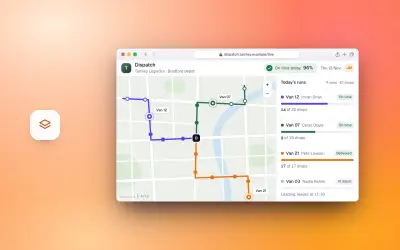
 Software modernisationRebuild ageing apps without losing users.
 Product engineeringWeb platforms, admin panels and APIs.
 LondonCustom software for London teams.
 ManchesterCustom software for Manchester teams.
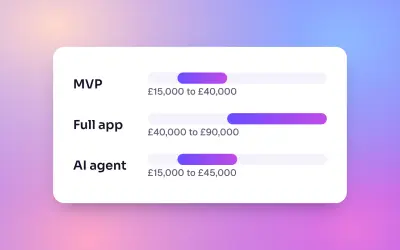 PricingWhat apps and AI agents cost, in pounds.
 Request a quoteTell us what you want to build and get a written view.