Insurance app development company UK: apps for policyholders, brokers and field staff.
We are an insurance app development company building mobile apps for the policyholders, brokers and field staff of UK insurers, MGAs and insurtechs. That means claims by phone with photo and video evidence, a policy wallet, renewal reminders by push, and apps for brokers and loss adjusters. Each UK rule is tied to a screen before the first sprint, and the price is fixed in pounds after discovery.
Vulnerable customers (FG21/1)Journeys where a customer may need extra care
Financial Ombudsman Service evidenceComplaints about insurance price or renewal
Operational resilienceInsurers
Security and compliance
Cyber EssentialsCertified
Cyber Essentials PlusIndependently tested
ISO/IEC 27001:2022Information security
ISO 9001:2015Quality management
ISO/IEC 42001:2023AI management
SOC 2 Type IIAudited controls
UK GDPR andData Protection Act 2018
ICORegistered
NHS DSPTData security toolkit
WCAG 2.2 AAAccessibility
PCI DSSCard data security
What does UK insurance app development involve?
It builds the phone and web apps your customers, brokers and adjusters hold, on top of the policy and claims systems you already run. A two-week discovery maps the app to the UK rules and lists every system it must talk to. An insurance app MVP for one product line then costs £20,000 to £40,000 excluding VAT and takes 12 to 14 weeks, discovery included. A home insurance app with quote and buy, self-service and claims, linked to one policy system, comes to £30,000 fixed. Price your own version with the calculator on this page, and see every price line we sell on our app development cost page.
Discovery
2 weeks, ending in a fixed quote
Insurance app MVP
12 to 14 weeks
Full platform
5 to 8 months
Insurance app development services, app by app
01
Quote and buy on the phone
Policyholders
A short question set, a price with its main terms and a payment step, for personal lines such as motor, home, travel and pet. Each answer is stored with the time and the question wording the customer saw. In 2024, 77% of insurance or protection policyholders had used a price comparison website (FCA Financial Lives 2024).
02
Policy wallet and push renewals
Policyholders
Documents, certificates, address changes, renewal and cancellation in one place on the phone, for any line with mid-term changes. A push message reminds the customer before renewal, and cancelling takes no more taps than buying did, and we count the taps in the prototype.
03
Claims by phone, with photo and video evidence
Policyholders, claims teams
First notice of loss with photos and video from the phone camera, a reference number straight away and a status view, for motor, home, travel and pet claims. A claim that stops half-way is saved and can be resumed. Motor insurers paid out £3.2 billion in Q3 2026, and the average motor claim was £4,900 (ABI, Q3 2026).
04
Broker apps and portals
Brokers, MGAs
Quote for a client, see policies, upload documents and track referrals from a phone or a browser, for commercial lines and schemes sold through brokers. Each broker sees only their own book, and a script tests that rule on every release.
05
Adjuster and field staff apps
Loss adjusters, surveyors
Loss adjusters and surveyors take photos, video and notes at the property or the vehicle, and the app puts them on the claim file for the handler. It suits home and motor claims that need a site visit.
06
Complaints and vulnerability tools
Compliance teams
A complaints case log, a flag for customers who need extra support and the evidence export a complaint review asks for, across every line. Each staff action is logged with who, what and when. Complaints equalled 7-13% of home insurance claims in 2025 (FCA general insurance value measures data 2025). Most other products sat at 0-6%.
Building in insurance means rules you cannot get wrong. Talk them through with the developers who would build to them.
Which UK rules decide how an insurance app is built?
We are an engineering team, not a law firm or a regulated firm. Your compliance lead or adviser confirms which rules apply to your permissions. Dates are as each regulator gives them in November 2026.
Consumer Duty
Applies to
FCA-regulated firms serving retail customers
What it changes in the build
Quote, policy and cancellation screens are tested with five real customers or brokers before we build them. The FCA describes a consumer principle: “a firm must act to deliver good outcomes for retail customers”. It adds 3 cross-cutting rules and 4 outcomes: the governance of products and services, price and value, consumer understanding and consumer support. It expects firms to test that customers have understood key information, and ongoing service to be as easy to access as sales, with no barriers to switching or cancelling.
Vulnerable customers (FG21/1)
Applies to
Journeys where a customer may need extra care
What it changes in the build
Each journey has a support flag and a visible “speak to someone” route that carries the case context. FG21/1, the FCA guidance of February 2021, says a vulnerable customer is someone who, due to their personal circumstances, is especially susceptible to harm. That is particularly so when a firm is not acting with appropriate levels of care.
Financial Ombudsman Service evidence
Applies to
Complaints about insurance price or renewal
What it changes in the build
One button exports in one file the six items the Ombudsman says it would normally expect for a price or renewal complaint. They are the policy schedule, policy certificate, full policy terms, contact records, underwriting information and the premium calculation breakdown. The Ombudsman also checks discrimination, misleading information, mistakes, price rises over time and restricted choice.
Operational resilience
Applies to
Insurers
What it changes in the build
We document every service the app depends on, so your resilience map has the dependencies ready. Under the FCA’s rules, which apply to insurers, firms had until 31 March 2025 to ensure they could stay within impact tolerances for their important business services. New incident reporting and third-party notification rules were published on 18 March 2026 and come into force on 18 March 2027.
Outsourcing and cloud
Applies to
Firms that rely on third parties
What it changes in the build
You receive a supplier list: each service, what data it holds and which region it runs in. The FCA expects a firm to map the technology and third parties behind each important business service. It also expects the firm to manage outsourcing risk for as long as the arrangement runs.
Senior managers and AI
Applies to
Insurers and the senior managers of FCA-regulated firms
What it changes in the build
Every AI feature has a named owner on your side, written into the handover document. Insurers were brought fully into the Senior Managers and Certification Regime in December 2018. It reached all solo-regulated firms in December 2019. On AI, the FCA says it does not plan extra AI regulation and relies on existing frameworks, including the Consumer Duty and senior manager accountability.
UK GDPR and automated decisions
Applies to
Significant decisions made solely by automated processing
What it changes in the build
Decline and price decisions made by rules or models can be routed to a person, and the route is tested. Articles 22A to 22D of the UK GDPR cover decisions based solely on automated processing that have a legal or similarly significant effect. The ICO updated its draft guidance on 31 March 2026 for the Data (Use and Access) Act 2025. Safeguards include information about the decision, representations, human intervention and a way to contest.
Where does each rule show up in the app?
This is an example of the one-page rules map you receive at the end of discovery, filled in for an imaginary home insurance app. Yours lists only the rules your adviser confirms. Home claims are a large book. Insurers paid almost £3.4 billion across more than 560,000 home insurance claims in 2025 (ABI, 2025 property figures).
UK ruleScreen or export
01UK ruleConsumer Duty: consumer understanding
Screen or exportQuote summary with the main terms
02UK ruleConsumer Duty: consumer support
Screen or exportCancel and renew screens, with no more taps than buying
03UK ruleVulnerable customers (FG21/1)
Screen or exportSupport flag and “speak to someone” route
04UK ruleFinancial Ombudsman Service evidence
Screen or exportComplaint evidence export
05UK ruleOperational resilience
Screen or exportDependency list for every service the app uses
06UK ruleOutsourcing and cloud
Screen or exportSupplier list: service, data held and region
07UK ruleSenior managers and AI
Screen or exportNamed owner for each AI feature
08UK ruleUK GDPR and automated decisions
Screen or exportHuman review route for declines and price decisions
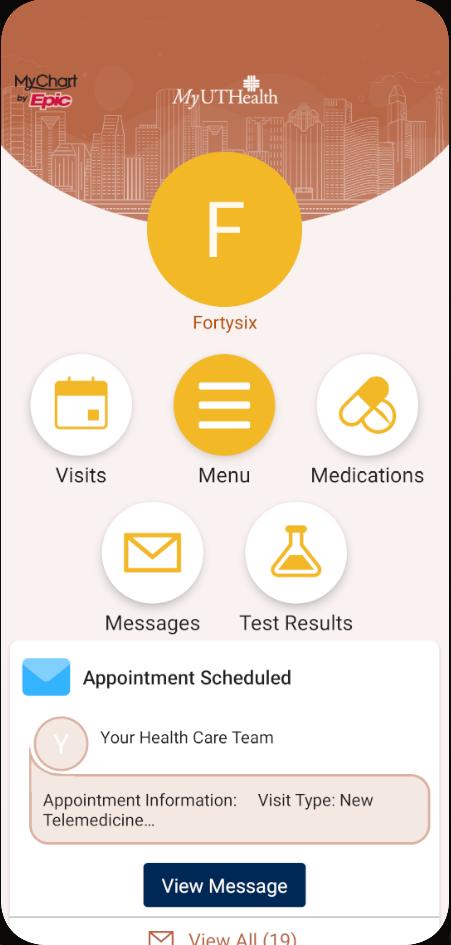
“Our patients needed the portal in their pocket: requesting visits, reading test results, reordering medicines and messaging their care team. AppAgentix built the Android app on our Epic MyChart system, careful where it matters: secure sign-in, no clinical detail on the lock screen, and patients choose what fitness data they share. The app has passed 50,000 downloads with 4.4 stars from over 750 reviews, and every release was tested before it reached our patients.”
“We wanted one streaming service that felt the same on phone, tablet and TV, whether people watch free with adverts, subscribe or rent a film. AppAgentix built the apps for iPhone, iPad, Android and Apple TV and the service behind them. They got the hard parts right: playback that starts quickly, a home screen that works with a TV remote, and billing that stays correct. The Android app has passed 50,000 downloads.”
“Amara is built around creators, so posting had to be effortless: posts, short videos, Stories, recipes and workouts, with each creator deciding who sees what. AppAgentix built it for iPhone and Android from one codebase, and what I value most is the video: uploads process in the background, playback starts fast and holds up on mobile data. Moderation and audience controls were built properly, not as an afterthought. They worked like part of our team.”
Apps we have built for documents, forms and secure messages
A few examples from the many apps we have built where people fill in forms, keep private documents on their phone and message the team behind the service securely.
Healthcare
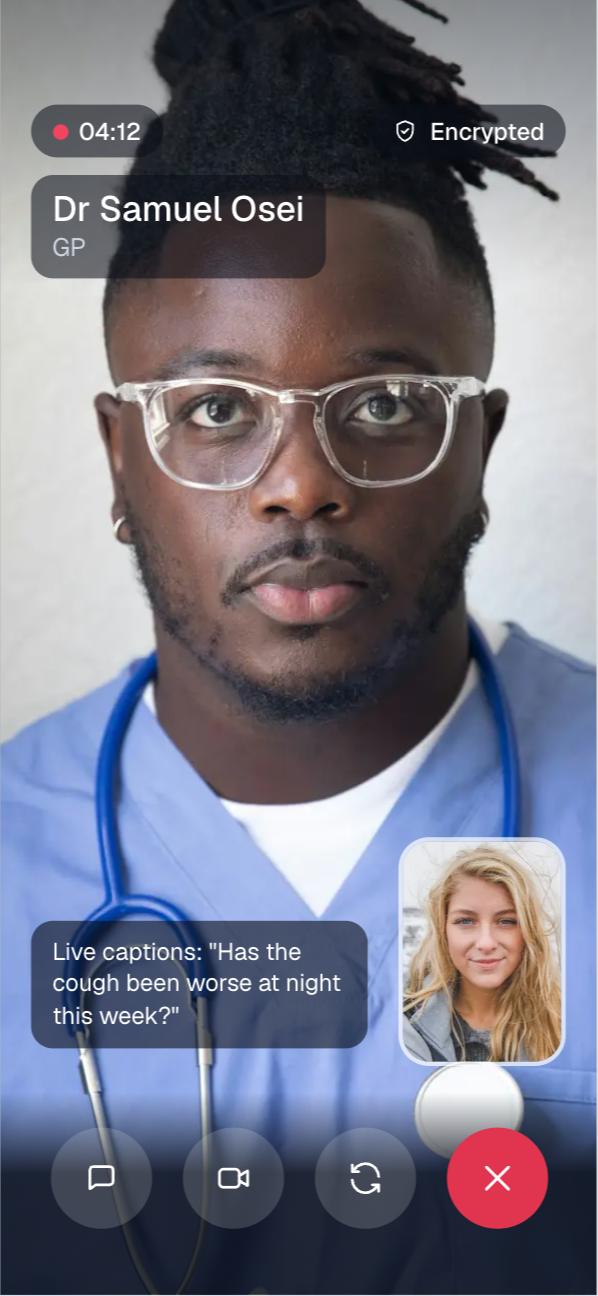
Telehealth app: forms, documents and bills on the phone
What we built
We built this telehealth app so patients complete pre-visit forms, pay bills and keep prescriptions, lab reports and medical records together on Android and iOS. Personal data is encrypted in storage and in transit, sessions are managed securely, and patients, doctors and administrators each see only what their role permits.
We built MyUTHealth so patients can message their care team securely, read test results and request repeat prescriptions from an Android phone. It reads the provider’s Epic MyChart records through HL7 FHIR APIs, sends reminders through Firebase Cloud Messaging, and keeps data encrypted in transit with access control and audit logs.
50,000+Google Play downloads, rated 4.4 stars across more than 750 reviews
Your firm answers to the Ombudsman, so the export is rehearsed on ten sample policies before launch. This is the sheet for one policy in an imaginary home insurance app.
ExampleComplaint evidence export: rehearsal sheet for sample policy 7AppAgentix
Item
Taken from
Result
Notes
Policy schedule
Policy system
Pass
Renewal schedule, 2 pages
Policy certificate
Policy system
Pass
Dates match the schedule
Full policy terms
Document store
Pass after fix
First run attached today’s wording, not the version in force at renewal
Contact records
App messages, email, phone notes
Open
Phone notes missing; the phone system link is booked for the next build
Underwriting information
Quote answers
Pass
14 answers, each with the question wording the customer saw
Premium calculation breakdown
Rating engine
Pass
Base premium, each loading and each discount on its own line
This is an example, not a client record: open rows go on the fix list with an owner, and you decide whether launch waits.
How long does it take to create an app?
This is the 14-week plan for one product line, and a build with one ready integration can finish in 12. A project team is usually 4 to 6 people. More than 95% of our projects are delivered on or before the agreed date.
Week1234567891011121314monthly
01Discovery and rules map
02Design and customer tests
03Insurance app development sprints
04Testing and evidence export
05Staff pilot and launch
06Run and improve
01Weeks 1 to 2
Discovery and rules map
We list the rules your permissions fall under and name every system the app must connect to. We choose native, Flutter or React Native, and agree one product line for the first release.
You receive: Written scope, clickable prototype, fixed quote and a one-page rules map.
02Weeks 3 to 4
Design and customer tests
Quote, policy and cancellation screens are tested with five real customers or brokers.
You receive: Tested screens and an accessibility checklist against WCAG 2.2 AA.
03Weeks 5 to 10
Insurance app development sprints
Three two-week sprints: quote and buy first, then policy self-service and documents, then claims notification and the read-only staff admin view.
You receive: A working build on your phone after every sprint.
04Weeks 11 to 12
Testing and evidence export
Automated tests, the evidence export rehearsal on ten sample policies, and a brief for the independent penetration tester you hire.
You receive: Test report, export sample and a fix list with owners.
05Weeks 13 to 14
Staff pilot and launch
Your own staff use the app on live policies first, then the store listings go live under your developer accounts.
You receive: Live listings, and a pilot log of what staff found.
06Monthly
Run and improve
Fixes are in the build price for 3 months after launch, then support watches crashes, failed payments and abandoned quotes.
You receive: A monthly report with running costs.
Custom insurance app development or your system vendor’s app?
First ask whether a configured product already does the job.
Topic
Custom app, built with us
App from your core-system vendor
Off-the-shelf portal
What it is
An app designed and built for your product, wording and flow
The app or portal your policy system supplier sells, configured for you
A ready-made portal product that you brand and configure
Best when
The journey is how you win customers
Your journey is close to standard
You need a login portal this quarter
Control of wording and flow
Full
Within the vendor’s configuration
Within the product’s settings
Time to release
12 to 14 weeks for an MVP, discovery included
Set by the vendor’s configuration work and release dates
Set-up and branding, with nothing to build
If your vendor’s product covers the need, we say so in discovery and you stop spending.
What does each stage of insurance app development include?
Each stage below lists what you receive. Discovery ends with one fixed quote, and the calculator below prices your own mix, excluding VAT.
01
Discovery
Comes off the build price
2 weeks
Rules map, scope, prototype and fixed quote.
02
Insurance app MVP
Quoted after discovery
12 to 14 weeks, discovery included
One app on iOS and Android, or a web portal, for one product line, with payments, a read-only admin view and store launch. One integration: one system connection, for example your policy system or rating engine, through its existing interface. Each further system is priced in discovery.
03
Full platform
Quoted after discovery
5 to 8 months
Several product lines, broker portal, more integrations, complaint and vulnerability tools, reporting exports and accessibility to WCAG 2.2 AA.
04
AI feature, one workflow
Quoted after discovery
quoted per feature
For example a referral triage queue, tested on your own historic cases.
05
Support and running
After launch
monthly
Fixes, operating system updates, monitoring and the monthly report.
A new policy system, a rating engine or moving old data is quoted after discovery.
Estimate your insurance app in a minute
Pick what the first version needs and watch the range update.
Included to start: Discovery, rules map, tested design, read-only admin view, one system connection, complaint evidence export and store launch. 9 to 10 weeks.
Who owns the code, the accounts and the keys, and what is not included?
You own what we build, and we write that into your contract. Four costs paid to other parties sit outside our price.
Source code
Sits in your repository from the first commit, and is assigned to you on payment.
Accounts
The Apple, Google and cloud accounts are opened in your company name, with us as invited users.
API keys
Keys and secrets are held in your secrets manager, and our access can be removed in one step.
Data
Hosted in the cloud region you choose in discovery, and that region is written on the quote.
Handover
A runbook, an architecture diagram and a recorded walkthrough, written for whoever runs the app next.
Not included: regulatory advice
Your compliance adviser or lawyer confirms which rules apply, because we do not give legal advice.
Not included: independent penetration test
Hired by you from an accredited firm, so the tester is independent of the builder.
Not included: your core-system vendor’s fees
Interface access, sandbox environments and change requests are charged by the vendor.
Not included: per-check and running fees
Identity, vehicle and credit data providers charge per use, and payment and hosting fees are monthly lines. The ICO says organisations that use personal information need to pay a data protection fee unless exempt.
Will the app work with your current policy system?
The app reads and writes through your policy system’s API or a scheduled file exchange, priced in discovery before you commit.
Yes. The app reads and writes through your policy system’s API or a scheduled file exchange, priced in discovery before you commit. Each connection sits behind one layer, so replacing the system later changes one place. Older systems with no API add weeks, and discovery prices them.
The app sends quote answers, receives a price and never stores rating tables, and a mismatch between app price and system price blocks the sale and is logged. Building the policy administration system, a rating engine, underwriting queues, bordereaux checks or Solvency UK reporting is back-office work, and our insurance software development page covers it.
How to work with our insurance app development company
01
Fixed-price build
Discovery ends with one fixed quote for the agreed scope.
02
A dedicated team
Our engineers join your team at a day rate, on the same ownership terms.
03
Monthly support
A monthly plan, with a report on crashes, failed payments, abandoned quotes and running costs.
A claim, from first report to payment
The claim steps a customer sees in the app.
01Report
02Photos
03Assess
04Repair
05Settle
9:41
AAshgroveSH
Motor claim AG-48213 Rear bumper damageFord Focus, reg. YK19 PRV
Reported
Photos
Assessed
Settled
Damage photos4 of 4
Approved repairerHollins Body Shop, Harrogate HG1
Courtesy carIncluded on your policy
Yes
Your excessPaid to the repairer
£250
How do we test AI inside an insurance app?
AI is optional, and reading one type of claim document is a smaller job than a whole workflow. A workflow might read invoices, estimates and forms, then fill the claim record for a handler to check.
01
Your cases, not ours
We test it on your own past claims and referrals before launch, and you read every result, misses included.
02
A person decides
The model suggests and shows its evidence, while a named handler makes every decline, cancellation and settlement offer.
03
Running cost on the quote
Model usage is billed per call, so the quote states a monthly figure for your expected claim volume.
When is an insurance app development company the wrong choice?
If your core-system vendor already ships a customer or broker app that covers your journey, use it.
If your core-system vendor already ships a customer or broker app that covers your journey, use it. A spreadsheet pilot for 50 customers and a payment link often tests demand for a new product at a fraction of an MVP cost.
If you cannot yet say who owns the app’s risk inside your firm, do discovery first. The FCA stresses senior manager accountability, so name an owner before you build.
Need a price before you go to the board? A two-week discovery ends in one fixed figure, and you own the code from the first commit.
The ten questions discovery starts with: users, the jobs they need done, systems to connect, rules, deadline and budget. Fill it in, attach nothing else, and the first call starts at the right place.
In the insurance apps we build, customers quote, buy and manage cover on the phone, from the price to renewal, cancellation and claims. For personal lines such as motor, home, travel and pet, the app shows a price with its main terms. Policyholder apps also hold documents and push renewal reminders, and take claims with photos and video from the phone camera.
How much does it cost to create an app in the UK?
In the UK, an insurance app MVP for one product line costs £20,000 to £40,000 with us, excluding VAT. Your core-system vendor’s fees and an independent penetration test sit outside that price.
How much does it cost to have an app built for you?
Having a full insurance platform built for you costs £50,000 to £90,000 with us over 5 to 8 months, excluding VAT. That covers several product lines, a broker portal, more integrations, complaint and vulnerability tools, reporting exports and WCAG 2.2 AA accessibility. A first version for one product line costs less, and discovery fixes the price in writing.
How long does it take to create an app?
An insurance app MVP takes 12 to 14 weeks with us, including the two weeks of discovery and rules mapping. In a home insurance build, sprints run in weeks 5 to 10, and weeks 11 to 12 rehearse the evidence export. A staff pilot and store launch fill weeks 13 to 14, while a full platform takes 5 to 8 months.
What software do insurance companies use?
Insurance companies use systems named by the job each one does. A policy administration system holds each policy and its documents, a rating engine works out the price, and a claims system records and tracks each claim. Customer and broker apps and portals sit in front of those systems, and that front layer is what this page covers.
Most app projects run late. Let’s make yours the one that ships.
More than 95% of our projects are delivered on or before the agreed date. About 60% of our clients come back for a second project.
What happens next
1We reply within 30 minutesEvery day of the year. A developer at our app development company, not a sales team, reads your brief.
2A 30-minute callWe ask about users, deadlines and the systems you already run.
3A written view in two working daysScope, timeline and a price range, yours to keep.
Thank you. Your brief is in.
A developer, not a sales team, reads it. We reply within 30 minutes, from info@appagentix.co.uk.
We use cookies to run this site and, with your permission, to understand how it is used. Cookie policy · Privacy policy
Most app projects run late. Let’s make yours the one that ships.
More than 95% of our projects are delivered on or before the agreed date. About 60% of our clients come back for a second project.
What happens next
1We reply within 30 minutesEvery day of the year. A developer at our app development company, not a sales team, reads your brief.
2A 30-minute callWe ask about users, deadlines and the systems you already run.
3A written view in two working daysScope, timeline and a price range, yours to keep.
We wanted one streaming service that felt the same on phone, tablet and TV, whether people watch free with adverts, subscribe or rent a film. AppAgentix built the apps for iPhone, iPad, Android and Apple TV and the service behind them. They got the hard parts right: playback that starts quickly, a home screen that works with a TV remote, and billing that stays correct. The Android app has passed 50,000 downloads.
Michael S.CEO and Co-Founder, Play Now Media
Thank you. Your brief is in.
A developer, not a sales team, reads it. We reply within 30 minutes, from info@appagentix.co.uk.




 WCAG 2.2 AAAccessibility
 SwiftGeneral-purpose language for all Apple platforms and servers
 SwiftUIDeclarative screens for every Apple platform
 KotlinGoogle’s preferred language for Android
 Jetpack ComposeAndroid’s current toolkit for screens
 FlutterMobile, web and desktop apps from one codebase
 React NativeNative Android and iOS apps built with React
 FigmaScreens and clickable prototypes you can test
 TypeScriptTyped JavaScript that catches errors early
 Node.jsJavaScript runtime for scalable network applications
 PythonLanguage for web development and scientific work
 PostgreSQLOpen-source database; pgvector adds vector search
 RedisIn-memory store for caching and live messages
 FirebaseFirestore and Realtime Database: store and sync app data
 AWSCloud hosting with a London region
 CloudflareContent delivery, caching and attack protection
 GitHub ActionsCI/CD platform to automate build, test and deployment
 SentryCaptures errors and alerts you with full context
 Insurance softwarePolicy, claims, underwriting and broker platforms.
 FintechBanking, payments and lending apps.
 MVP developmentA first version for users and investors.
 Software modernisationRebuild ageing apps without losing users.
 Custom CRM and ERPBusiness systems shaped around how you work.
 AI chatbot developmentChat assistants for customers and staff.
 Agentic AI developmentAI agents that complete tasks in your systems.
 Hire mobile app developersiOS, Android and Flutter engineers for your team.
 Maintenance and supportUpdates, monitoring and OS releases.
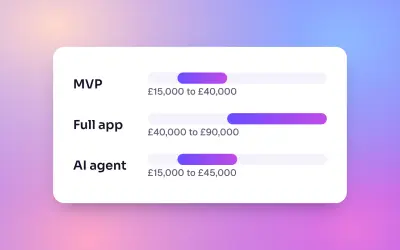 PricingWhat apps and AI agents cost, in pounds.