Logistics software development company UK fleets can hire for driver apps and dispatch
Our logistics software development covers driver apps, dispatch tools, proof of delivery and customer tracking for UK hauliers, couriers and warehouses. Prices are in pounds, timelines are in weeks, and the code and accounts are yours.
Logistics MVP in 10 to 14 weeks, discovery included
Drivers' hours, tachograph data and walkaround checks planned in discovery
Code, designs and accounts in your name from the first commit
109
9:41
TRun 148 of 12 stops9 of 12 stopsETA4 min3 min2 min1 minArrived
9
22 Mill Lane3 parcels, side door
On the wayDelivered
7 Station RoadDelivered 10:02
103 Harbour StreetDue by 10:50
Proof of delivery10:21
Signed by M. AlderPhoto
RunMapScanMessages
Rules this build is planned around
Drivers' hoursVehicles or vehicle combinations with a maximum weight over 3.5 tonnes, driven in the UK or to, from or through an EU country
Tachograph data downloadsOperators of goods vehicles under the assimilated and AETR rules
Operator licenceBusinesses that transport goods in vehicles over a certain weight, for example a lorry or van
Walkaround checks and recordsOperators of HGVs, vans, buses and coaches in England, Scotland and Wales, whatever the fleet size
Security and compliance
Cyber EssentialsCertified
Cyber Essentials PlusIndependently tested
ISO/IEC 27001:2022Information security
ISO 9001:2015Quality management
ISO/IEC 42001:2023AI management
SOC 2 Type IIAudited controls
UK GDPR andData Protection Act 2018
ICORegistered
NHS DSPTData security toolkit
WCAG 2.2 AAAccessibility
PCI DSSCard data security
What does a UK logistics software development project involve?
A UK logistics build starts with one job done well: a driver app with proof of delivery, a dispatch screen or a vehicle check tool. A two-week discovery fixes the scope and the price, and the work then runs in two-week sprints. A first release costs £15,000 to £35,000 excluding VAT and takes 10 to 14 weeks, discovery included. A small-fleet driver app with proof of delivery, simple dispatch and one TMS link comes to £25,000 fixed. Price your own logistics software development project with the calculator on this page, and see every price line we sell on our app development cost page.
Discovery
2 weeks, ending in a fixed quote
Logistics MVP
10 to 14 weeks
Full platform
4 to 8 months
Which logistics tools do we build?
Each entry names who it serves, the systems it links and the rule it respects. The volume is large. GB-registered HGVs lifted 1.53 billion tonnes of goods in the UK in 2025 (DfT domestic road freight statistics, 2025).
01
Driver app with proof of delivery
Driver
The driver gets the day's jobs in order, a hand-off to the phone's navigation app, and photo, signature and time capture at the door. The office sees each job close as it happens, with the proof attached. Jobs and proofs stay on the phone until the server confirms receipt, so a dead spot loses nothing. One codebase covers Android and iPhone, and location is recorded only during a shift. Vans carry much of this work. Van traffic in Great Britain reached 58.8 billion vehicle miles in 2025, 10.0% above 2019 (DfT road traffic estimates, 2025).
02
Dispatch and route planning
Planner
The planner gets one screen that assigns jobs by vehicle type, time window and driver availability. Orders arrive from your TMS or order system, and the finished run goes straight to the driver app. Route suggestions come from a mapping service, and every planner override is logged against a name. The screen warns before a route would break a drivers' hours limit, and it never reassigns a driver silently.
03
Digital walkaround checks
Transport manager
The driver completes the daily vehicle check in the app before leaving the yard and photographs each defect. The transport manager gets the defect report at once, with an alert when a defect is marked dangerous. Each record is stored by vehicle and date and exports as a file for an inspection or an audit. The checklist starts from the example driver defect reports DVSA publishes, and your transport manager edits it for your own vehicles and trailers.
04
Customer tracking and notifications
Customer
Your customer gets a tracking link, a time-slot message and a delivery confirmation by SMS or email, with the proof attached. Customer service staff see the same status, so they can answer a delivery query without ringing the planner. Messages go out through an SMS and email service that bills by usage. Live location sharing switches off the moment the job is marked complete, so a customer link cannot follow a driver after the delivery. Much of what is delivered is bought online. In September 2026, 28.8% of retail sales in Great Britain were made online (ONS retail sales, September 2026).
05
TMS, WMS, ERP and carrier integrations
Office systems
Office staff stop retyping jobs, because the build links your TMS, WMS, ERP, accounting package and carrier labels. Each link uses the system's published API or a file export, with a retry queue and an alert when a message fails twice. Discovery checks each system for an API and names any access fee its vendor charges. For cross-border work, we build the customs data fields and exports your declarant's software expects.
06
AI for paperwork and exceptions
Optional
A clerk or planner gets help with one narrow job, such as reading delivery notes or sorting failed deliveries by cause. The AI suggests and a named person decides. Before launch it runs against your own past jobs, and you see the results, every miss included. Model usage is billed per call, so the quote shows a monthly running figure for your job volume.
Building in logistics means rules you cannot get wrong. Talk them through with the developers who would build to them.
Which UK rules shape logistics software development?
These six rules decide what the software must store and warn about, so we map them in discovery, before any screen is designed. We are an engineering team, not a law firm or a transport consultancy, so your transport manager or adviser confirms your own legal position. Figures are the published UK rules as of November 2026.
Drivers' hours
Applies to
Vehicles or vehicle combinations with a maximum weight over 3.5 tonnes, driven in the UK or to, from or through an EU country
What it changes in the build
GOV.UK's assimilated rules cap driving at 9 hours a day, which can rise to 10 hours twice a week. The limits are 56 hours in a week and 90 hours in any two weeks in a row. A break or breaks totalling at least 45 minutes must follow no more than 4 hours 30 minutes of driving. The planner warns before a route would break a limit, as a planning aid that never replaces the tachograph record.
Tachograph data downloads
Applies to
Operators of goods vehicles under the assimilated and AETR rules
What it changes in the build
GOV.UK tells goods vehicle operators to download vehicle unit data at least every 90 calendar days. Driver cards need a download at least every 28 calendar days, and operators must be able to show records to enforcement officers for 12 months. The download itself is done with your tachograph tools, not by the app. We build a due-date board that lists every vehicle and driver card and sends a reminder before each deadline.
Operator licence
Applies to
Businesses that transport goods in vehicles over a certain weight, for example a lorry or van
What it changes in the build
GOV.UK says it is illegal to operate a vehicle before the operator licence has been issued. A decision usually comes within 7 weeks, and an interim licence lasts for up to 6 months. Fleet records in the software hold the licence details for each vehicle as fields, with any interim end date on the transport manager's screen. The application itself stays with you, and we never write it. Great Britain had 64,246 goods vehicle operator licences in issue in 2025-26, covering 376,017 specified vehicles (Traffic Commissioners annual report 2025-26).
Walkaround checks and records
Applies to
Operators of HGVs, vans, buses and coaches in England, Scotland and Wales, whatever the fleet size
What it changes in the build
DVSA's guide to keeping commercial vehicles roadworthy covers daily checks, inspections, maintenance and record keeping. It was last updated on 28 April 2025 and includes example driver defect reports for goods vehicles and light goods vehicles. The app walks the driver through the daily check and stores each record by vehicle and date.
Customs declarations
Applies to
Businesses that submit import or export declarations using software
What it changes in the build
Subscribing to the Customs Declaration Service lets a business submit import and export declarations using software. A business established in Great Britain or Northern Ireland needs an EORI number that starts with GB or XI. We build the data fields and exports your customs software expects, and filing stays with your declarant.
UK GDPR and driver tracking
Applies to
Organisations that monitor people who work for them, whatever the contract, including gig-economy arrangements
What it changes in the build
The ICO publishes guidance for employers on monitoring workers under the UK GDPR and the Data Protection Act 2018. It covers monitoring of work vehicles, and says workers and passengers must be told about any vehicle monitoring. The ICO says this guidance is under review because of the Data (Use and Access) Act, so check the current version. The app records location only in shifts, with a data map of every stored field, and your data protection lead confirms the legal basis.
Which screen does each UK rule change?
Each of the six rules above changes one screen or feature in the build.
UK ruleScreen or feature
01UK ruleDrivers' hours
Screen or featureRoute warning on the dispatch screen
The daily, weekly and two-week limits and the 45-minute break sit in settings.
02UK ruleTachograph data downloads
Screen or featureDue-date board for every vehicle and driver card
Reminders go out before the 90-day and 28-day deadlines.
03UK ruleOperator licence
Screen or featureLicence fields on each vehicle record, with any interim end date
04UK ruleWalkaround checks and records
Screen or featureDaily check in the driver app, with a photo of each defect
A dangerous defect alerts the transport manager before the vehicle leaves the yard.
05UK ruleCustoms declarations
Screen or featureCustoms data fields and exports for your declarant's software
06UK ruleUK GDPR and driver tracking
Screen or featureShift-only location recording and a data map
A customer tracking link stops sharing live location when the job is marked complete.
One delivery, from depot to doorstep
Office board and driver app share the same run.
01Orders in
02Routes planned
03Driver app
04Proof of delivery
05Customer told
109
9:41
TRun 148 of 12 stops9 of 12 stopsETA4 min3 min2 min1 minArrived
“Drivers want three things: find a working charger, start charging without fuss and pay without surprises. AppAgentix built the Android app, the prepaid wallet and the link to our chargers. Live charger status is accurate, starting a session is a scan and a tap, and the wallet settles the right amount even if the connection drops. The app has passed 10,000 downloads with a 4.1 star rating, and our manual billing work has dropped sharply.”
“A smart home app only works if the whole family trusts it. AppAgentix built our Android app so every appliance and routine sits in one place, with each family member given the right access. Commands reach the device in a moment, the app shows honestly when something is offline, and voice control works through Google Assistant and Alexa. The listing holds a 4.9 star rating. Every release was tested on real devices in real homes.”
“We wanted one streaming service that felt the same on phone, tablet and TV, whether people watch free with adverts, subscribe or rent a film. AppAgentix built the apps for iPhone, iPad, Android and Apple TV and the service behind them. They got the hard parts right: playback that starts quickly, a home screen that works with a TV remote, and billing that stays correct. The Android app has passed 50,000 downloads.”
A few examples from the many apps we have built that follow equipment in the field in real time and alert people when something changes.
EV charging
Tiger Charge: a live map of a charging network
What we built
We built Tiger Charge to put a whole charging network on one Google Maps view, with live availability and connector type for each station, and to send drivers updates by push notification, SMS and email. Each session is recorded with its invoice, so the operator holds a clear history of every station and payment. Every charger links back over OCPP, and the backend keeps its data in PostgreSQL and Redis.
Prepaid balances and digital payments cut manual billing work by 70%
Digilite Automation, our Android build for smart homes, keeps track of Zigbee, Wi-Fi and infrared devices around a home in real time, over MQTT and WebSockets. Families get a push alert when a door is open beyond its set time, and a troubleshooting guide helps when a device drops offline. Energy readings go into a time-series store for graphs over time.
Should you build custom logistics software or buy a TMS?
Most small fleets should buy a TMS first. We do not sell or rank TMS products, and discovery checks whether your current system has an API before any build is quoted.
How far does a bought TMS fit the way you work?
IfA bought TMS can be configured to your jobs, which look like most operators' jobs
ChooseAn off-the-shelf TMS
You pay a monthly licence per user or vehicle, the vendor owns the code, and the rules covered are whatever the product supports.
IfNo bought system can be configured to your pricing, rules or customer promises
ChooseA custom build on your own process
You pay one build price, then running costs, and you own the code. A first release takes 10 to 14 weeks, discovery included, and is built to the six rules above.
IfYour TMS suits the office and has an API or file export, but its driver side is weak
ChooseHybrid: the TMS plus a custom driver app
You pay a build price for the app only while the TMS licence continues, and you own the app.
When is custom logistics software the wrong choice?
If a TMS you already pay for does the job, keep it.
If a TMS you already pay for does the job, keep it. For a handful of vans, a shared spreadsheet and a ready-made proof of delivery app can be enough, and they cost far less than a build.
If you cannot yet say which drivers' hours rules cover your vehicles, settle that with your transport manager first, because otherwise the planner's warnings may need rebuilding.
If the real problem is one missing report or one export, ask your TMS vendor before you ask us. We say so in discovery when a smaller fix would solve it, before you spend on a build.
How to build a delivery app?
It follows our homepage process, with one addition for this sector. Before launch, a small group of drivers runs real routes, including areas with no signal, and every failed sync is logged and fixed. More than 95% of our projects are delivered on or before the agreed date.
Weeks 1 to 201
Discovery
We watch a full driver shift, list the integrations and write the scope behind the fixed quote.
Weeks 3 to 402
Design and driver tests
Five drivers try the screens on their own phones, in gloves and in a cab.
Weeks 5 to 903
Build
Two two-week sprints and a final week, each ending with a working build on your drivers' phones.
Weeks 10 to 1104
Field test
Real routes with a small group of drivers, dead spots included.
Week 1205
Launch
Store listing or private distribution, under developer accounts in your company name.
You receive this report before launch, one row per test route. This example uses an imaginary courier fleet.
ExampleField test report, driver app release candidateAppAgentix
Route and shift
Signal on the route
Jobs completed
Proofs synced
Failed syncs
Fix and retest
Urban multi-drop, day shift
Signal all day
42 of 42
42 of 42
0
Pass
Rural run with dead spots
None on part of the route
18 of 18
17 of 18
1
Pass after fix: a photo taken with no signal was not resent. The rerun on the fixed build synced 18 of 18.
Depot yard and loading bay
Weak inside the bay
25 of 25
25 of 25
0
Pass
Late shift in low light
Signal all shift
30 of 30
30 of 30
0
Open: two proof photos were too dark to read. A flash prompt goes into the next build, and launch waits for the rerun.
An example, not a client record. Every failed sync is listed with its cause and the build that fixed it, and nothing goes live until you have been through the report, misses included.
What does each stage of custom logistics software development include?
Each stage below lists what you receive. Discovery ends with one fixed figure for the agreed scope, and the calculator below prices your own mix.
01
Discovery
Comes off the build price
2 weeks
Scope, clickable prototype, integration list and a fixed quote.
02
Logistics MVP
Quoted after discovery
10 to 14 weeks
Driver app on Android and iPhone, proof of delivery, a simple dispatch screen, one integration and an admin panel.
03
Custom logistics software platform
Quoted after discovery
4 to 8 months
Planner, driver, customer and warehouse apps, several integrations, reporting exports and WCAG 2.2 AA.
04
AI feature, one workflow
Quoted after discovery
quoted per feature
For example reading delivery notes or sorting exceptions, tested on your own past jobs, with the running cost on the quote.
05
Support and running
After launch
monthly
Fixes, operating system updates, monitoring and a monthly report. 30 days' notice after a 3-month minimum.
The logistics MVP takes 10 to 14 weeks because the field test on real routes is part of the plan. Three months of fixes after launch are included in the build price.
Estimate your logistics app in a minute
Pick what your drivers, planners and customers need first, and the range updates as you go. We look after 20 to 40 live apps at any time.
Included to start: Discovery, design, a driver app with offline proof sync, a simple dispatch and admin screen, the field test and launch. 10 to 11 weeks.
What is paid to others, and who owns the code and accounts?
Running costs and ownership are settled in writing before the build starts. The first three lines are paid to others, and the last four are yours.
Mapping, routing and message fees
Billed by the mapping and messaging providers according to usage, with a monthly estimate for your expected volume on the quote.
Hosting and monitoring
Paid by you at cost, in a cloud account opened in your company name, and shown on the quote as a monthly line.
Tachograph, licence and customs costs
Tachograph downloads and calibration, licence fees and customs filing sit outside the build, with your staff, calibration centre and declarant.
Source code
Sits in your repository from the first commit, and the licence is assigned to you on payment.
Apple, Google and cloud accounts
Opened in your company name, with us as invited users you can remove.
Driver and customer data
Held in the UK or EU region you choose in discovery, with the region written on the quote.
Handover pack
A runbook, an architecture diagram and a recorded walkthrough, so another team can take over.
Three ways to work with us
Pick by how much you can write down today. Prices in pounds, excluding VAT.
Fixed-price build
Best whenYou can say what the product must do, and want one figure before work starts.
Price
MVP from £15,000, 8 to 14 weeks
Two weeks of discovery first, its fee taken off the build price
Full iPhone and Android app in 4 to 8 months
Terms
One fixed figure in writing after discovery
Fixes for 90 days after launch included
If we do not deliver what the written scope promises, we refund what you paid for the undelivered work within 7 days.
You own the code, designs and accounts from the first commit.
The ten questions discovery starts with: users, the jobs they need done, systems to connect, rules, deadline and budget. Fill it in, attach nothing else, and the first call starts at the right place.
How much does custom logistics software development cost?
With us, a first release costs £15,000 to £35,000, excluding VAT. A two-week discovery fixes the figure and comes off the build price if you continue. Mapping, SMS and hosting are paid to their providers and shown on the quote as monthly lines.
What is the best logistics software for small businesses?
For a small fleet with standard jobs, an off-the-shelf transport management system is usually the better first choice. You pay a monthly licence instead of a build price. Custom software earns its cost when your pricing, rules or customer promises cannot be configured in a bought system. We do not sell or rank TMS products, so we name none here.
What software do logistics companies use?
They use systems such as a transport management system, which plans and runs the movement of goods, and a warehouse management system, which gives visibility into inventory. Around them sit an accounting or ERP package. Custom software fills the gaps between these, such as a driver app with proof of delivery, the work described on this page.
How to build a delivery app?
Build it as two linked parts: a driver app with proof of delivery and a dispatch screen for the planner. The driver app captures photo, signature and time at the door, and keeps jobs on the phone until the server confirms receipt. Orders arrive from your TMS through its API or a file export, with an alert when a message fails twice.
What is logistics software development?
It is the design, build and testing of the software that moves goods. That covers driver apps, dispatch and route planning, proof of delivery, warehouse scanning and the links to carriers and back-office systems. For a UK operator it also means building around drivers' hours, tachograph records, walkaround checks and customs data.
Will logistics be replaced by AI?
No. In the systems we build, the AI suggests and a named person decides. AI helps with narrow jobs such as reading delivery notes or sorting failed deliveries by cause. We add it to one workflow at a time and test it on your own past jobs. Our engineers use AI tools to work faster.
Is TMS an ERP system?
No. A transport management system plans, carries out and improves the movement of goods, with its shipping documents. An ERP system manages daily business work such as accounting, purchasing and the supply chain. An operator can run both, and we build the link between them through each system's published API or a file export.
Most app projects run late. Let’s make yours the one that ships.
More than 95% of our projects are delivered on or before the agreed date. About 60% of our clients come back for a second project.
What happens next
1We reply within 30 minutesEvery day of the year. A developer at our app development company, not a sales team, reads your brief.
2A 30-minute callWe ask about users, deadlines and the systems you already run.
3A written view in two working daysScope, timeline and a price range, yours to keep.
Thank you. Your brief is in.
A developer, not a sales team, reads it. We reply within 30 minutes, from info@appagentix.co.uk.
We use cookies to run this site and, with your permission, to understand how it is used. Cookie policy · Privacy policy
Most app projects run late. Let’s make yours the one that ships.
More than 95% of our projects are delivered on or before the agreed date. About 60% of our clients come back for a second project.
What happens next
1We reply within 30 minutesEvery day of the year. A developer at our app development company, not a sales team, reads your brief.
2A 30-minute callWe ask about users, deadlines and the systems you already run.
3A written view in two working daysScope, timeline and a price range, yours to keep.
We wanted one streaming service that felt the same on phone, tablet and TV, whether people watch free with adverts, subscribe or rent a film. AppAgentix built the apps for iPhone, iPad, Android and Apple TV and the service behind them. They got the hard parts right: playback that starts quickly, a home screen that works with a TV remote, and billing that stays correct. The Android app has passed 50,000 downloads.
Michael S.CEO and Co-Founder, Play Now Media
Thank you. Your brief is in.
A developer, not a sales team, reads it. We reply within 30 minutes, from info@appagentix.co.uk.
 WCAG 2.2 AAAccessibility


 SwiftGeneral-purpose language for all Apple platforms and servers
 SwiftUIDeclarative screens for every Apple platform
 KotlinGoogle’s preferred language for Android
 Jetpack ComposeAndroid’s current toolkit for screens
 FlutterMobile, web and desktop apps from one codebase
 React NativeNative Android and iOS apps built with React
 FigmaScreens and clickable prototypes you can test
 TypeScriptTyped JavaScript that catches errors early
 Node.jsJavaScript runtime for scalable network applications
 PythonLanguage for web development and scientific work
 PostgreSQLOpen-source database; pgvector adds vector search
 RedisIn-memory store for caching and live messages
 FirebaseFirestore and Realtime Database: store and sync app data
 AWSCloud hosting with a London region
 CloudflareContent delivery, caching and attack protection
 GitHub ActionsCI/CD platform to automate build, test and deployment
 SentryCaptures errors and alerts you with full context
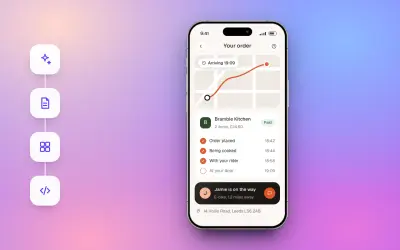 MVP developmentA first version for users and investors.
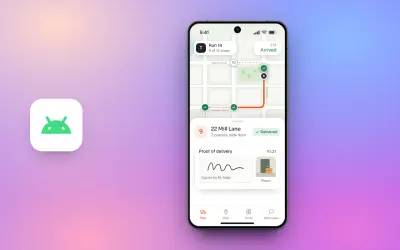 Android app developmentNative Kotlin apps for Google Play.
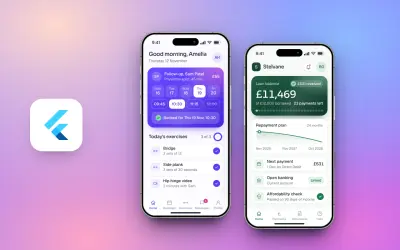 Flutter app developmentOne Flutter codebase for iOS and Android.
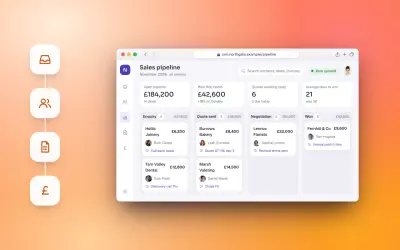 Custom CRM and ERPBusiness systems shaped around how you work.
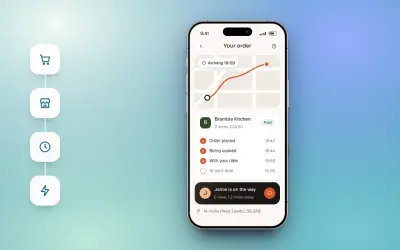 Food deliveryOrdering, kitchen and courier apps.
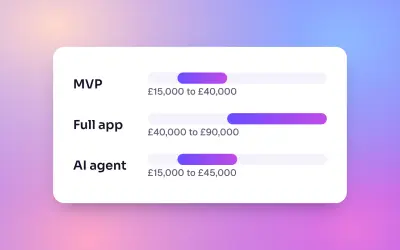 PricingWhat apps and AI agents cost, in pounds.
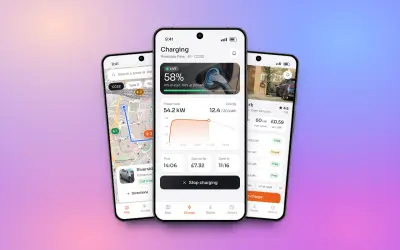 Tiger ChargeLive charger status, scan to charge and a prepaid wallet.
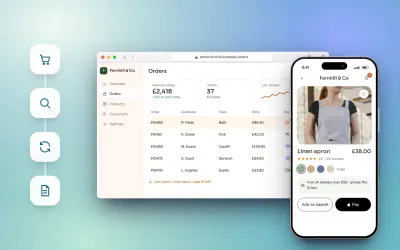 RetailStore, stock and point-of-sale tools.
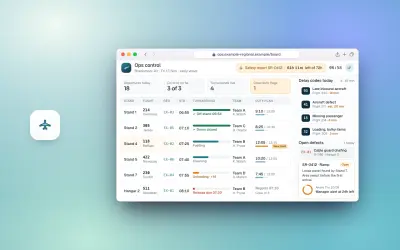 AviationMaintenance, crew and ground software.
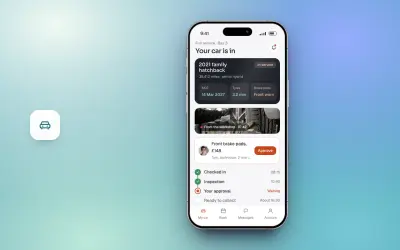 AutomotiveDealer, service and driver apps.
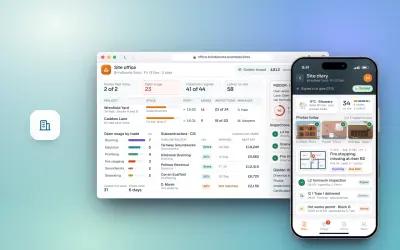 ConstructionSite, safety and project software.